
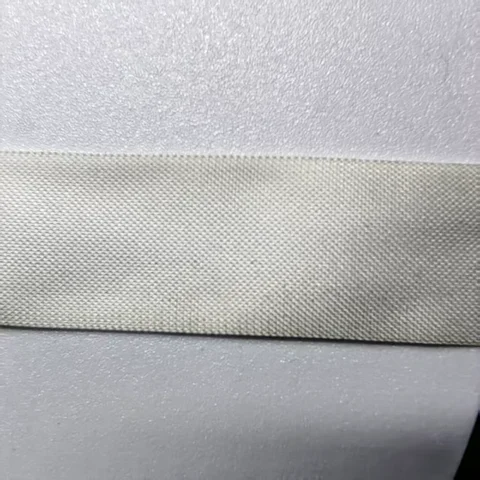
A line item such as MIL-T-5038, Type 3, 3/8", Class 1 specifies plain-weave reinforcing tape made from nylon 6,6 on a shuttle loom. A buyer may call it nylon binding tape when it binds a fabric edge. Include the document revision, Type III (also written as Type 3), Class 1 and the exact width when requesting a quote.
What Class 1 means for shuttle-woven nylon tape
MIL-DTL-5038K §1.2.2 specifies a shuttle loom and nylon 6,6 for Class 1. Class 1A uses nylon 6,6 on a shuttleless loom. Class 2 allows either loom and either nylon 6 or nylon 6,6.
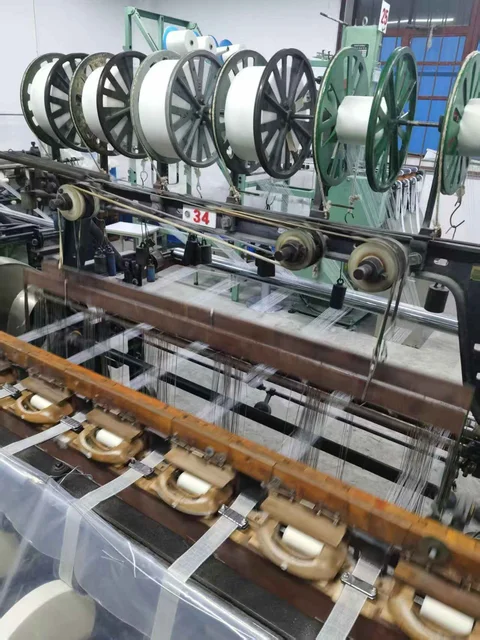
The difference is how the weft forms the woven edge, or selvage. On a shuttle loom, the shuttle carries the weft across the tape, and the yarn turns back at the edge to form the next pick. Section 3.7.5 specifies one full-width weft per shed for Class 1. The returning yarn forms the selvage without a separate catch cord. For Class 1A, a catch cord interlaces with the weft to hold it at the edge. See §3.7.5 and Figure 1.
Class 1 vs. Class 1A and shuttleless substitution
The main risk is a mismatch with the drawing and its acceptance requirements. For example, 3/4" Type III has the same 400 lbf minimum breaking strength in both Revision K tables. A passing tensile test confirms that property. Class 1 acceptance also requires the specified loom and weave construction. A shipment can meet the tensile minimum and still be rejected for the wrong Class. Compare Tables II and III.
A catch-cord edge can differ in profile or feel. If your buyer permits a substitution, compare samples in the intended assembly, especially if the tape feeds through a sewing binder or passes through a slot. Check how the edges sit and feed. Revision K lists missing catch cord as a visual defect for shuttleless tape and checks edge workmanship for both constructions. Ask the supplier to confirm the loom type and batch documents against the Class on your order. See Table IV on visual defects.
Type III Class 1 plain-weave nylon tape widths
Table II lists five Type III widths. All five use a width tolerance of ±1/32" and a thickness range of 0.015–0.025" under Revision K. Use the nominal width from the drawing in the RFQ and check the tolerances against the contracted revision.
| Type | Weave | Width | Minimum breaking strength (lbf) |
|---|---|---|---|
| Type III | Plain weave | 3/8" | 200 |
| Type III | Plain weave | 1/2" | 250 |
| Type III | Plain weave | 3/4" | 400 |
| Type III | Plain weave | 1" | 525 |
| Type III | Plain weave | 1-1/2" | 850 |
Class 1 herringbone twill nylon tape in Types II, V and VI
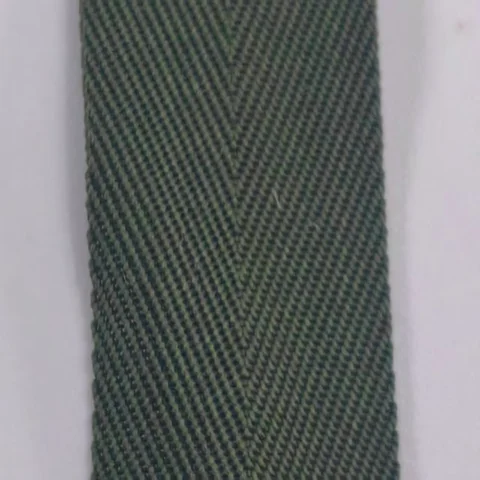
Type II covers 1", 1-1/2" and 2" herringbone twill tape. Type V covers 9/16", and Type VI covers 3/4". Include the Type even when you know the width. For example, a 3/4" Type III Class 1 tape is plain weave with a 400 lbf minimum, while a 3/4" Type VI Class 1 tape is herringbone twill with a 425 lbf minimum. The Type and width together identify the row you need.
| Type | Weave | Width | Minimum breaking strength (lbf) |
|---|---|---|---|
| Type II | Herringbone twill | 1" | 900 |
| Type II | Herringbone twill | 1-1/2" | 1,300 |
| Type II | Herringbone twill | 2" | 1,700 |
| Type V | Herringbone twill | 9/16" | 500 |
| Type VI | Herringbone twill | 3/4" | 425 |
How to specify Class 1 nylon tape in an RFQ
- Copy the specification and revision from the drawing or purchase order. Older records may say MIL-T-5038 or MIL-PRF-5038. Check the contracted version before quoting against Revision K.
- List the Type, Class, nominal width, color or finish, and quantity with units for each line item. Include any drawing-specific tolerances, roll lengths or destination requirements.
- Ask for sample options, MOQ and lead time for that exact combination. If the order requires a certificate of conformance, test report or lot traceability, specify it in the RFQ.
Use a separate line for each width so the supplier can match it to the corresponding requirement. For example, an RFQ using the legacy designation could list the following line items:
- MIL-T-5038 Type III Class 1, 3/8-inch plain-weave nylon tape
- MIL-T-5038 Type III Class 1, 3/4-inch plain-weave nylon tape
- MIL-T-5038 Type III Class 1, 1-inch plain-weave nylon tape
Add the exact revision, color and quantity to each line. For herringbone, a line such as MIL-DTL-5038K Type VI Class 1, 3/4-inch herringbone twill tape makes the required weave clear.
Read the broader guide to 5038 revisions, types and classes
Technical references
The width and breaking-strength tables are based on MIL-DTL-5038K Table II. The loom comparison uses §1.2.2, §3.7.5 and Tables II–IV. The figures are specification requirements. The sample and loom photographs illustrate construction and equipment. Use the test report for the specific lot to verify measured results.