
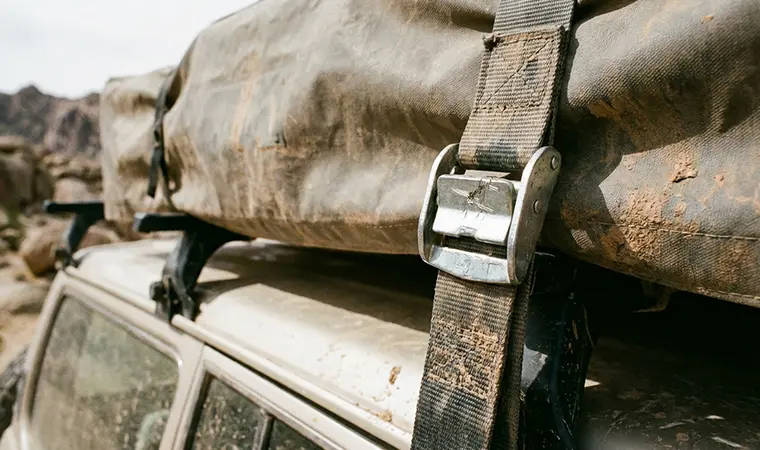
The rooftop tent (RTT) industry has exploded in popularity, evolving from niche overlanding gear to mainstream camping essential. For manufacturers, this means increased competition and a customer base that demands absolute reliability. When a vehicle is barreling down the highway at 70 mph or parked under the scorching desert sun, the webbing straps securing the tent are the unsung heroes keeping the rig safe.
As a specialized webbing manufacturer serving the outdoor industry, we often see RTT brands struggle with strap failure—fading, fraying, or snapping after just one season. This guide explores the technical requirements for rooftop tent webbing and helps procurement managers specify materials that match the premium quality of their tents.
The Unique Challenges of Overlanding Gear
Unlike a backpack that spends most of its life in a closet, a rooftop tent lives on top of a vehicle, exposed to the elements 24/7. The webbing used for travel covers, cinch straps, and ladder attachments must withstand:
- Intense UV Radiation: Constant sun exposure is the #1 killer of synthetic fibers.
- Hydrolysis & Mildew: Rain, snow, and morning dew can cause inferior webbing to rot or smell.
- Dynamic Wind Loads: Highway speeds create vibration and "flapping" that fray edges quickly.
- Abrasion: Dust, sand, and metal buckles wear down fibers over time.
Material Selection: Why Polyester is King for RTTs
When specifying heavy-duty straps for roof top tents, the debate often comes down to Nylon vs. Polyester. While Nylon is excellent for dynamic climbing ropes, High-Tenacity Polyester is the superior choice for RTT applications. Here is why:
1. Superior UV Resistance
Nylon degrades rapidly under UV light, losing up to 50% of its strength within months if untreated. Polyester, by contrast, is naturally UV resistant. For a product that lives on a car roof, this is non-negotiable.
Deep Dive: Read our full analysis on Webbing Lifespan & UV Resistance.
2. Hydrophobic Properties (Water Resistance)
Polyester absorbs very little water. This means:
- No Sagging: Nylon stretches when wet. A nylon cinch strap tightened in the dry afternoon will loosen during a rainy night, potentially causing the tent cover to flap or leak. Polyester stays tight, wet or dry.
- Mildew Resistance: Because it dries quickly and doesn't hold moisture, polyester is far less prone to mold and mildew growth—a common complaint among campers.
3. Abrasion Resistance
Our high-tenacity polyester webbing is engineered with a tight weave that resists snagging on velcro, zippers, and metal hardware. For even greater durability, some manufacturers are upgrading to TPU Coated Webbing for their main travel cover straps, rendering them completely waterproof and mud-proof.
Critical Application Areas in a Rooftop Tent
Not all straps in an RTT serve the same purpose. Here is how to specify the right webbing for each zone:
| Zone | Recommended Material | Key Feature Requirement |
|---|---|---|
| Travel Cover Cinch Straps | High-Tenacity Polyester (1.5" - 2") | Max UV resistance, Zero stretch when wet. |
| Ladder Extension Straps | Heavy Duty Polyester or Nylon 6,6 | High tensile strength (>2000 lbs) for safety. |
| Window Roll-Up Loops | Standard Polyester or PP | Soft hand-feel, easy to toggle. |
| Internal Storage/Mattress Straps | Fine-Weave Nylon | Smooth texture to prevent chafing bedding. |
Hardware Integration: The Buckle Factor
Even the best webbing is useless if it slips through the buckle. RTT straps typically use cam buckles or stainless steel D-rings. The thickness of the webbing must be calibrated to the hardware to ensure a "bite" that doesn't slip under wind load but is still easy to thread.
At TMG Webbing, we can recommend the ideal thickness (typically 1.5mm - 2.0mm for heavy-duty applications) to match your specific hardware.
Related: A Manufacturer's Guide to Choosing the Right Buckles.
Custom Manufacturing for RTT Brands
Sourcing raw rolls of webbing is just the start. To streamline your production line, TMG Webbing offers value-added services specifically for the outdoor gear industry:
- Precision Cutting: We use Ultrasonic Cutting to seal the edges of the straps. This prevents the "fuzzy ends" that make threading buckles frustrating for customers.
- Sewing & Assembly: We can sew velcro patches, box-x stitches, or attach hardware directly at our facility, delivering ready-to-install components to your factory.
- Custom Branding: Elevate your brand with Jacquard woven logos directly on the strap. It’s a subtle detail that signals premium quality to overlanders.
Conclusion: Build a Better Tent with Better Straps
In the competitive world of overlanding, word of mouth is everything. Don't let a cheap, faded strap be the reason a customer complains about your $3,000 tent. By specifying high-quality, UV-resistant polyester webbing, you ensure your product looks good and performs perfectly for years of adventure.
Are you designing a new Rooftop Tent or upgrading your current model? Contact TMG Webbing today. We can provide free sample kits of our "Overland Series" webbing so you can test the difference yourself.