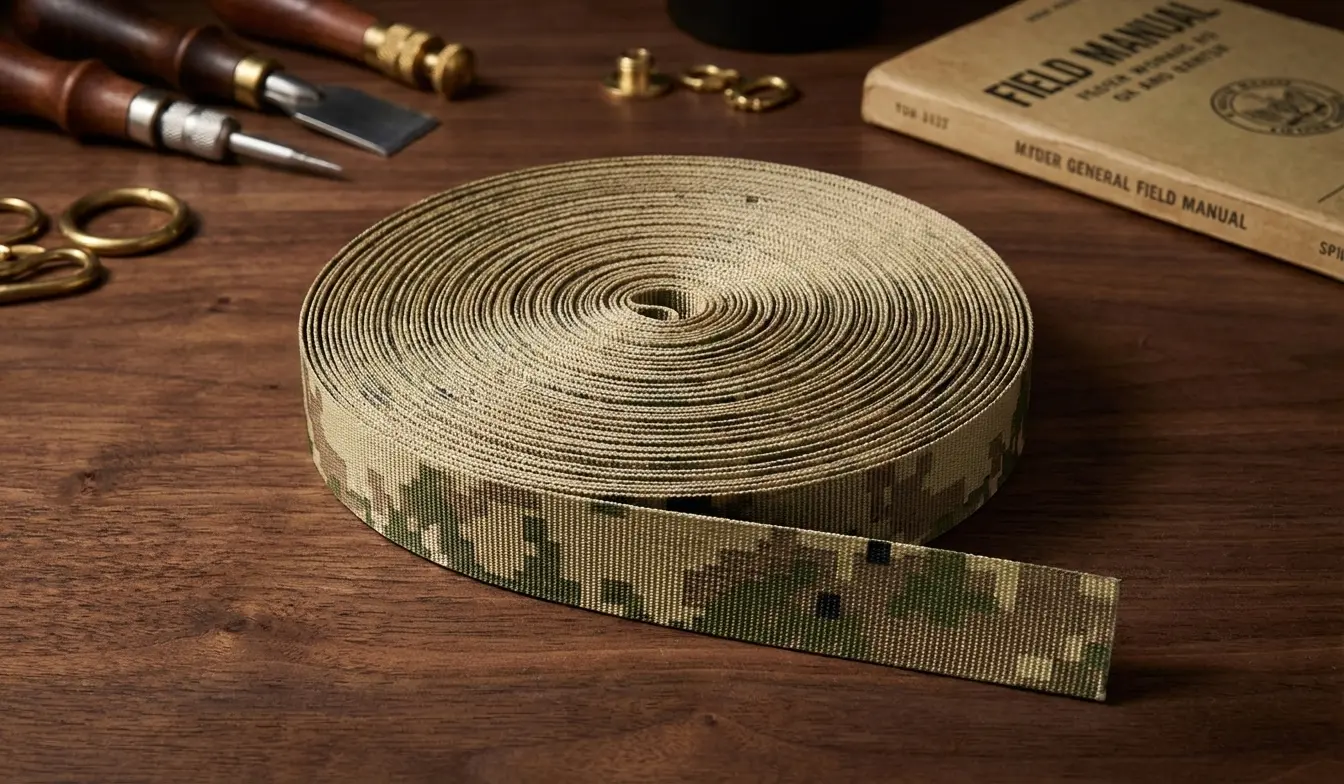
CADPAT MT Webbing: Canadian Camo Mil-Spec Straps Guide
Sourcing for the Canadian Armed Forces? We now stock Mil-Spec CADPAT MT (Multi-Terrain) webbing. IRR compliance, jacquard weaving, and how it differs from CADPAT TW.
Check Stock & Specs →
Welcome to the official blog of TMG Webbing. Here we share with you over 20 years of expertise as an industry-leading webbing manufacturer.
Here you will read in-depth analysis of webbings made of different materials such as nylon, polyester, PP, etc., learn about their latest applications in the fields of safety belts, slings, outdoor equipment, etc., and gain production and quality control insights from our factory frontline.
Sourcing for the Canadian Armed Forces? We now stock Mil-Spec CADPAT MT (Multi-Terrain) webbing. IRR compliance, jacquard weaving, and how it differs from CADPAT TW.
Check Stock & Specs →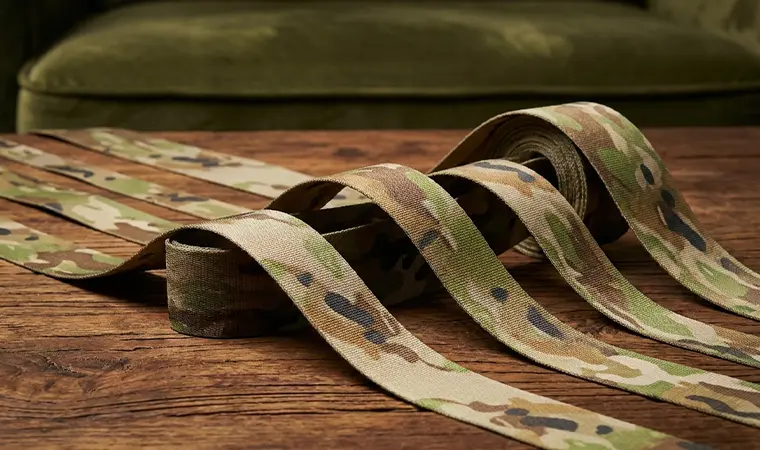
Sourcing AMCU for ADF contracts? Mil-Spec AMCU Jacquard webbing in stock. Learn about IRR compliance, weave specs, and why this pattern differs from standard MultiCam.
Check Stock & Specs →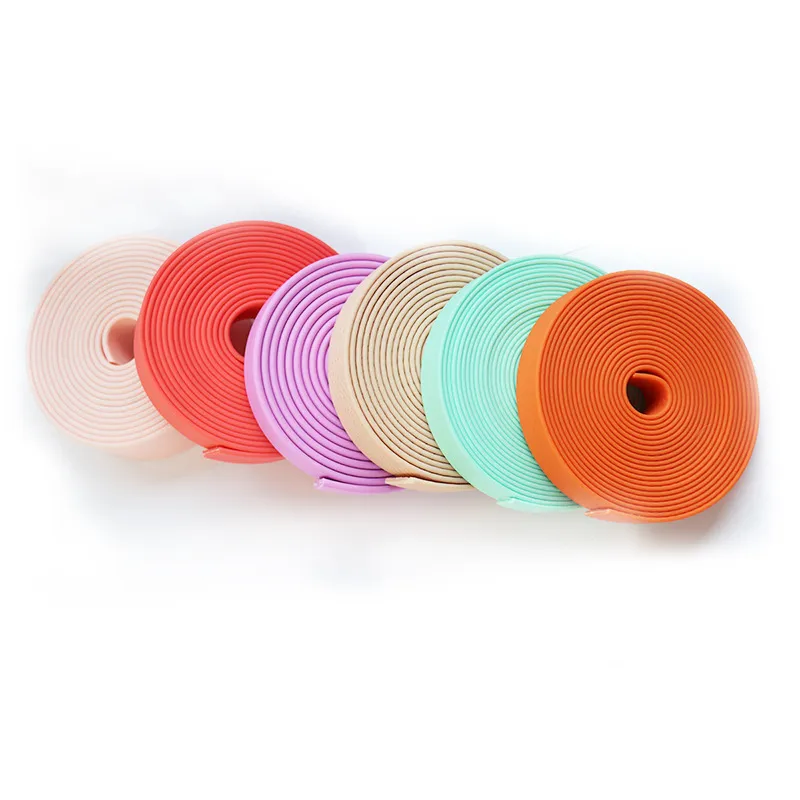
Waterproof, odor-free, and 30% cheaper. A technical comparison of TPU coated webbing vs BioThane for premium pet collars and leashes.
Read More →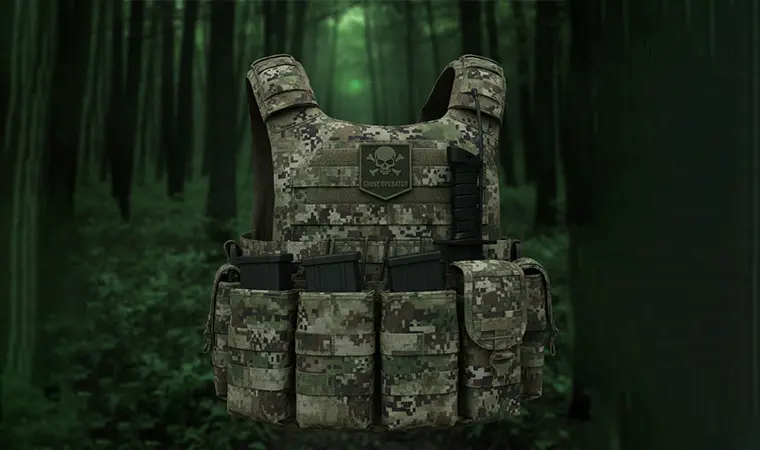
Why do standard straps glow under night vision? Technical guide covering NIR spectral reflectance curves and why Jacquard outperforms printed webbing in combat.
Read More →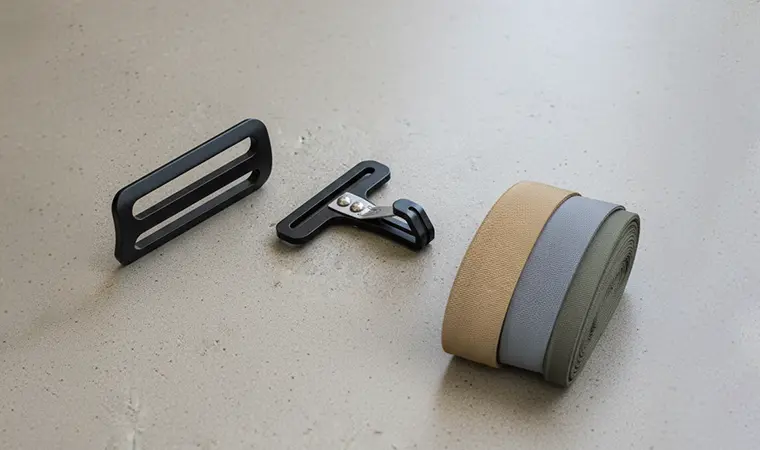
Mission-critical parachute components sourcing guide. Mil-Spec MIL-W-4088K nylon webbing and heavy-duty hardware for maximum safety and reliability.
Read More →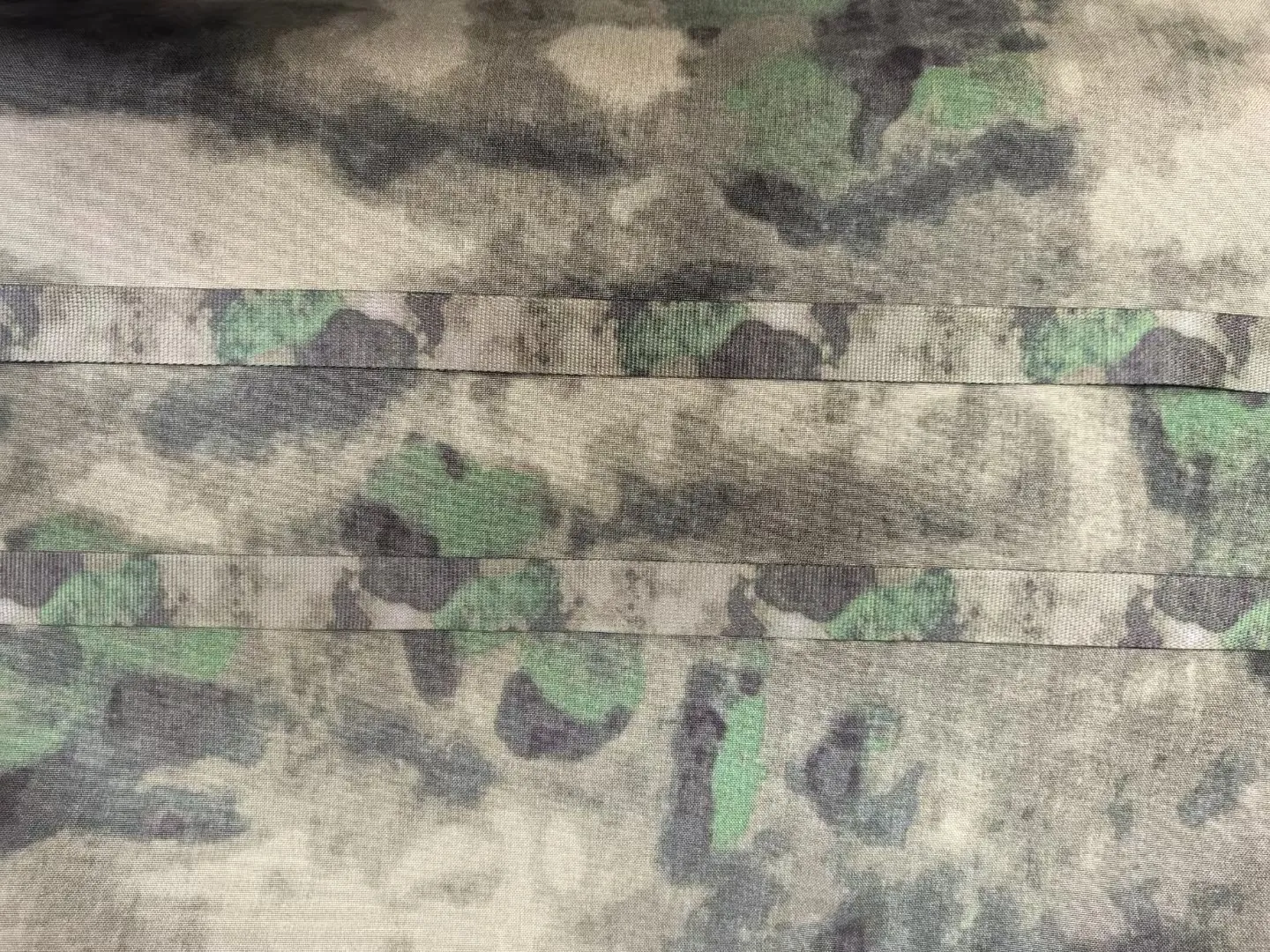
Sourcing authentic A-TACS FG webbing? Covers the critical role of Mil-Spec nylon, IRR compliance, and jacquard weaving for elite tactical gear.
Read More →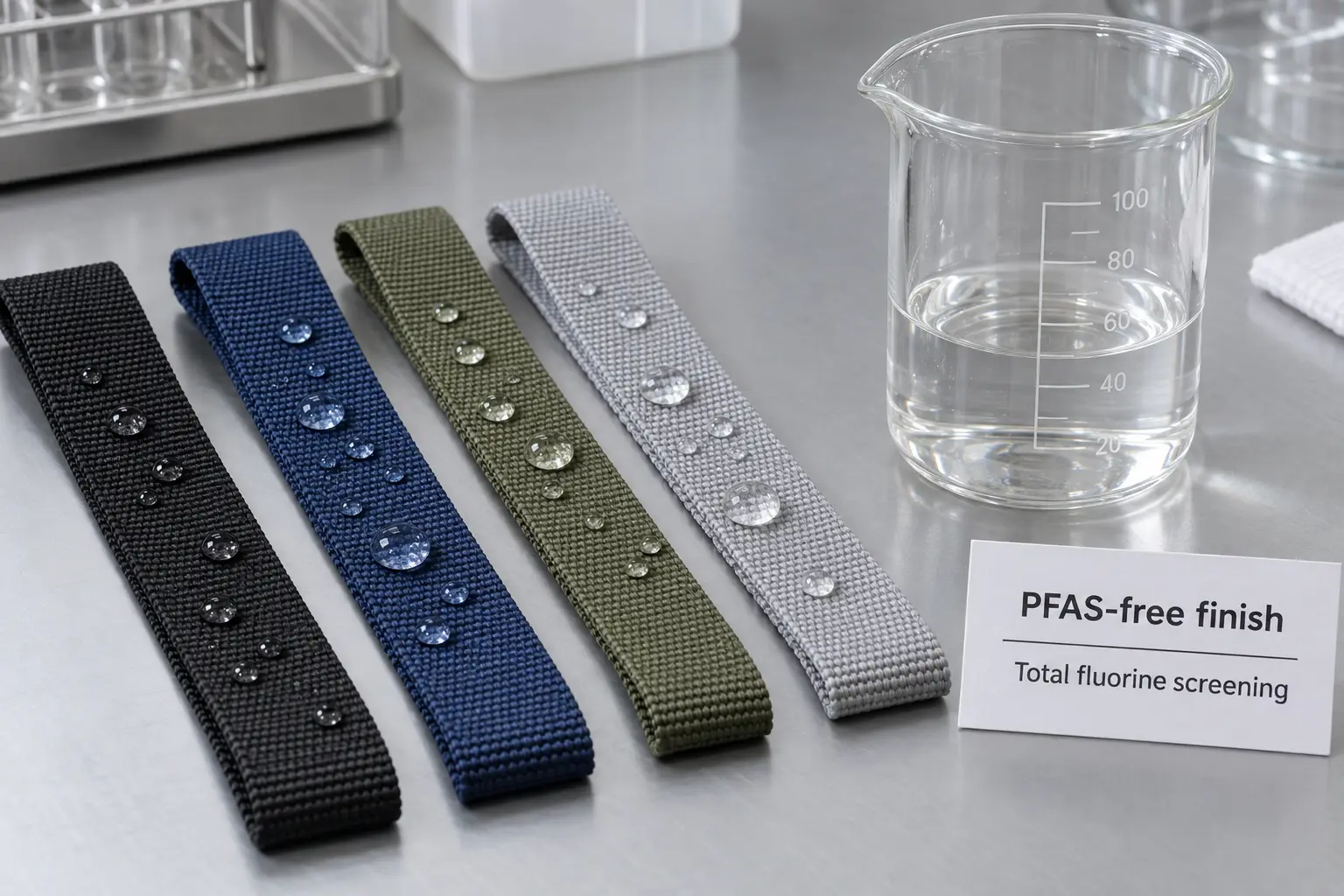
EU consumer textiles, clothing accessories and footwear have faced a 25 ppb PFHxA limit since October 2026, with all other textiles following in 2027. Which webbing is actually in scope, why the risk sits in DWR finishes rather than the yarn, how total-fluorine screening and LC-MS/MS differ, what PFAS-free finishes can deliver, and a 7-point specification checklist.
Read More →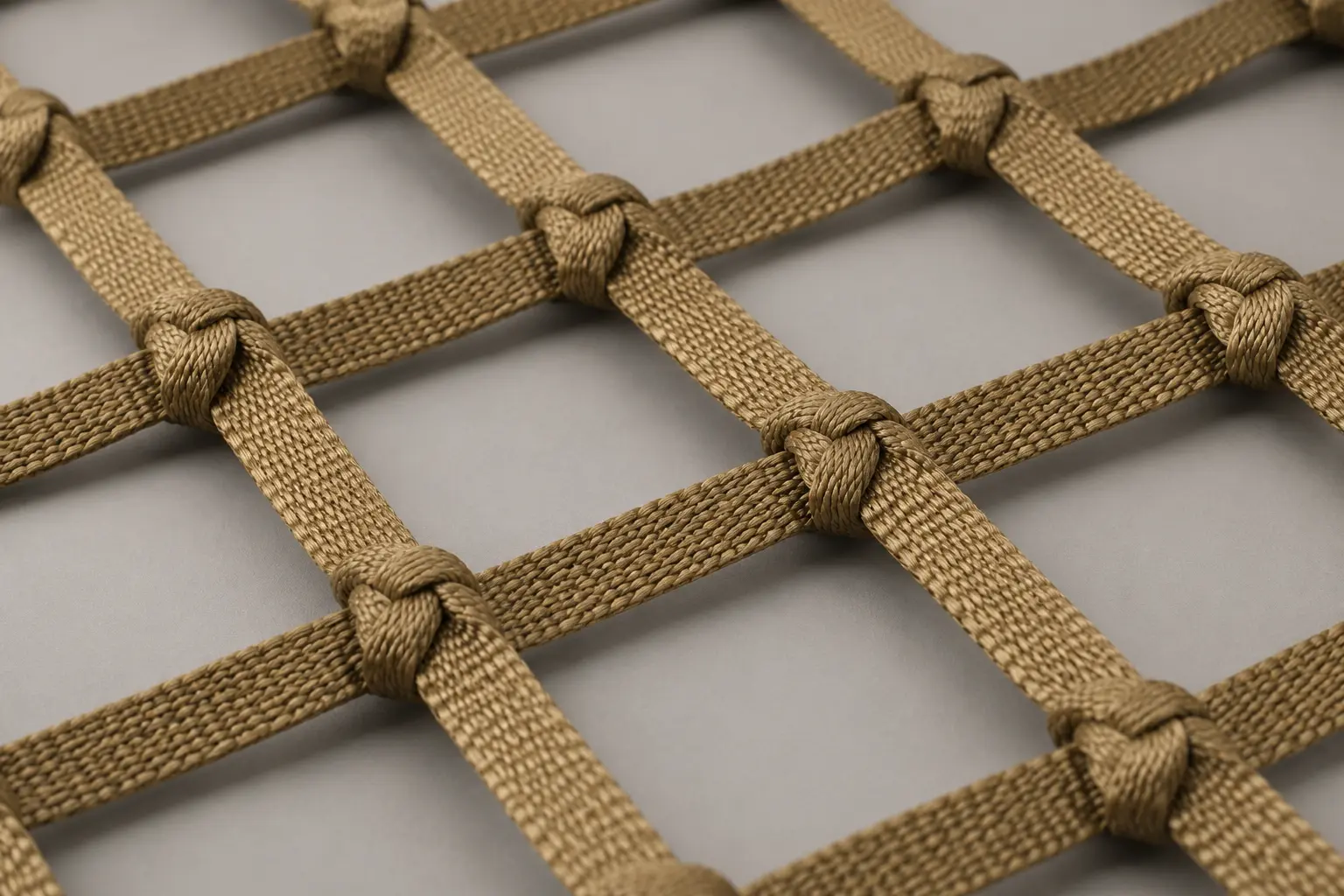
Why para-aramid beats UHMWPE and polyester in counter-UAS capture netting: thermal thresholds (decomposition near 500 C vs melting near 145 C), cut and abrasion resistance, low elongation and energy absorption, knot strength retention, construction and width choices, coating and low-signature options, and a 7-field specification checklist.
Read More →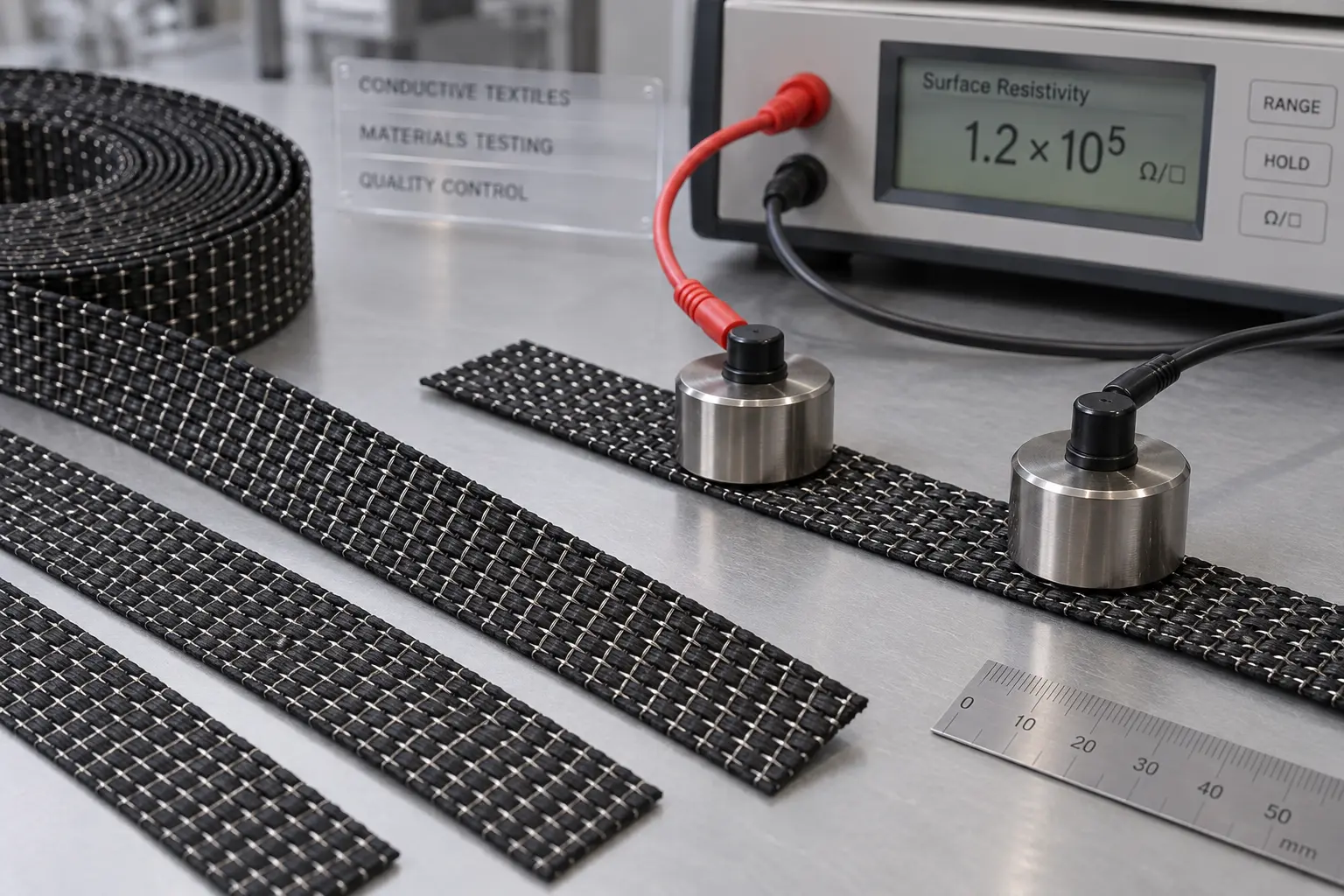
The resistivity spectrum that separates insulative, dissipative and conductive webbing, the four ways conductivity is built into narrow fabric (carbon-loaded yarn, stainless blend, metal plating, topical finish), EN 1149 and ANSI/ESD S20.20 test methods, why many anti-static straps stop working after washing, and a 5-field specification checklist.
Read More →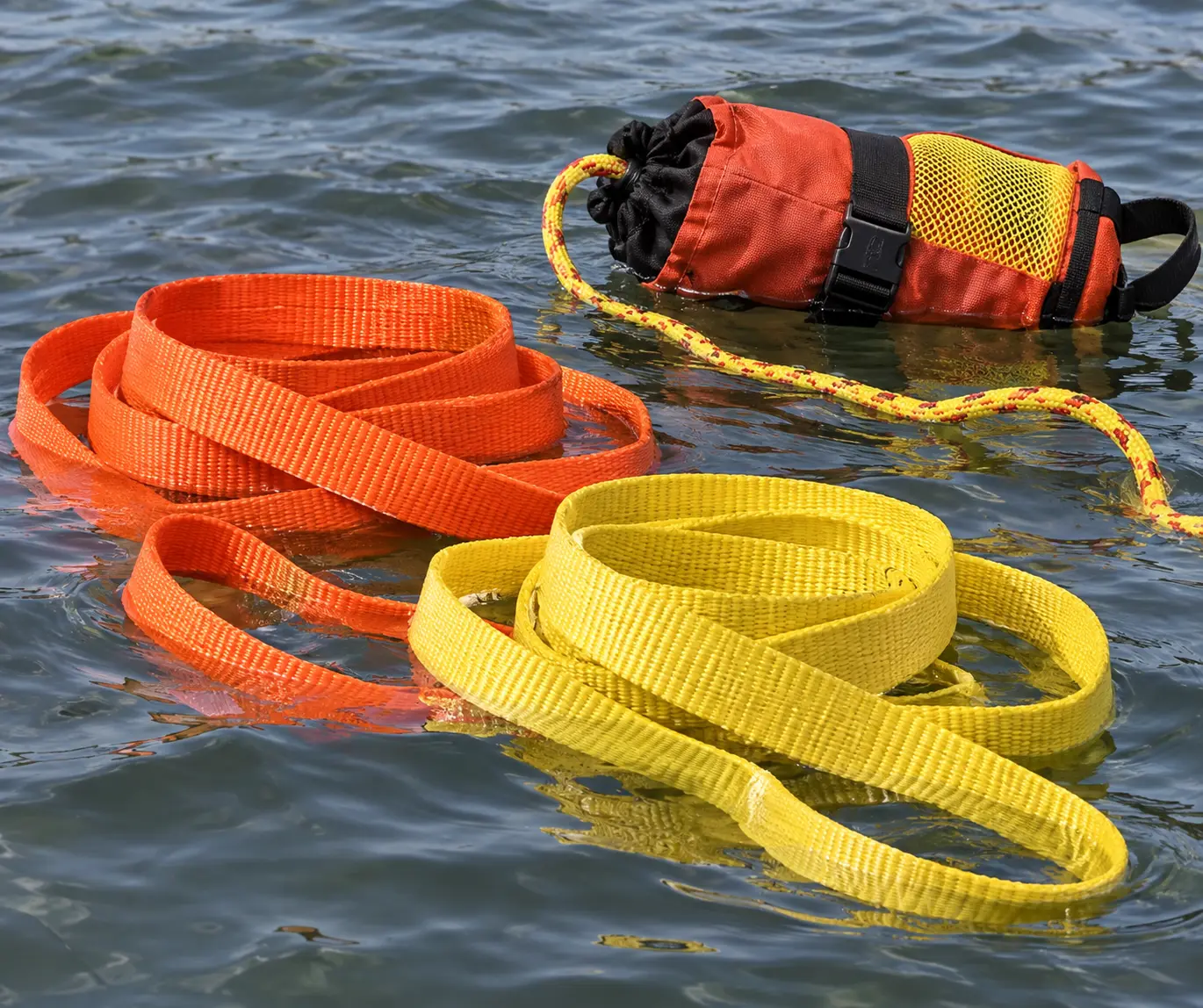
Only two fibers float — PP (0.91 g/cm3) and UHMWPE (0.97). This guide covers the density physics, where floating webbing is used in water rescue gear, wet-vs-dry strength, the 24-hour immersion test that separates real buoyant webbing from showroom claims, and realistic MOQ and price expectations.
Read More →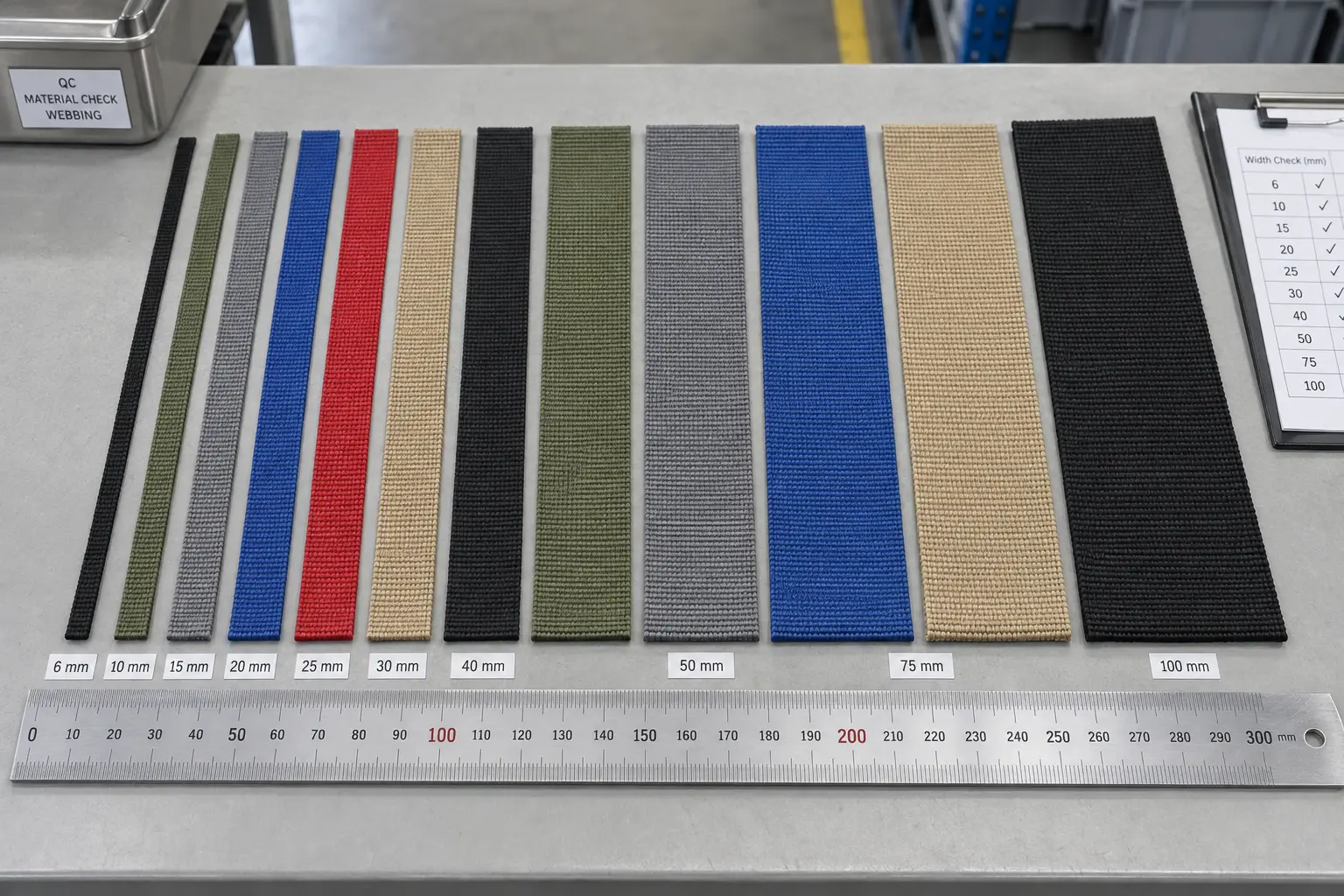
Specify width correctly the first time: the millimetre-to-inch chart that factories actually work in (6 mm to 100 mm+), how much strength really scales with width, hardware and buckle sizing rules, accepted production tolerances, recommended widths by end use from pet collars to cargo tie-downs, and custom-width MOQ and lead times.
Read More →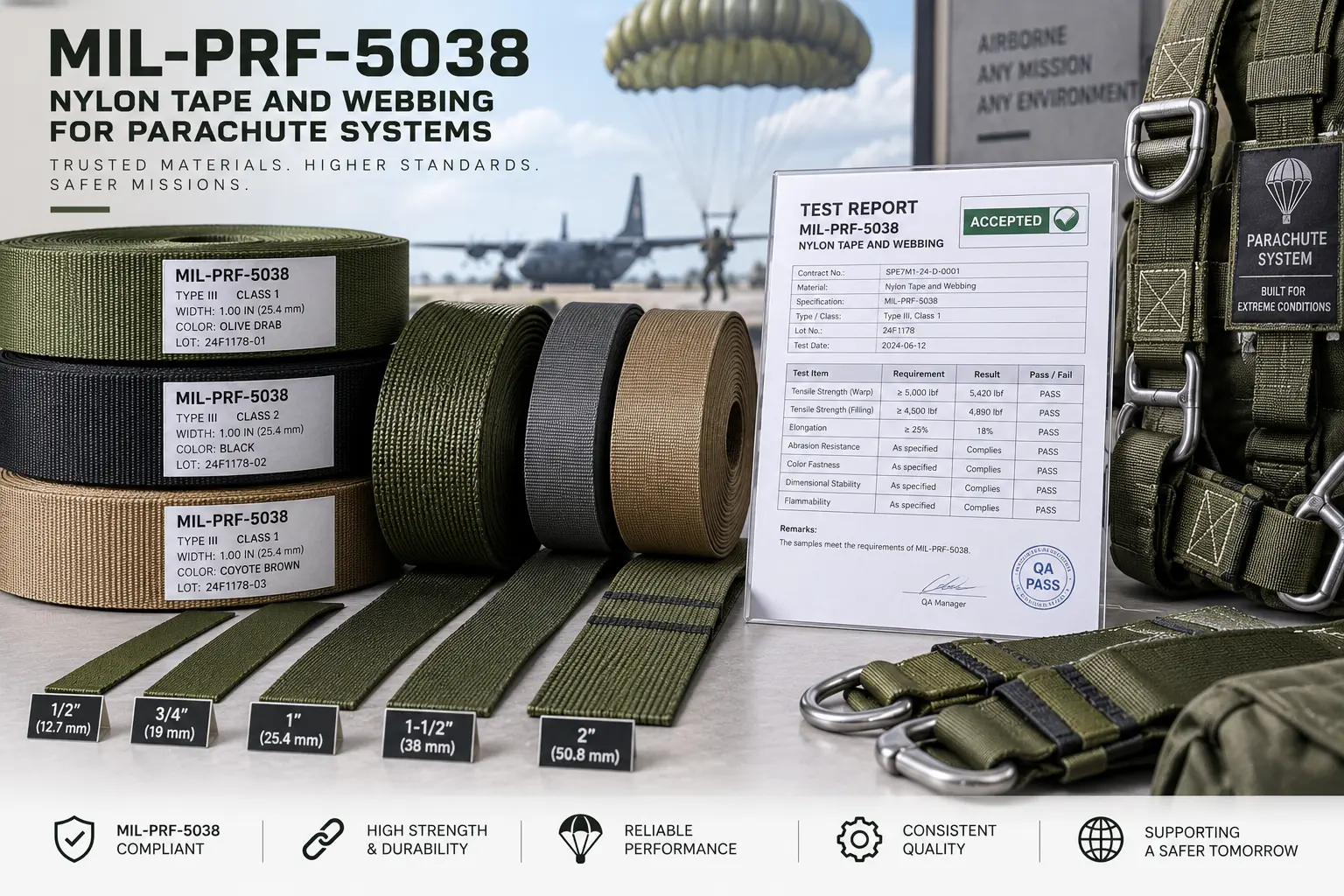
Guide to the U.S. military performance specification for nylon parachute tape: what MIL-PRF-5038 covers, how it evolved from MIL-T-5038, the type and class structure defining width, tensile strength and elongation, how it relates to MIL-W-4088 webbing, and what to demand from a supplier — qualified weaving, batch test data, and full lot traceability.
Read More →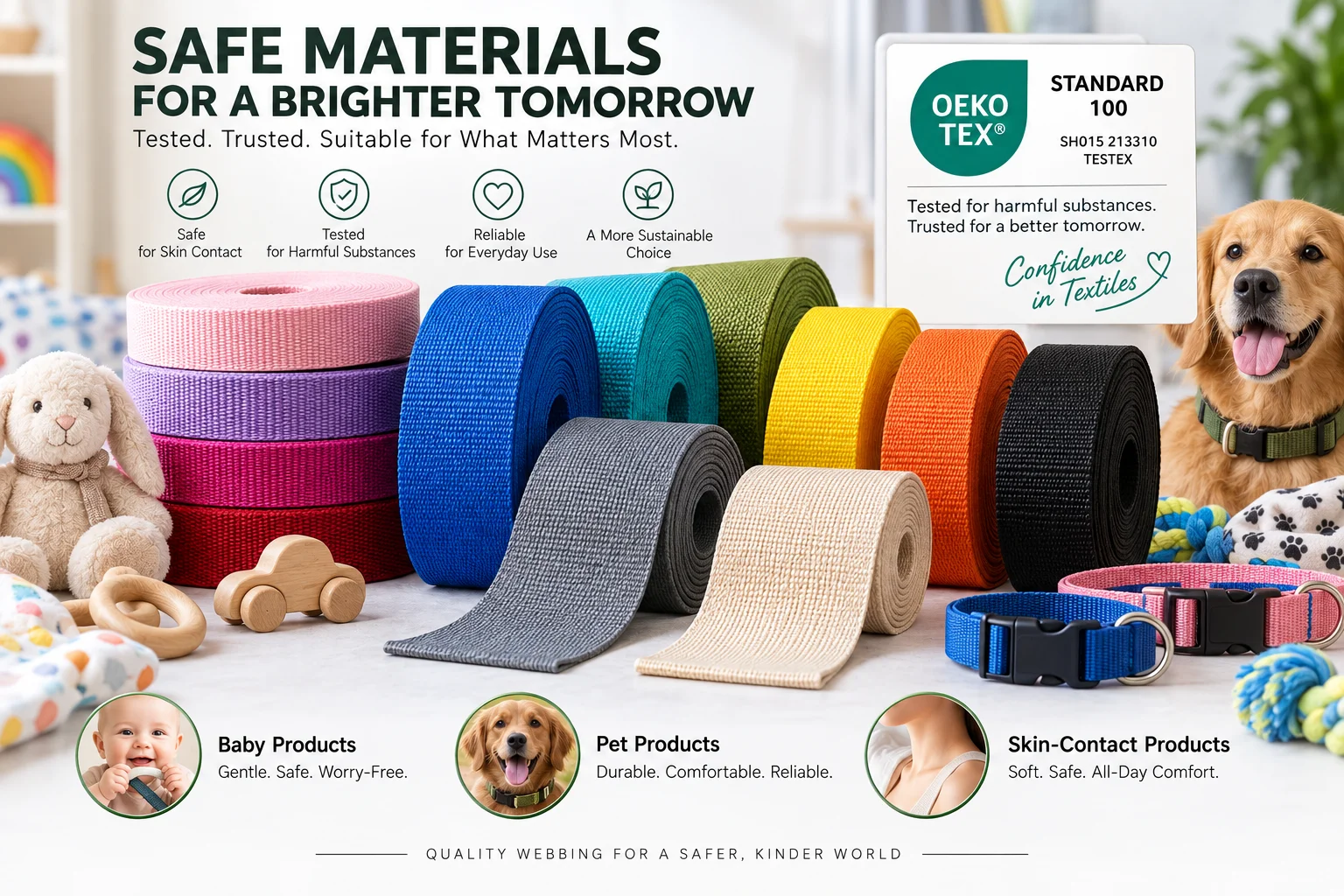
What OEKO-TEX Standard 100 actually tests, the four product classes (baby-safe Class I to decorative Class IV), why it matters for pet, baby, medical and skin-contact webbing, how to verify a supplier's certificate covers your exact article, and how it differs from GRS, REACH and CPSIA — with a practical sourcing checklist.
Read More →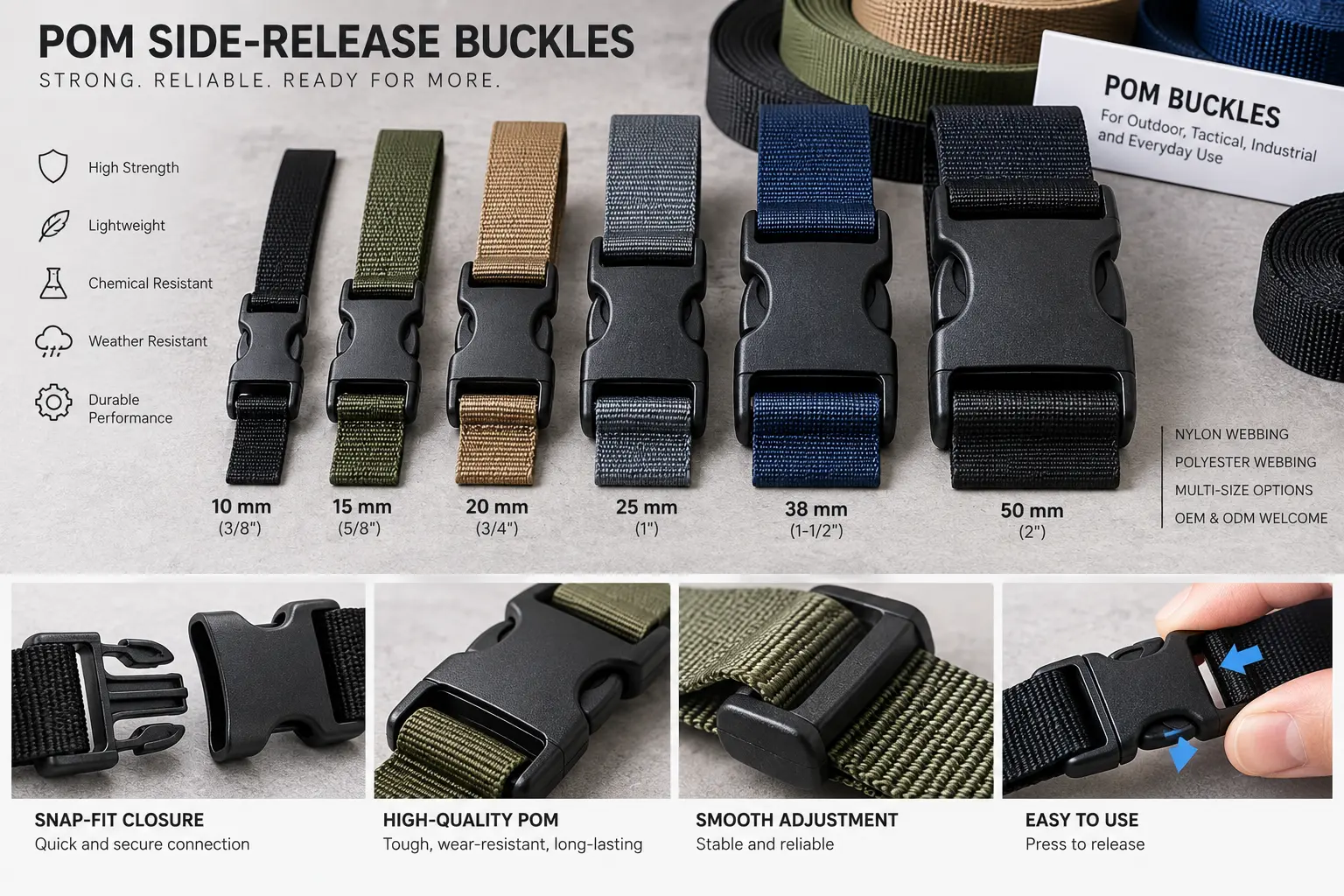
Engineering guide to POM (acetal) side-release buckles: strength ratings by width (20mm to 50mm), POM vs nylon vs metal trade-offs, cold and wet performance, the webbing width and thickness compatibility factors that cause field failures, and custom color, logo and flame-retardant grade options at production volume.
Read More →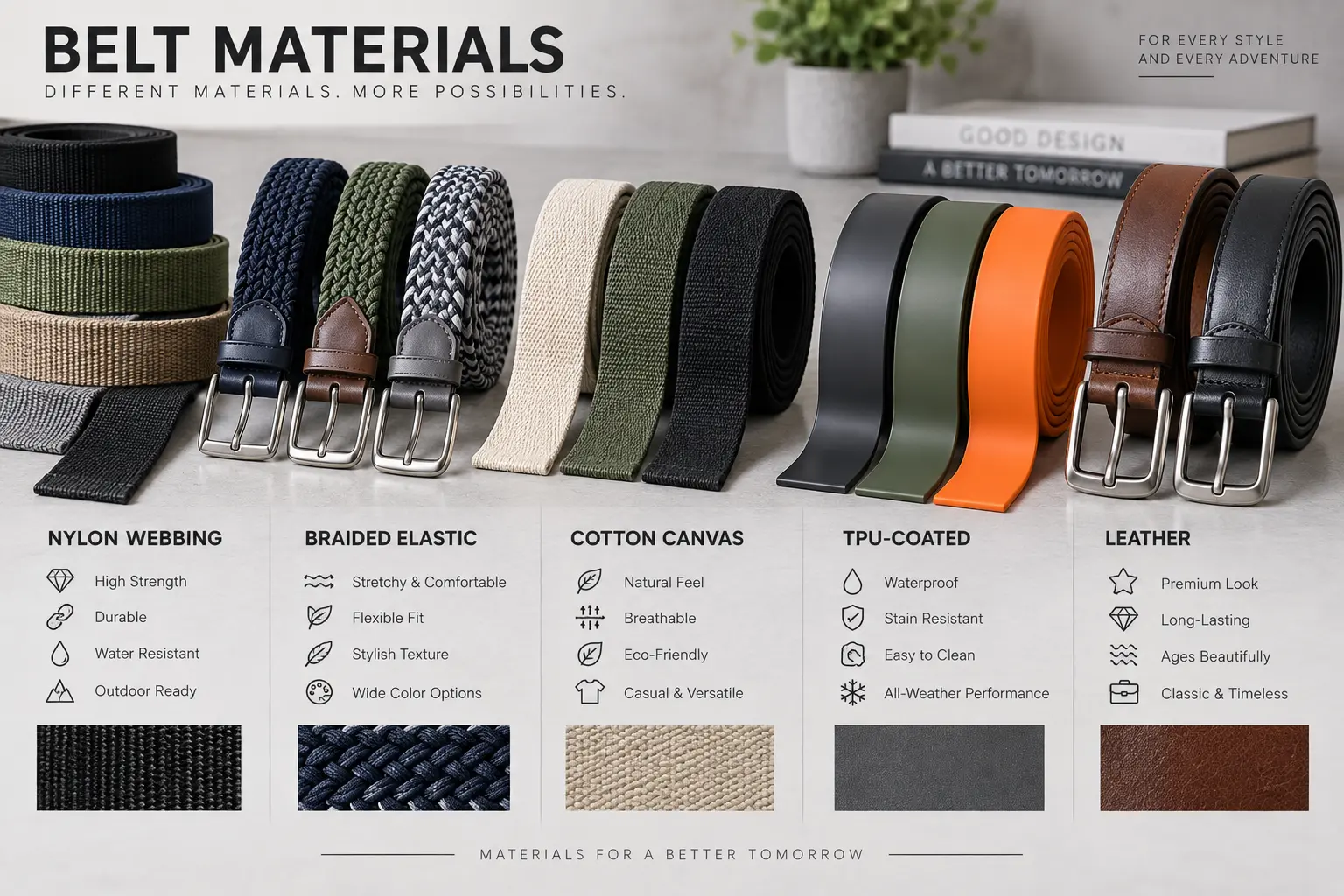
Every belt material compared in one place: nylon, polyester, polypropylene, cotton canvas, waxed cotton, braided elastic, leather and TPU-coated webbing — strength, water behavior, stretch, cost and comfort, plus which material fits dress, casual, tactical, outdoor, golf and workwear belt categories.
Read More →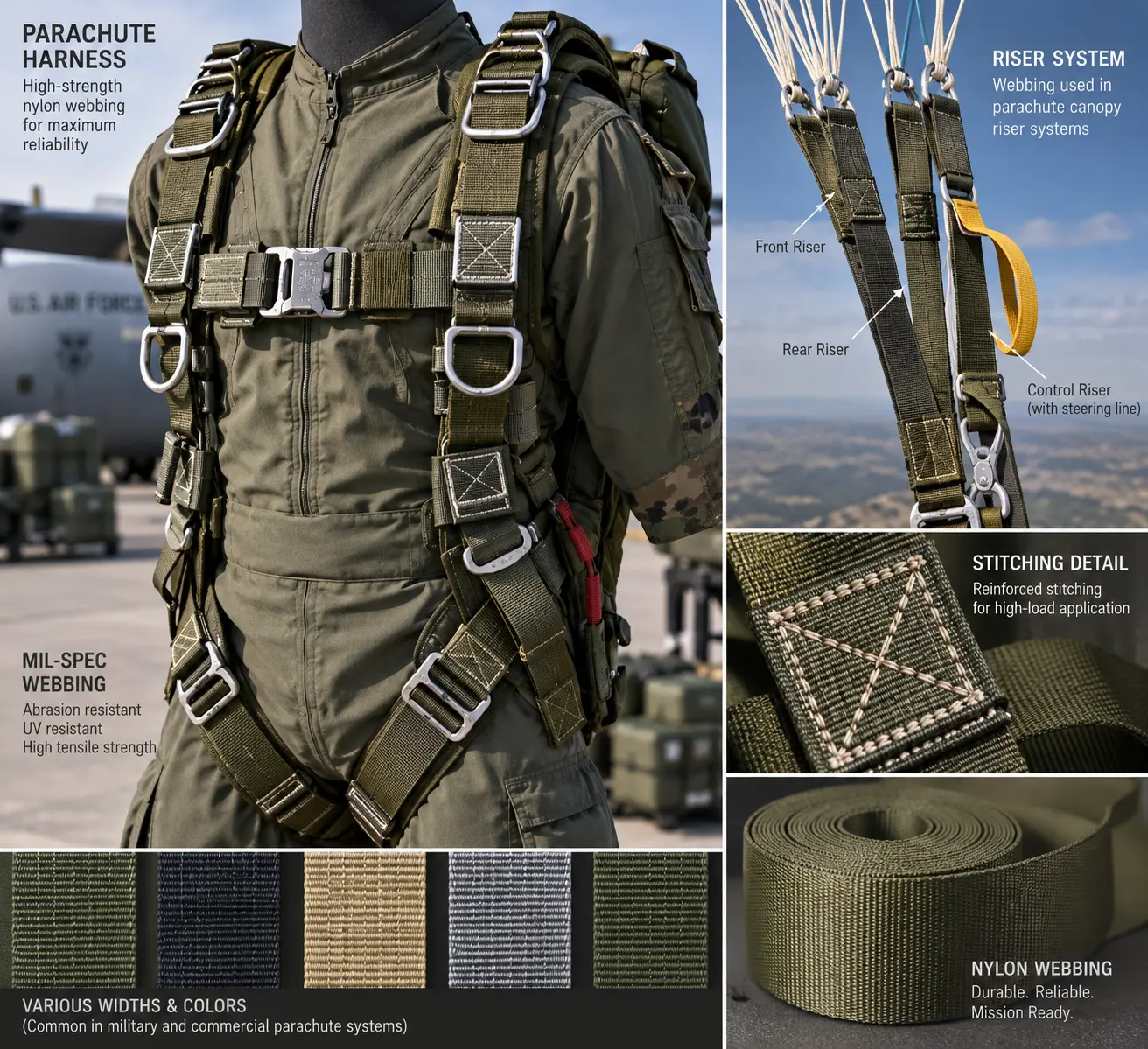
Technical guide to parachute webbing: why nylon 66 energy absorption matters on canopy opening shock, MIL-W-4088 military specification types, tensile strength and elongation requirements, flat vs tubular construction, and a five-point checklist for qualifying a supplier with batch test data.
Read More →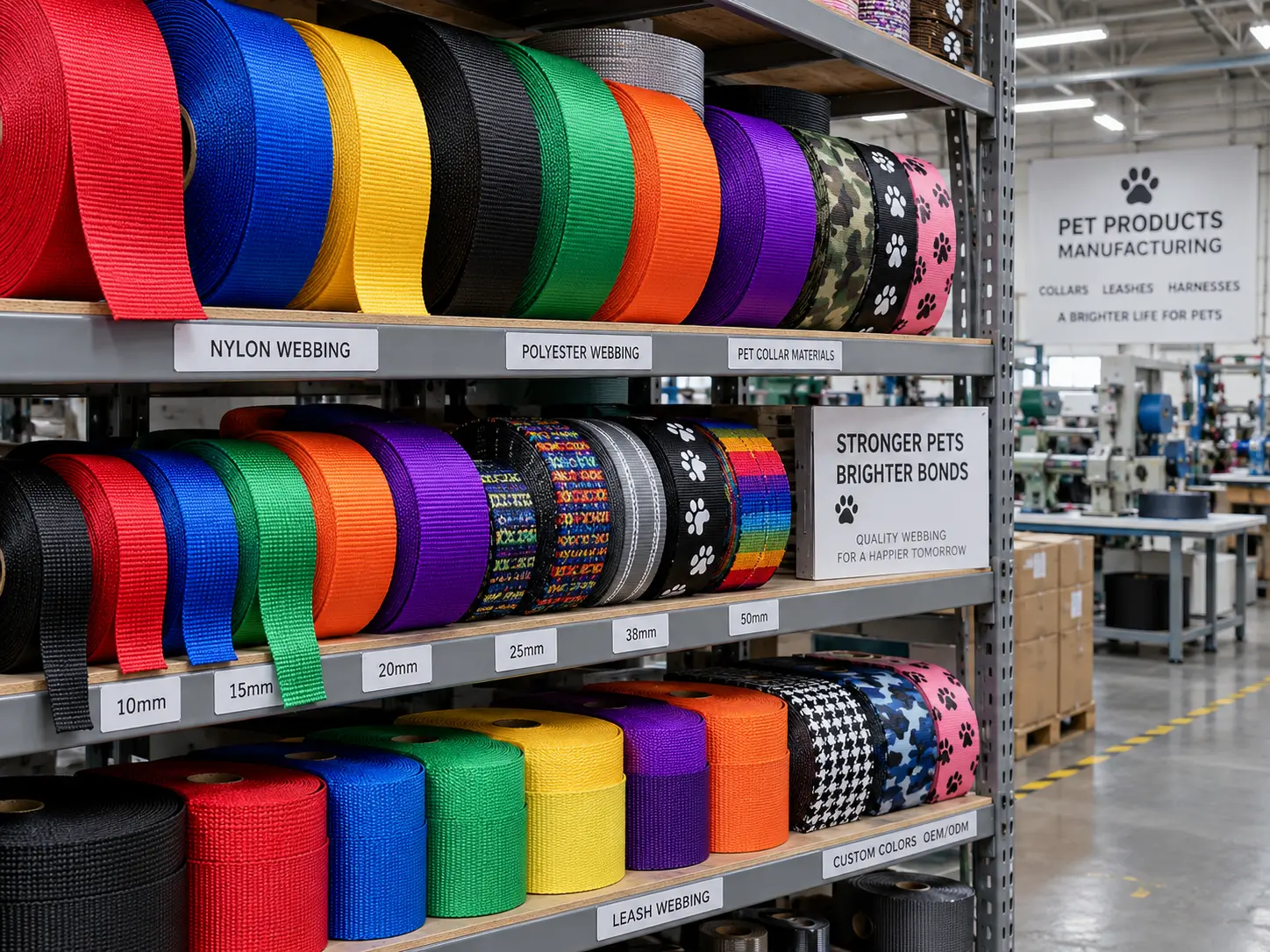
Wholesale sourcing guide for pet brands: nylon, polyester, PP, cotton and TPU-coated materials compared, standard widths by breed size (3/8 to 2 inch), strength and colorfastness requirements, custom jacquard/printed logo programs, MOQ from 500m with pricing benchmarks, and how to qualify a manufacturer.
Read More →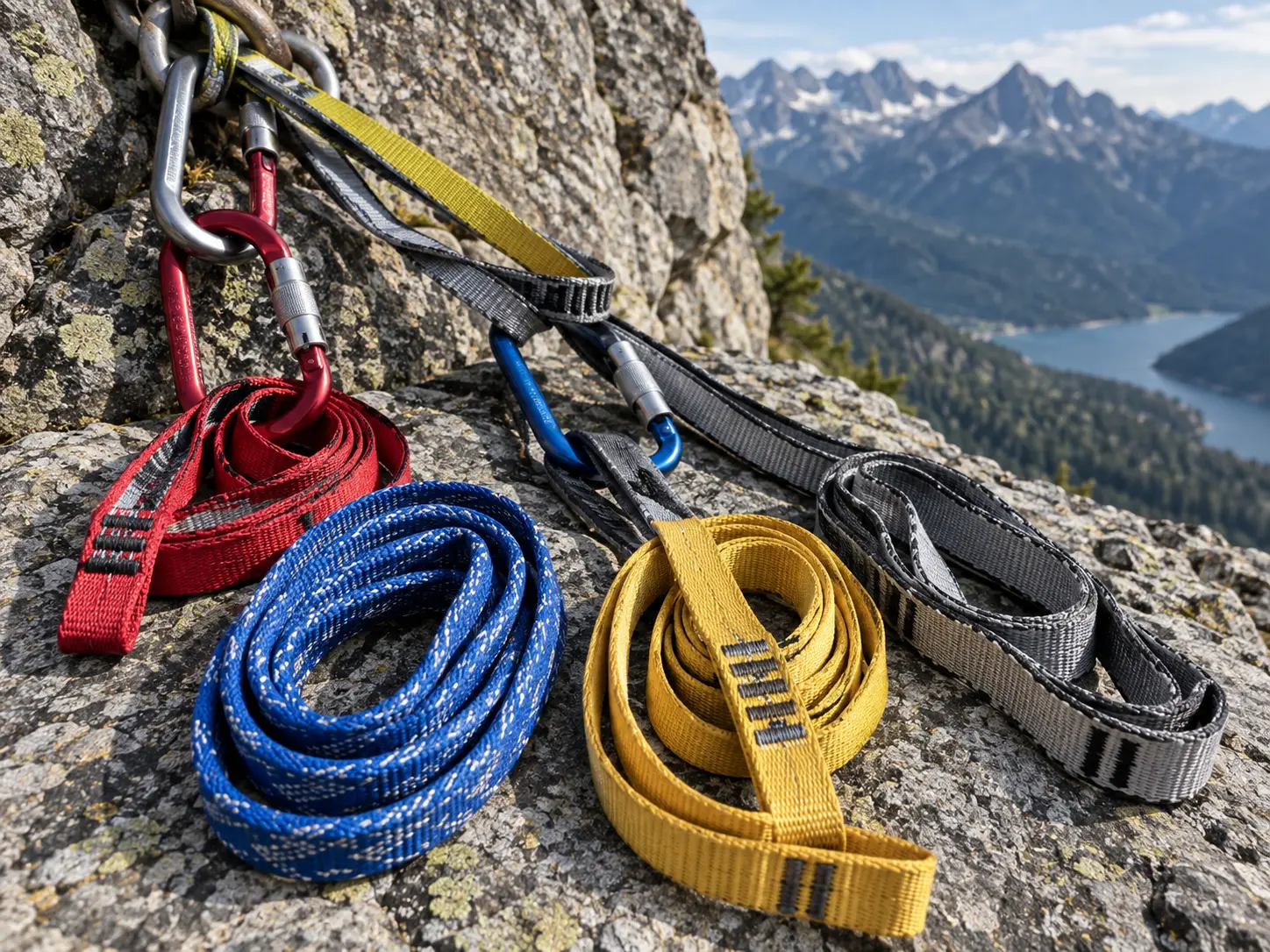
Life-safety guide to climbing webbing: flat vs tubular construction, nylon vs polyester vs Dyneema materials, EN 565 and UIAA certification (22 kN sling standard), why energy absorption matters in a fall, common width and sling specs, and how to source certified climbing webbing.
Read More →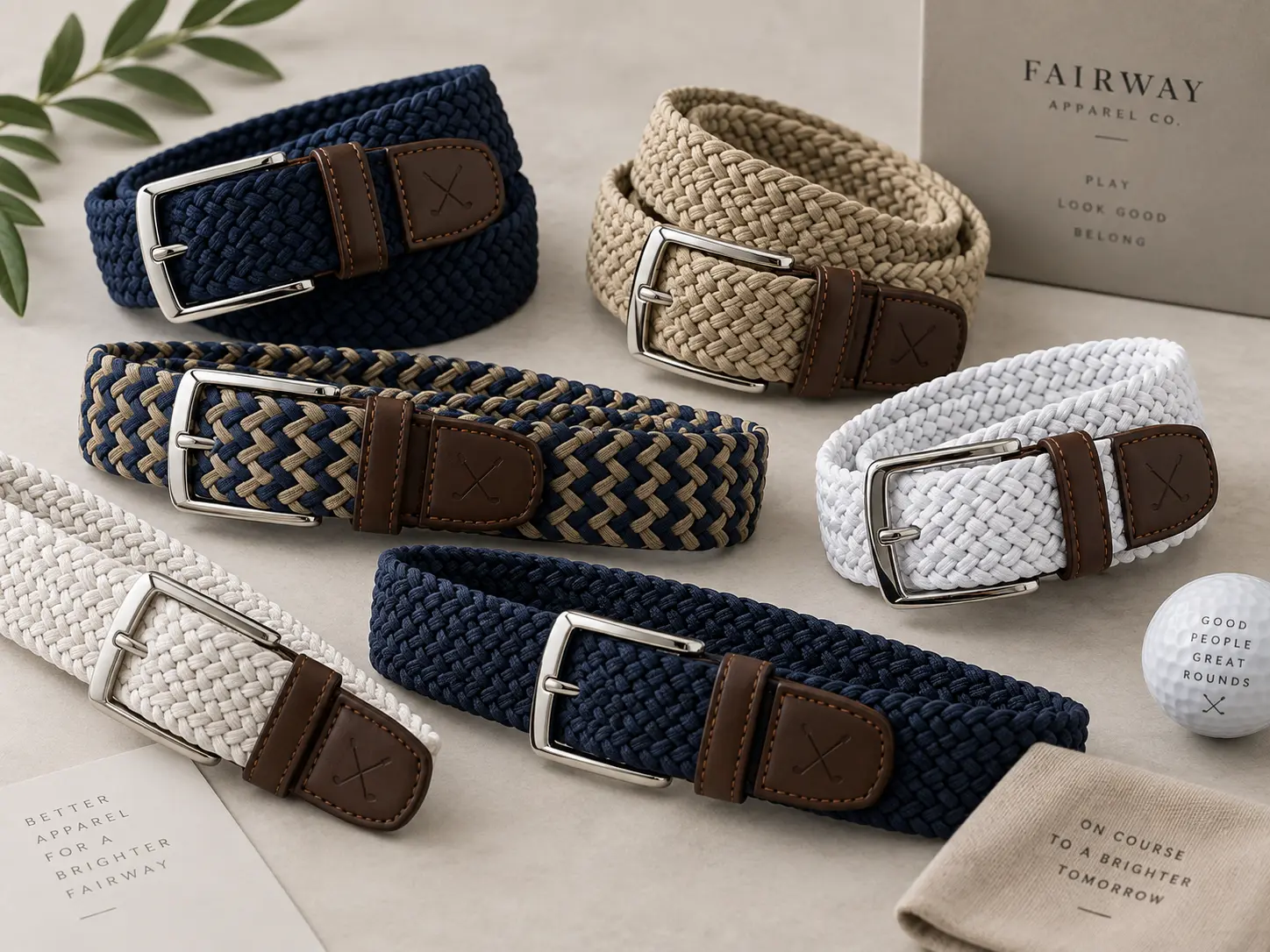
Guide for golf brands and retailers: woven vs braided construction, elastic and waxed-cotton materials that survive sun and sweat on the course, standard widths (30-35mm) and sizing logic, leather end-tab and buckle options, custom logo programs, MOQ from 500 pieces with unit pricing, and how to spec a private-label golf belt line.
Read More →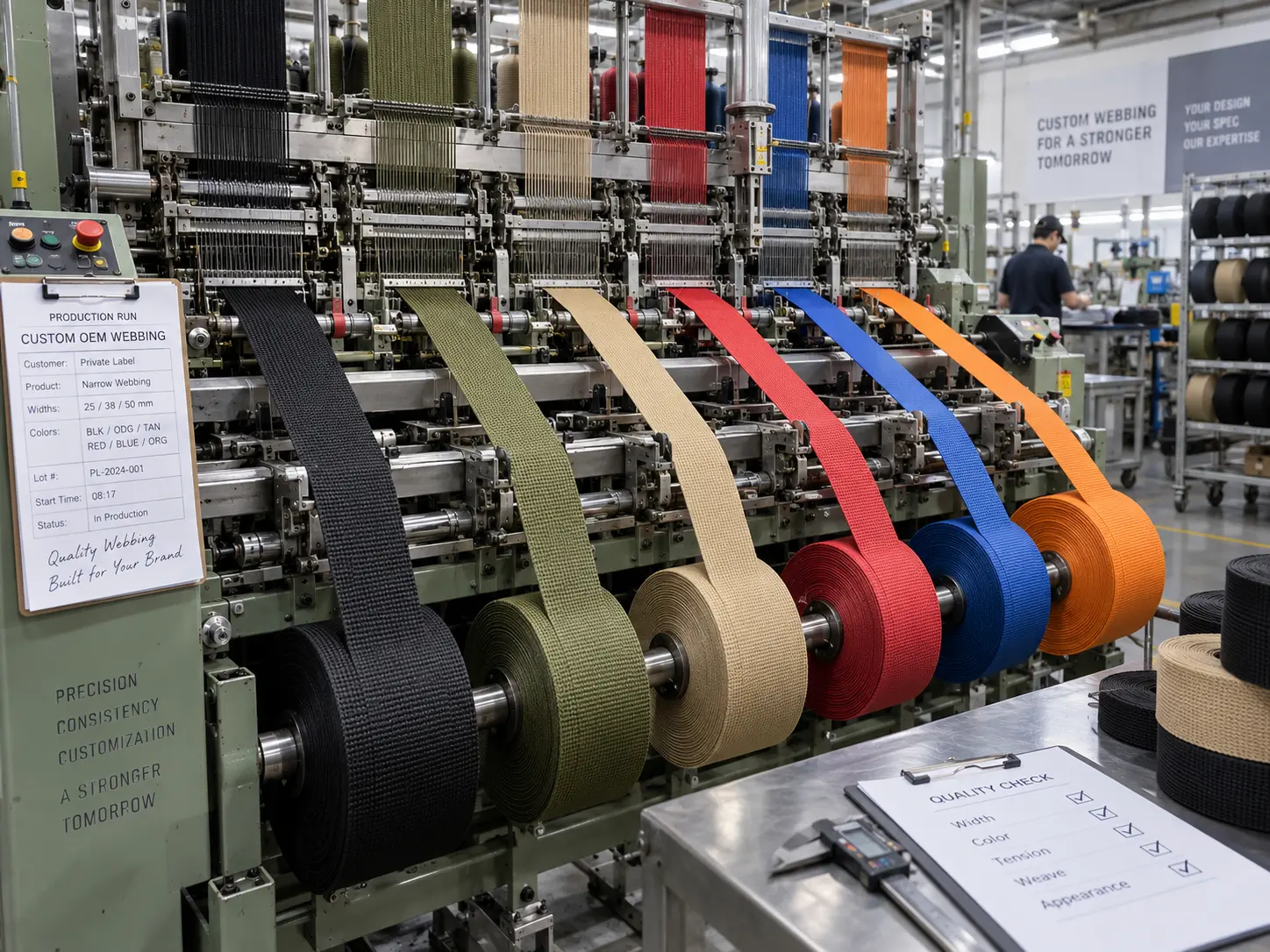
B2B guide to ordering custom OEM webbing from a factory: 6-step process from specification to delivery, sample sequence (development sample, lab dip, pre-production sample), MOQ benchmarks by material (nylon 3,000m / UHMWPE 500m / jacquard 1,000m), realistic lead times (2-8 weeks), price benchmarks by product type, and 9 sourcing red flags to avoid when commissioning private-label webbing.
Read More →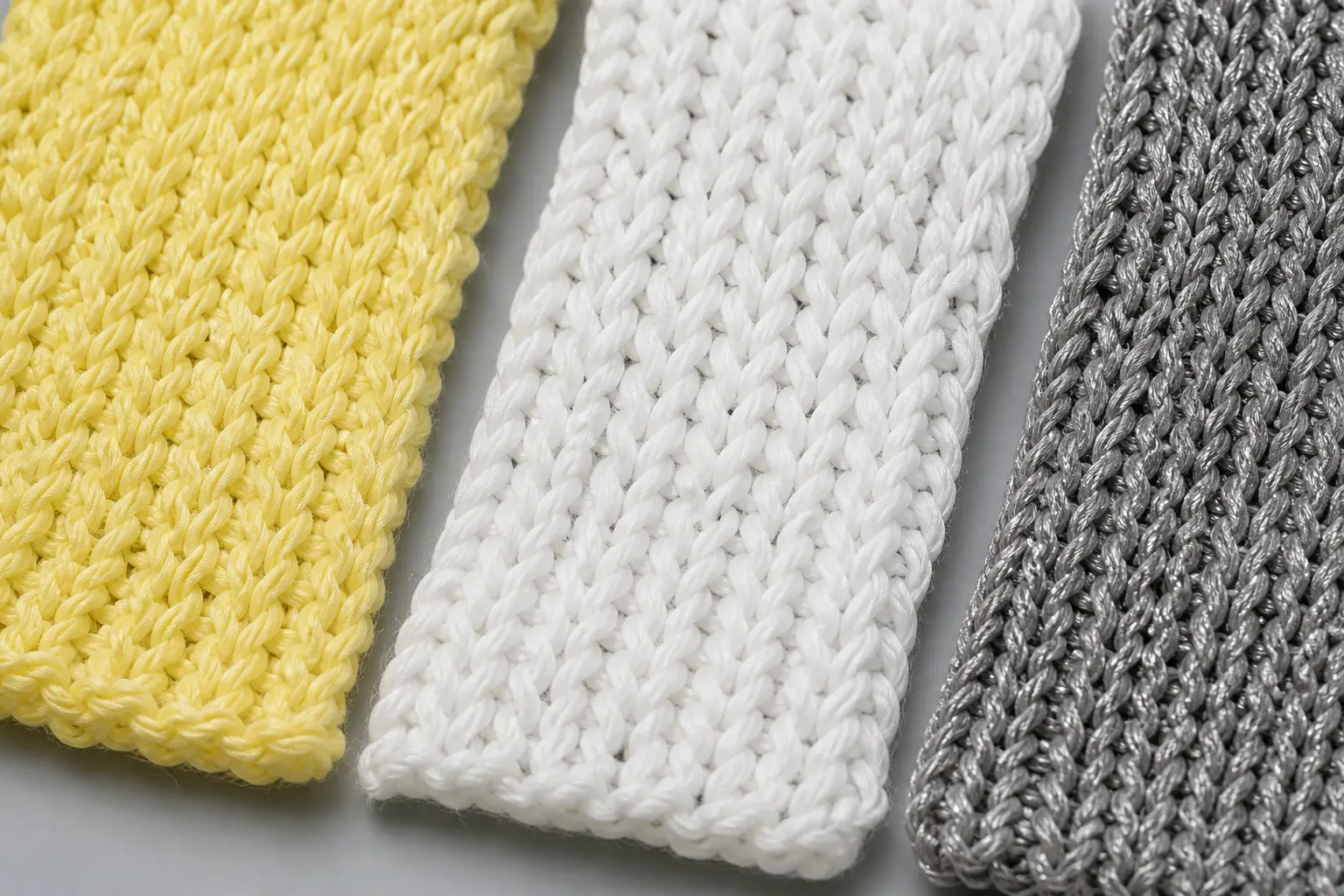
B2B guide to cut resistant glove webbing: EN 388 vs ANSI/ISEA 105 standards, 4-fiber comparison (aramid, HPPE, steel, glass), composite yarn engineering, thermal limits (aramid 400°C vs HPPE 150°C melt), moisture absorption, 11-application matrix, 5-year TCO analysis, and 8 sourcing red flags for PPE manufacturers.
Read More →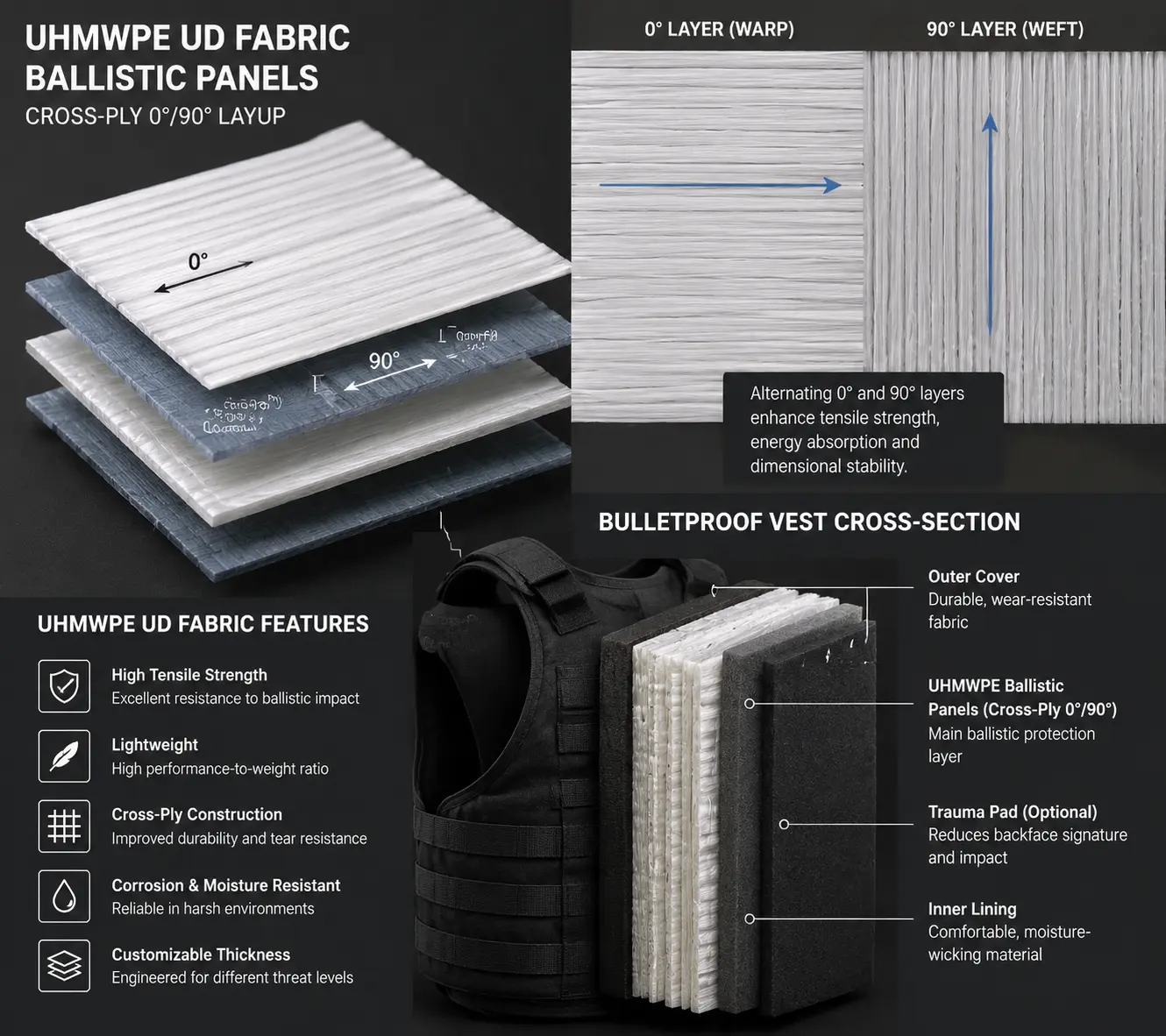
Complete B2B guide: NIJ 0101.06/0101.07 levels (IIA→IV, HG1→RF3), 5-step UD fabric manufacturing process, Dyneema SB/HB ballistic grade selection (SB301, HB210, HB311, HB480), UHMWPE vs Kevlar (30% lighter, 0% moisture), SK75/SK78/SK99 fiber selection, 8 application matrix, and 8 red flags when sourcing ballistic-grade UHMWPE.
Read More →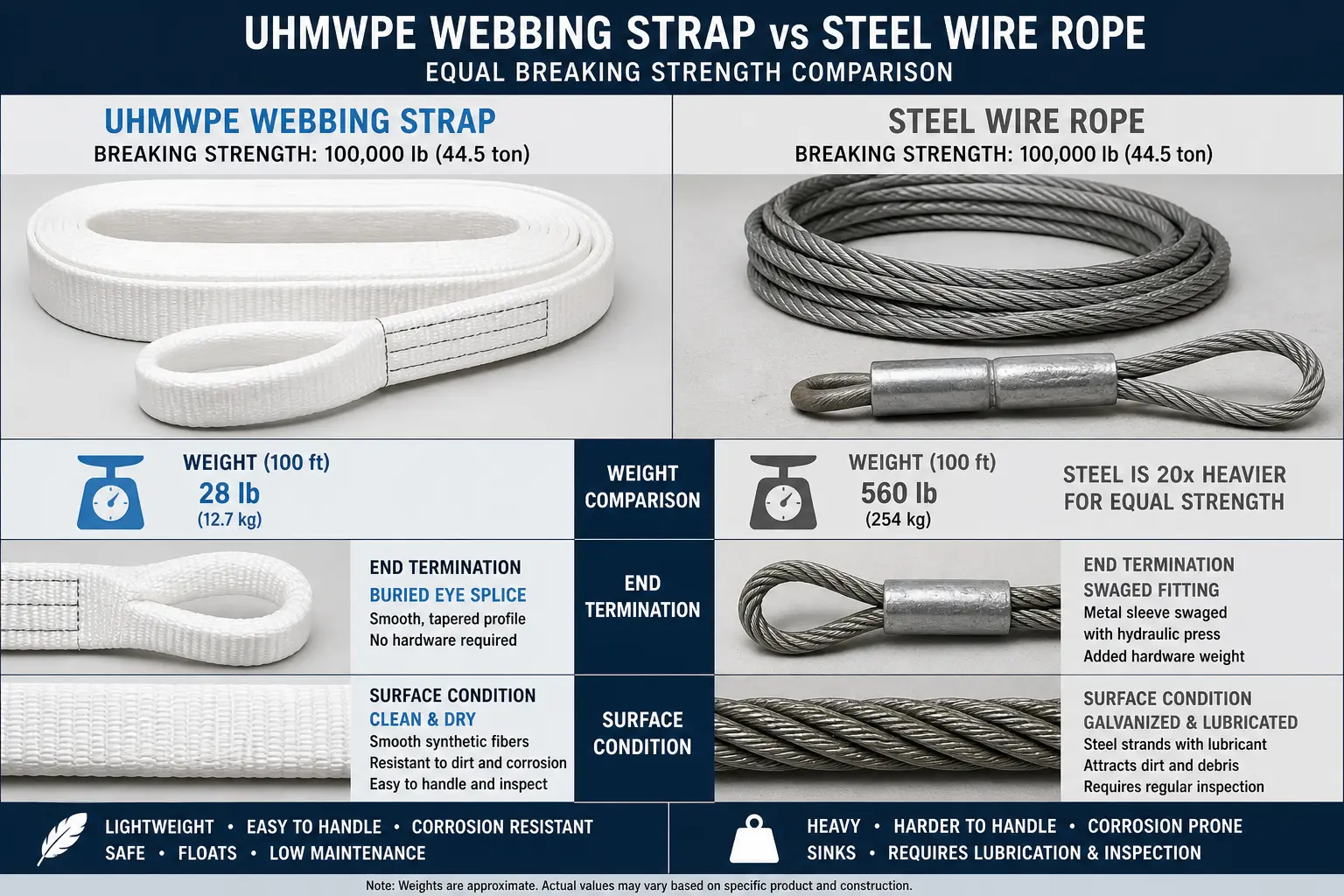
16-parameter comparison: 87% weight reduction at equal breaking strength, 15× strength-to-weight ratio, snap-back safety (drops limp vs violent whip), heat tolerance (147°C vs 1,000°C), end terminations (splice vs swage), 11 application selections, 5-year TCO ($17.1k vs $42k), and 8 B2B sourcing red flags.
Read More →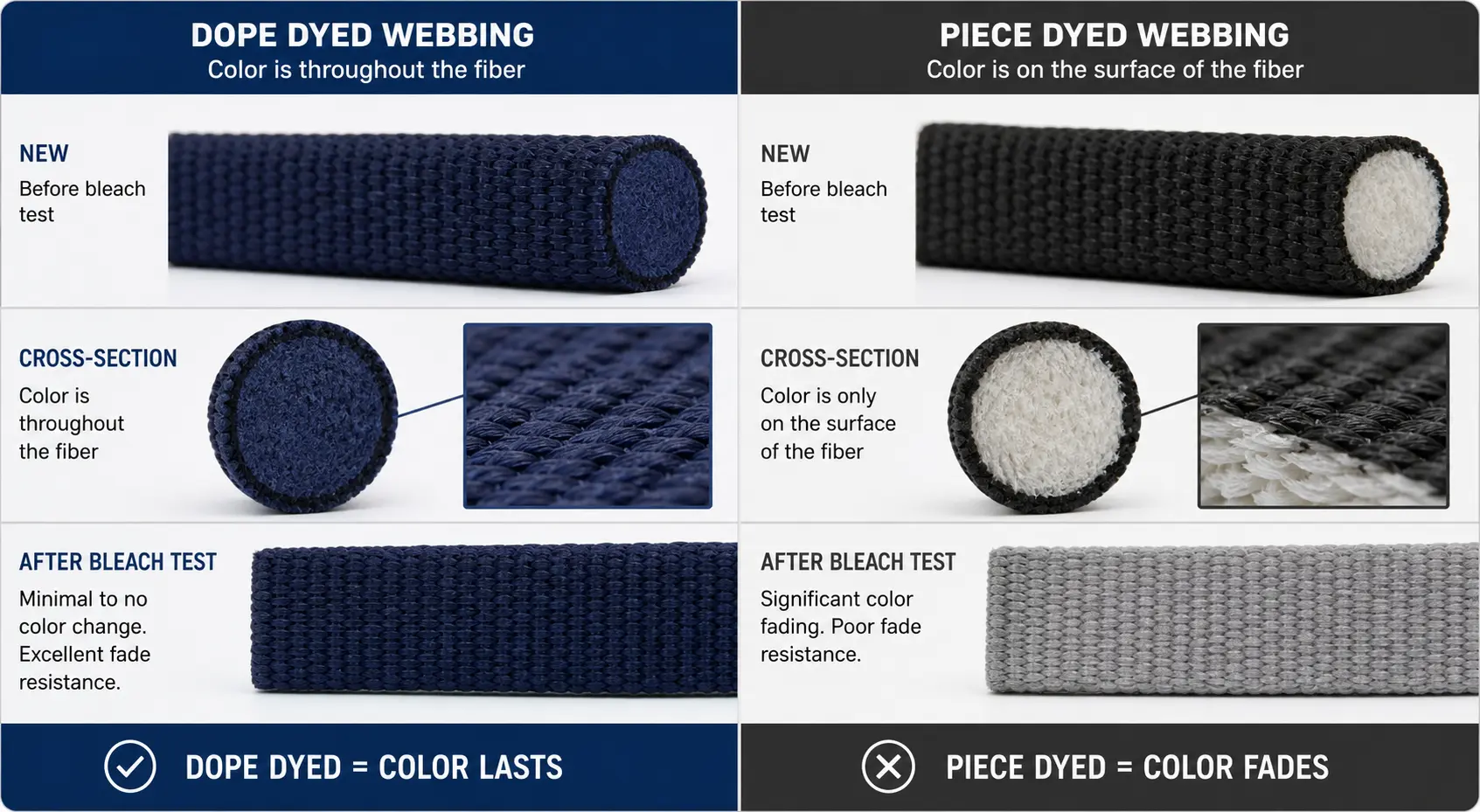
Solution dyed vs piece dyed webbing comparison: light fastness Grade 7-8 vs 4-5, 95% water savings, MOQ 3,000 kg vs 500 kg, NIR consistency for military use, $1.38-1.86/kg yarn pricing, 3.5× 6-year TCO advantage, and 8 B2B sourcing red flags.
Read More →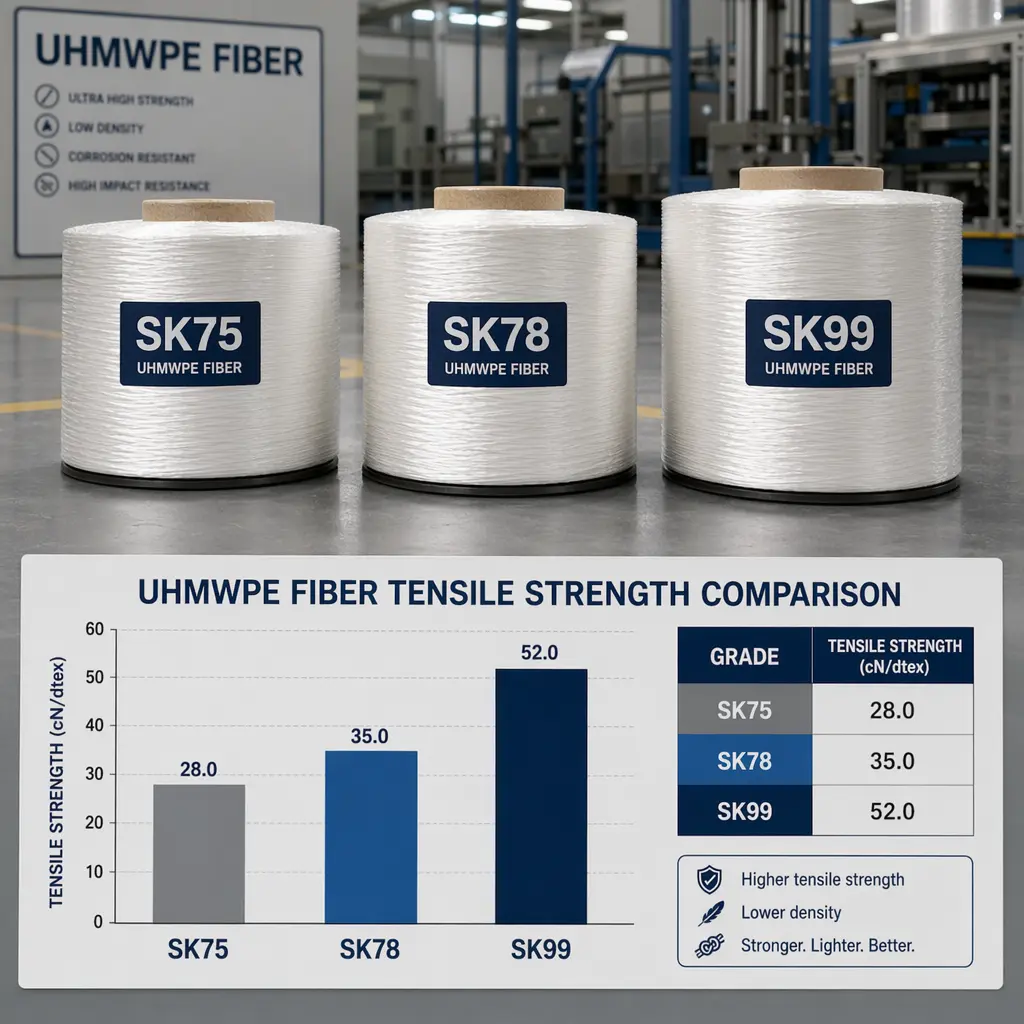
UHMWPE fiber grade comparison: tenacity (35.1 vs 42.5 cN/dtex), creep rate (0.02% vs 0.006%/day), modulus (113 vs 155 GPa), and price. Covers Dyneema vs generic HMPE (4× abrasion gap), MEG4/DNV-GL compliance, 11-application matrix, 15-year TCO, and 8 B2B sourcing red flags.
Read More →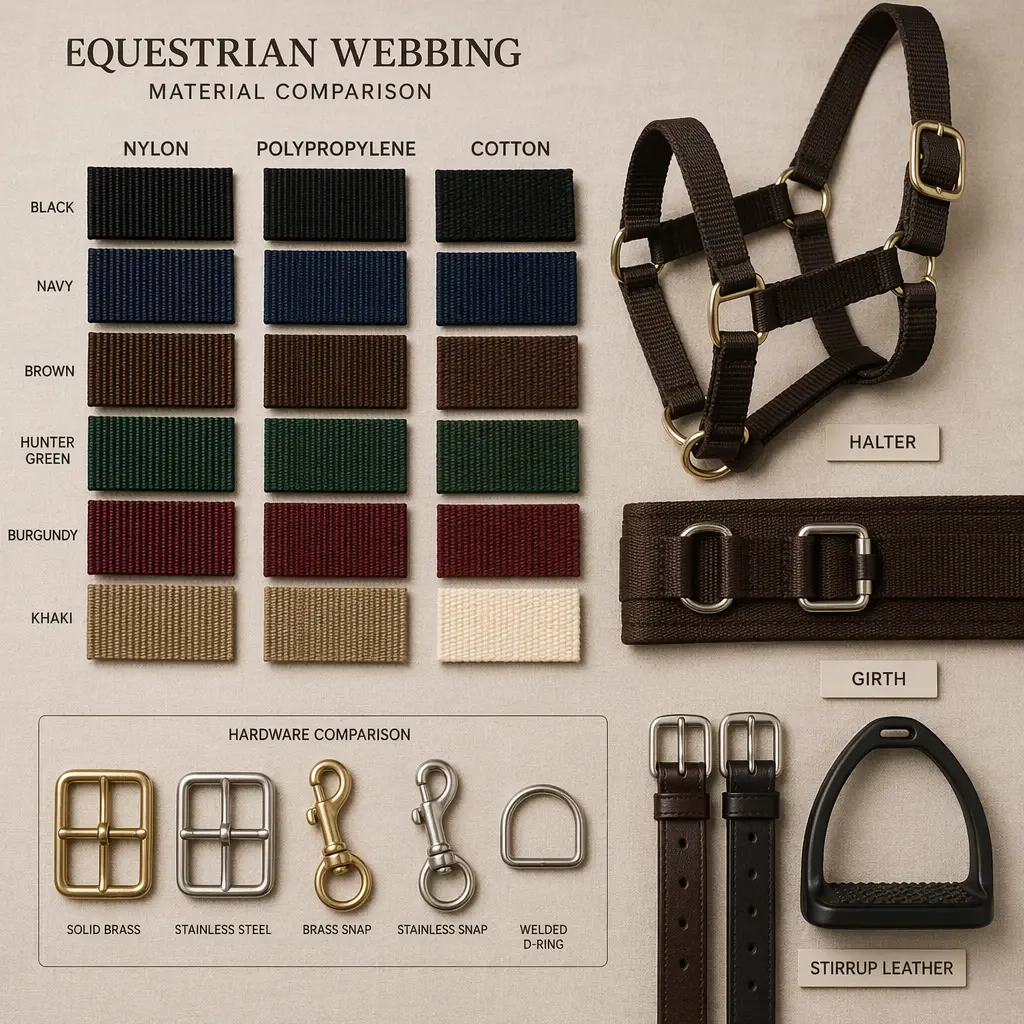
Equestrian webbing compared by sweat absorption (nylon 8%, cotton 25%, PP <0.5%), breaking strength by width, stretch, mildew, and wet grip. Covers halters, girths, saddle billets, stirrup leathers, reins, BioThane alternatives, and 6 red flags for B2B sourcing.
Read More →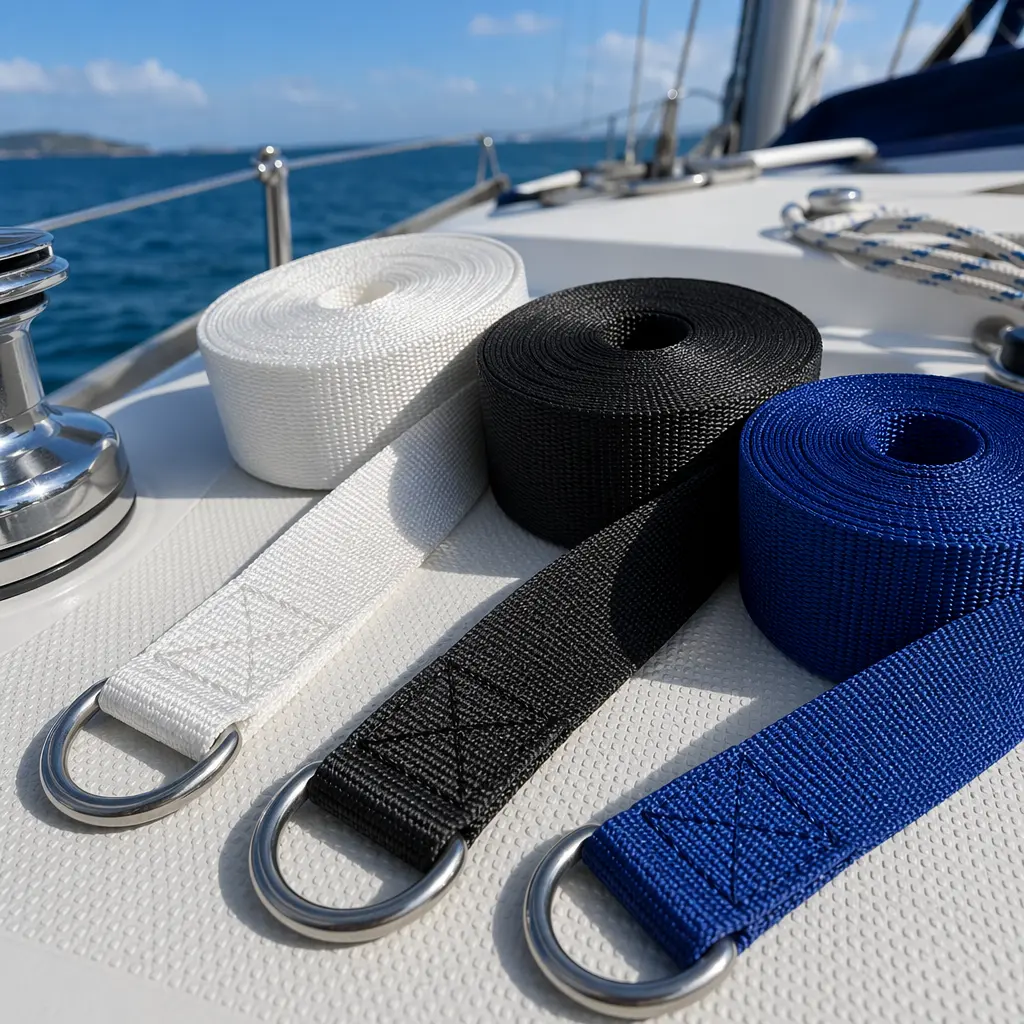
Saltwater-grade webbing guide: polyester vs nylon vs UHMWPE compared by water absorption (<1% vs 8%), strength retention after saltwater immersion, ISO 12401 jackstay compliance, sail ties, mooring straps, PFD webbing, and 6 red flags when sourcing marine webbing.
Read More →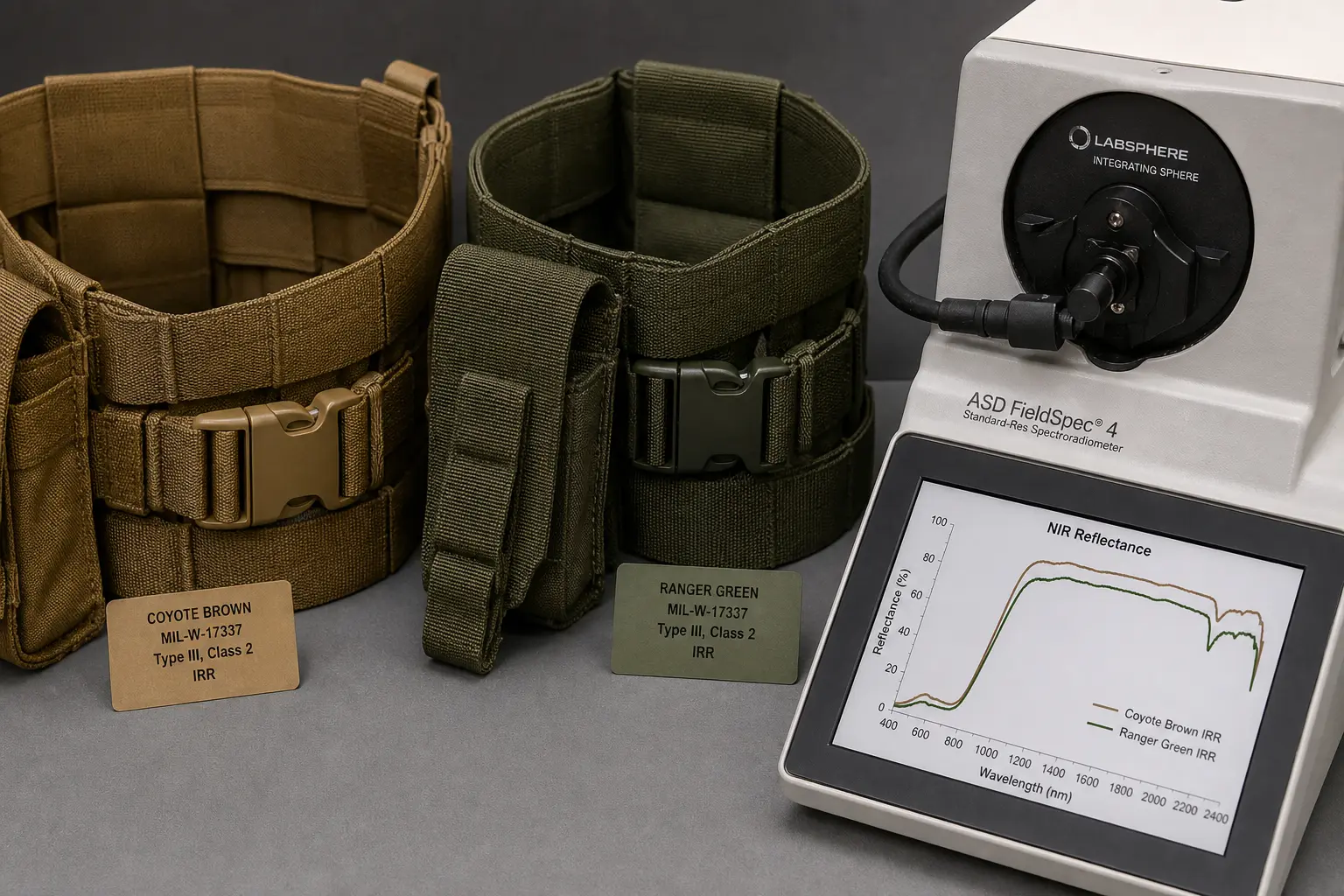
IRR webbing matches the NIR reflectance of natural vegetation (700–900 nm) so it stays invisible to night vision. Learn how IRR dyes work, key standards (MIL-W-17337, STANAG 2338), reflectance specs by color, and 6 red flags in supplier test reports.
Read More →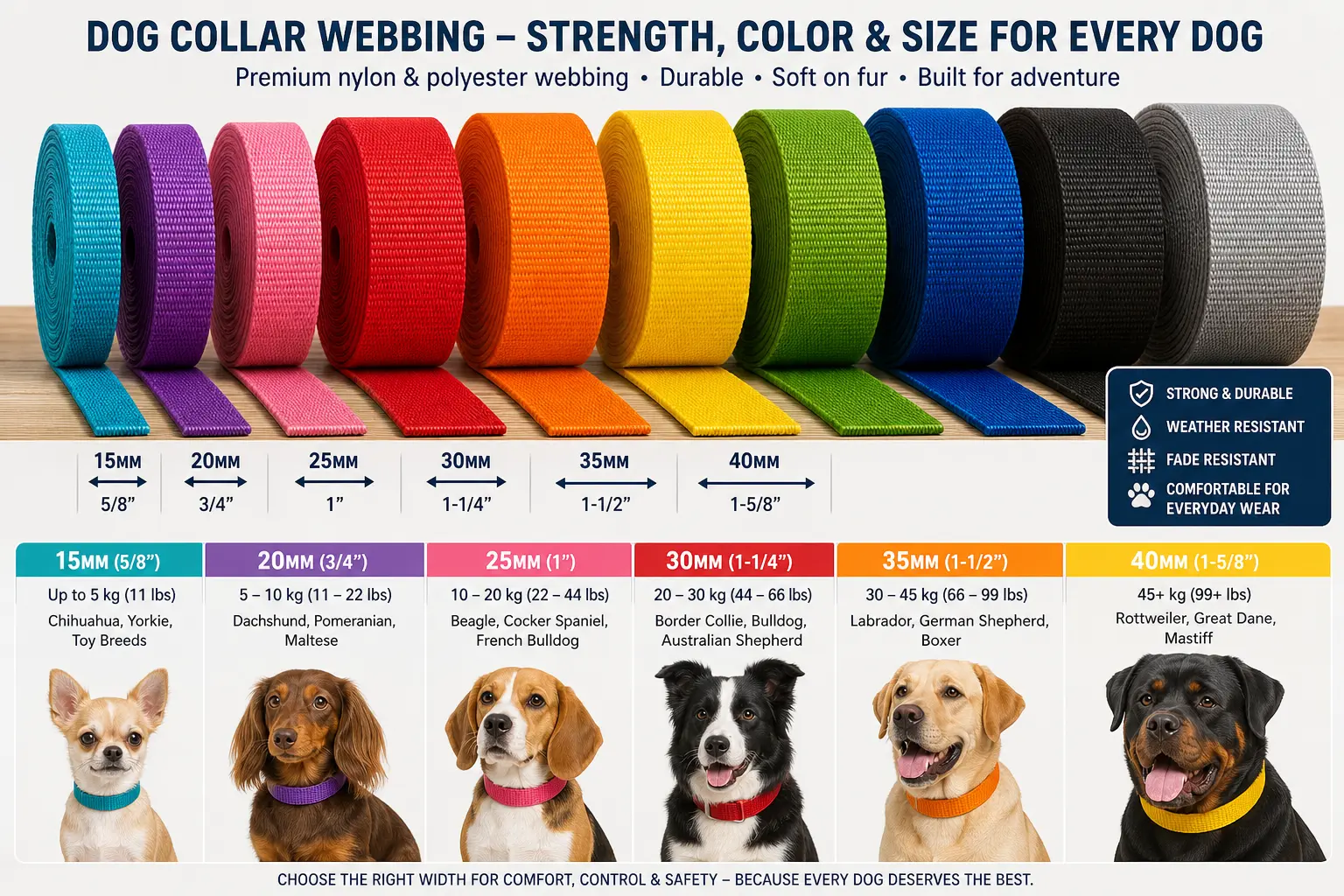
B2B guide: nylon vs polyester vs PP compared by tensile strength, UV resistance, sublimation printing. Breed-specific width chart (15–45+ mm), the 7× body weight safety rule, ASTM D5034 testing, hardware specs, and MOQ guidance.
Read More →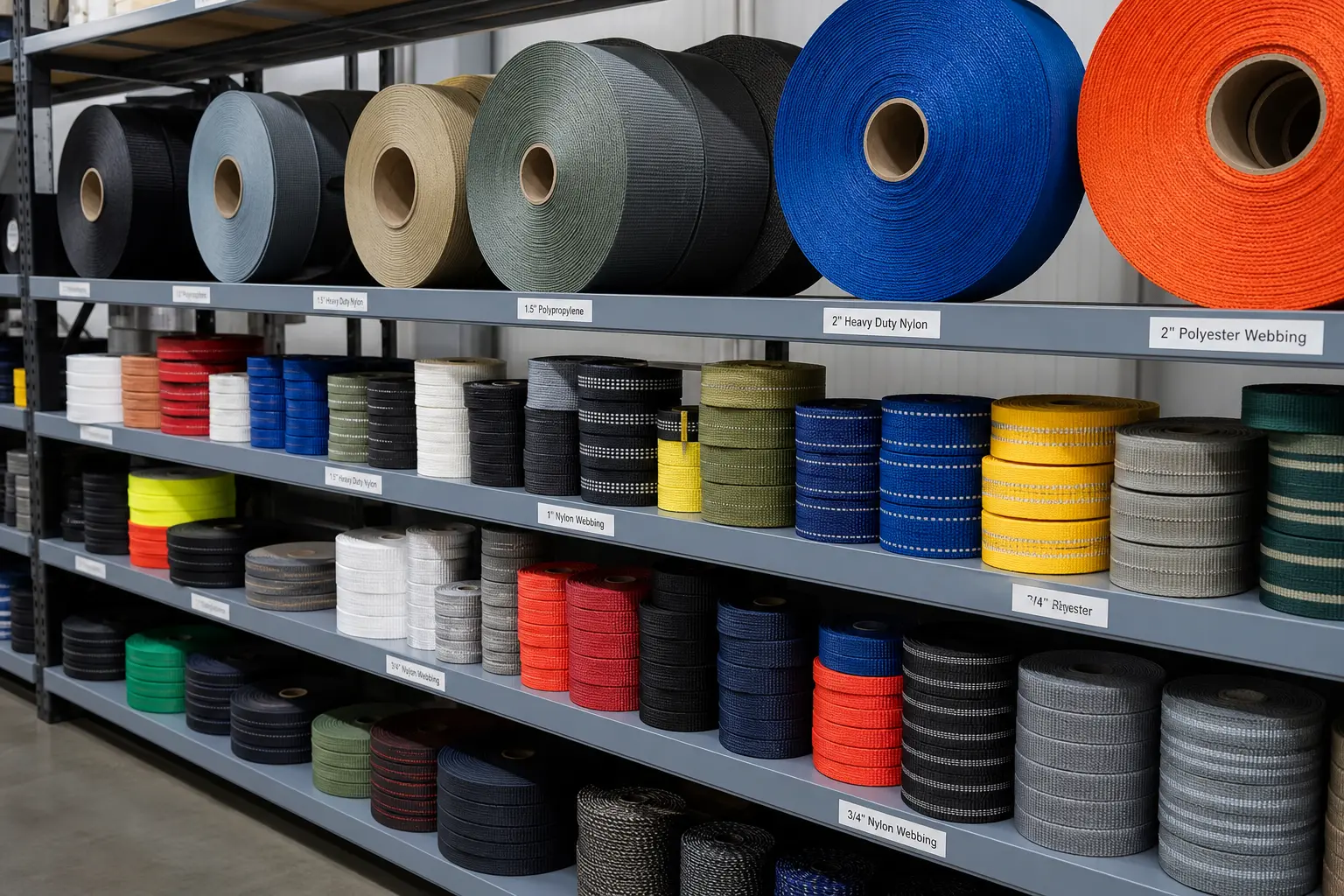
Custom webbing MOQ ranges from 500 m for stock items to 5,000+ m for UHMWPE or jacquard. Learn why MOQ exists, typical minimums by material, how dye lots drive costs, and 5 strategies to order below MOQ with surcharges.
Read More →
Step-by-step guide to decoding webbing test reports: ASTM D6775 tensile data, breaking strength vs. WLL safety factors, elongation curves, ASTM G154 UV aging results, NIR compliance, and 7 red flags that should concern you.
Read More →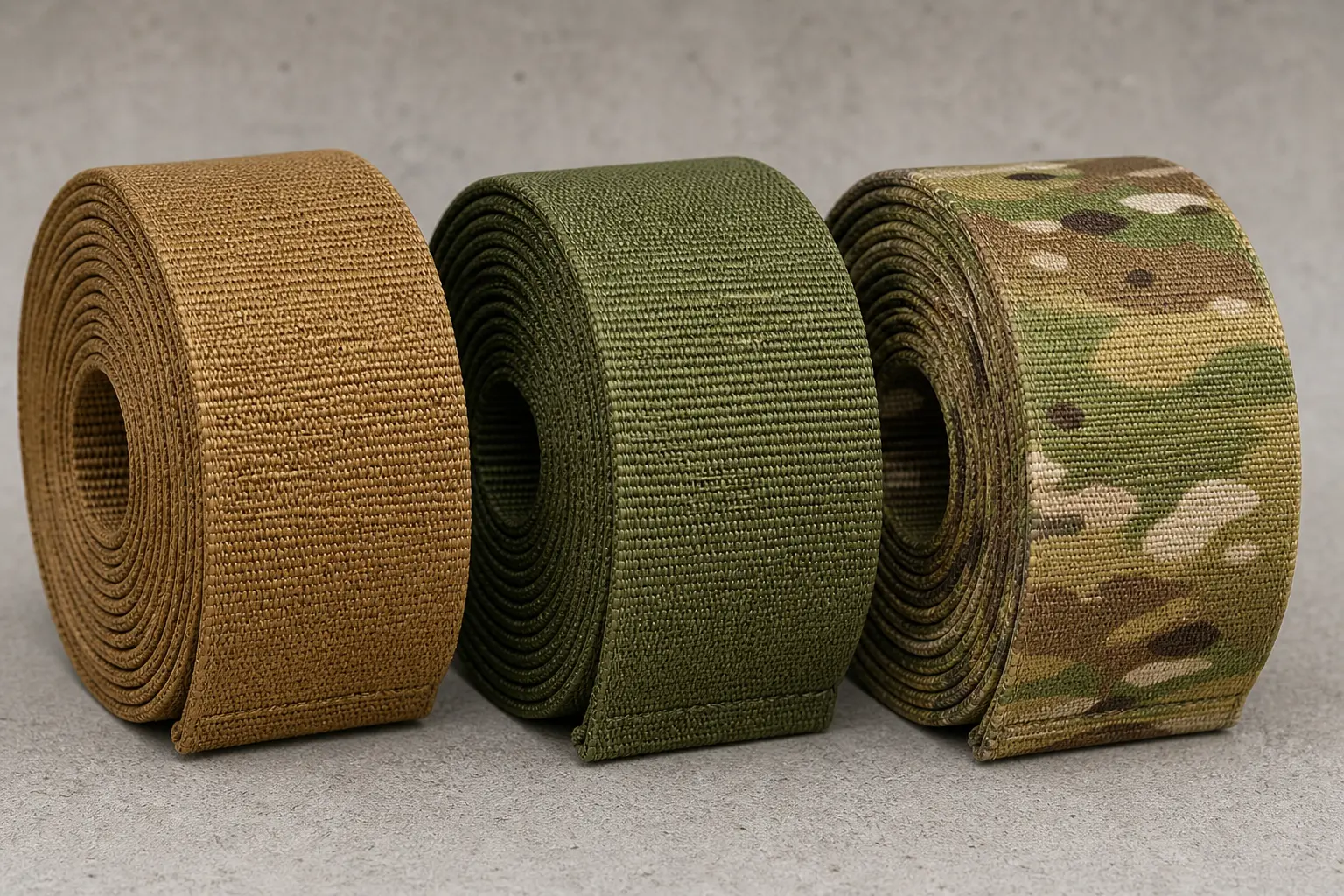
FS-595C color codes, NIR/IRR spectral reflectance data, and colorfastness comparison for Coyote Brown #498, Ranger Green, Foliage Green #504, and MultiCam — the complete military webbing color compliance guide.
Read More →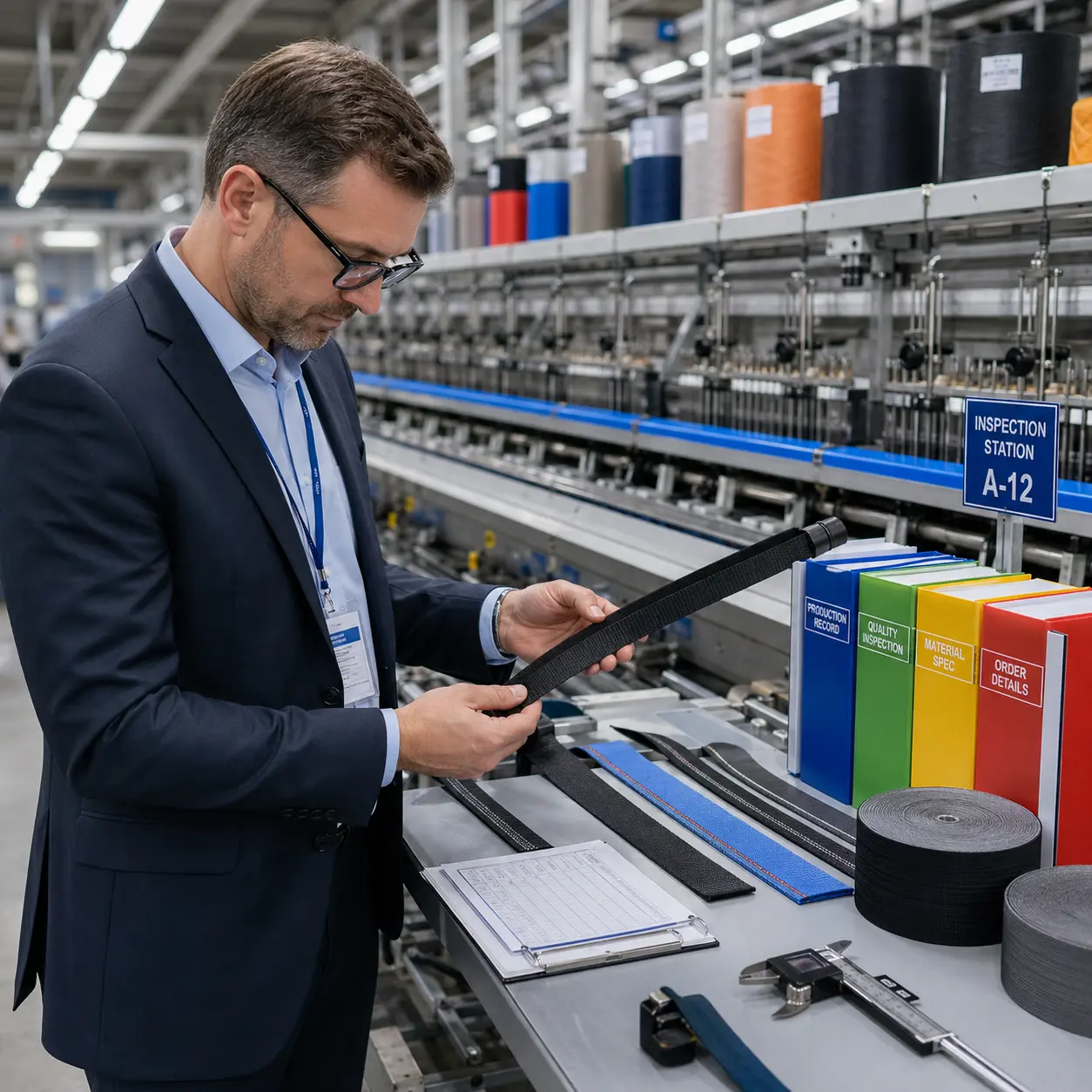
7-zone factory inspection checklist for webbing buyers: raw materials, production floor, testing lab, QC documentation, certifications, and social compliance — with pass/fail criteria.
Read More →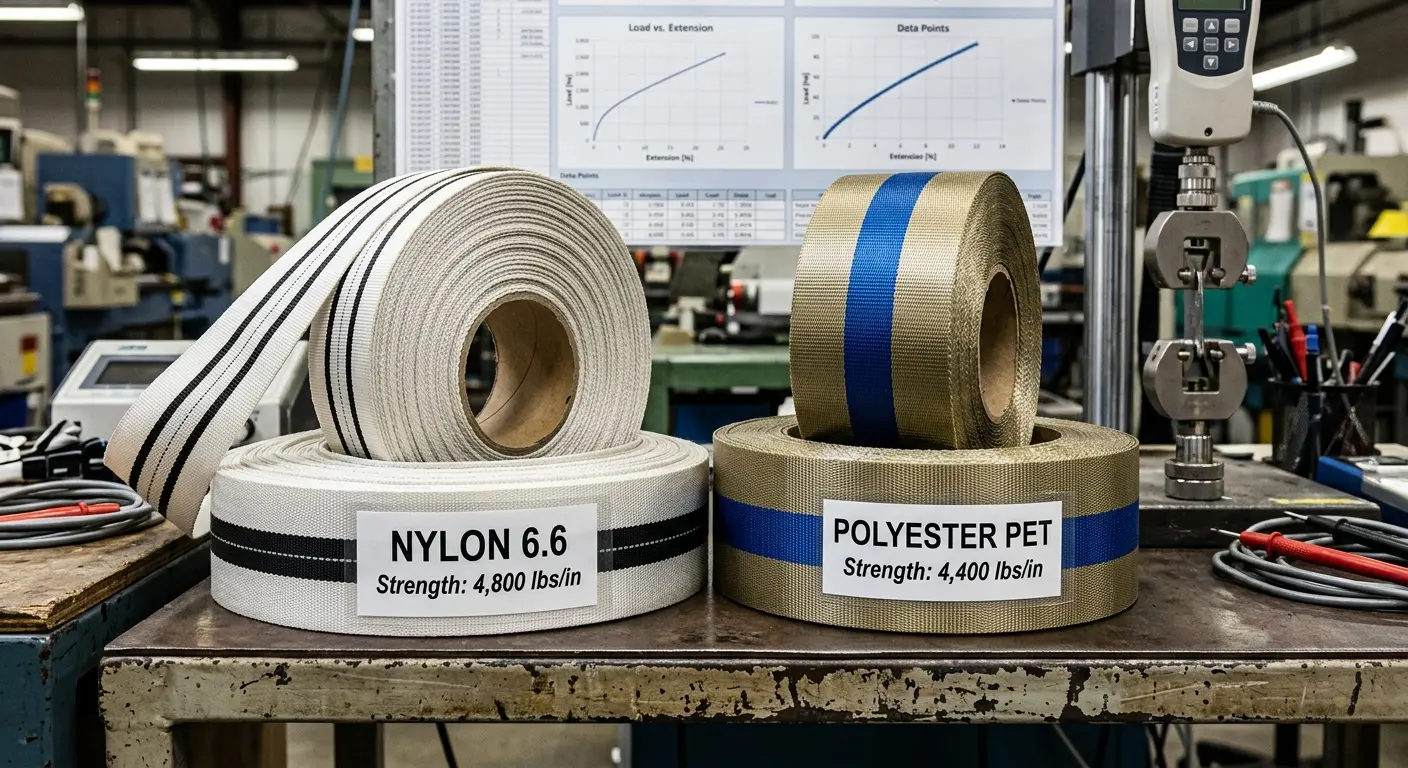
Breaking load tables by width, elongation charts, UV resistance data, and a decision framework — everything a procurement engineer needs to specify the right material.
Read More →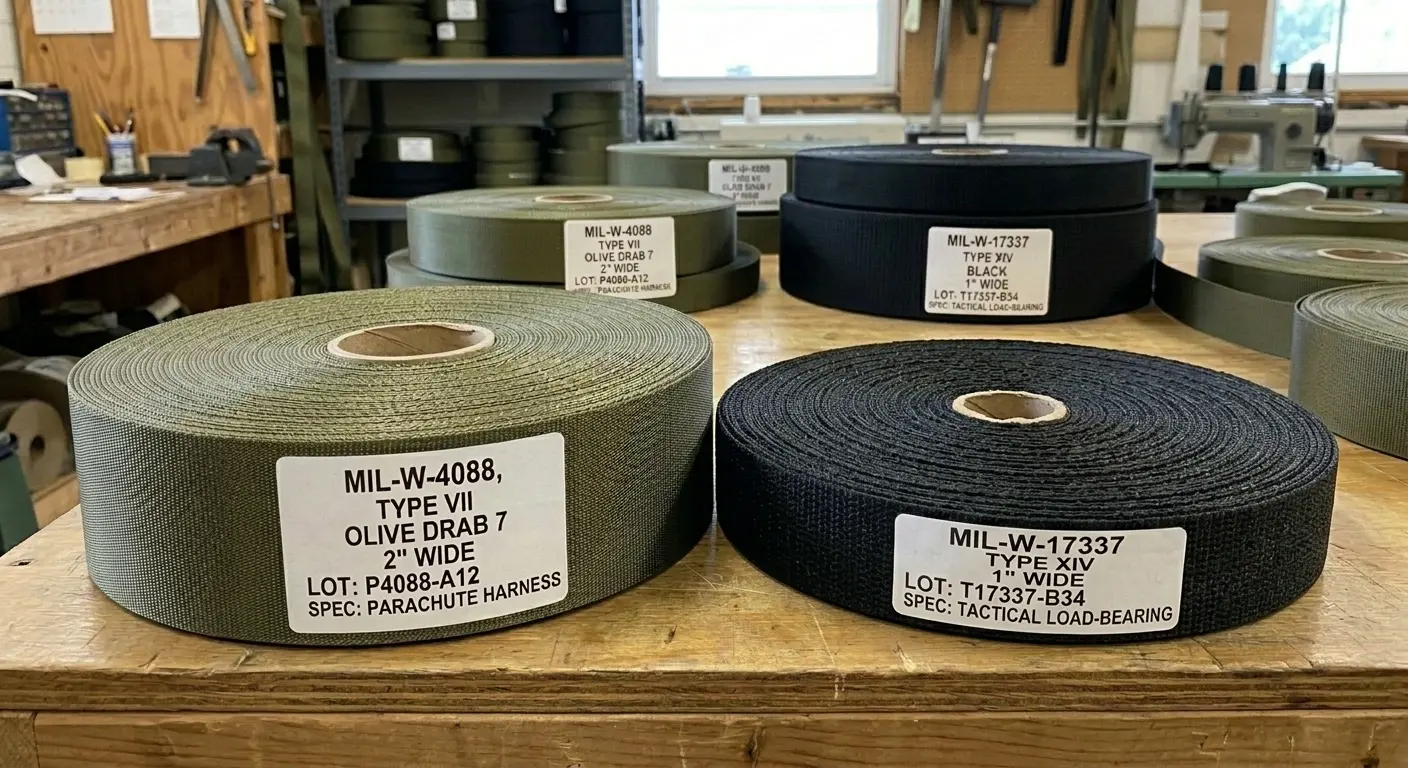
MIL-W-4088 vs MIL-W-17337: full spec comparison for military webbing. Tensile strength by width, elongation, Berry compliance, and when to use each standard. Includes A-A-55301 update....
Read More →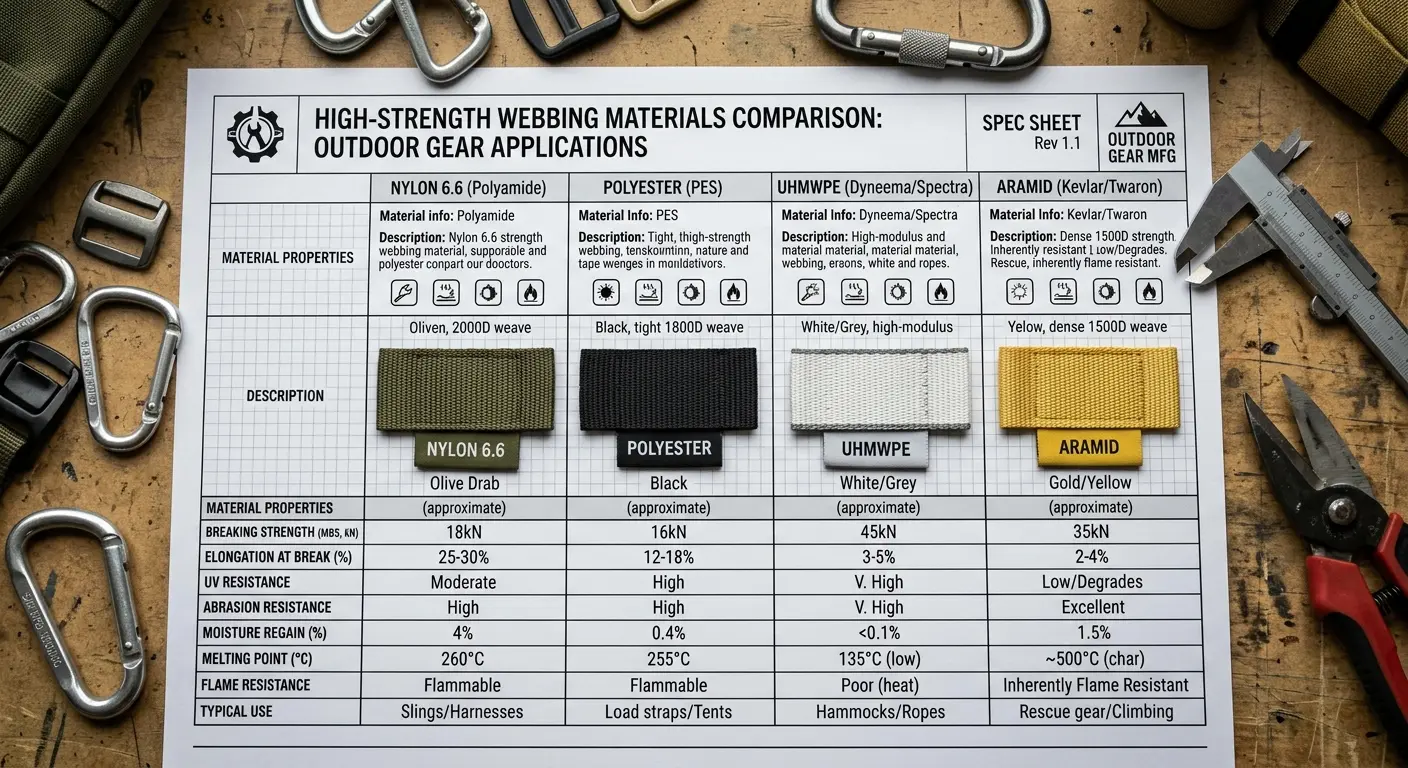
From load calculation to UV resistance — a complete material selection guide comparing Nylon 6.6, Polyester, UHMWPE, and Aramid webbing for backpacks, tents, climbing gear, and marine equipment.
Read More →
Manufacturer's guide to UHMWPE webbing in parachute systems. Compare strength-to-weight ratios, UV resistance, and sourcing requirements for military and civilian parachute harnesses.
Read More →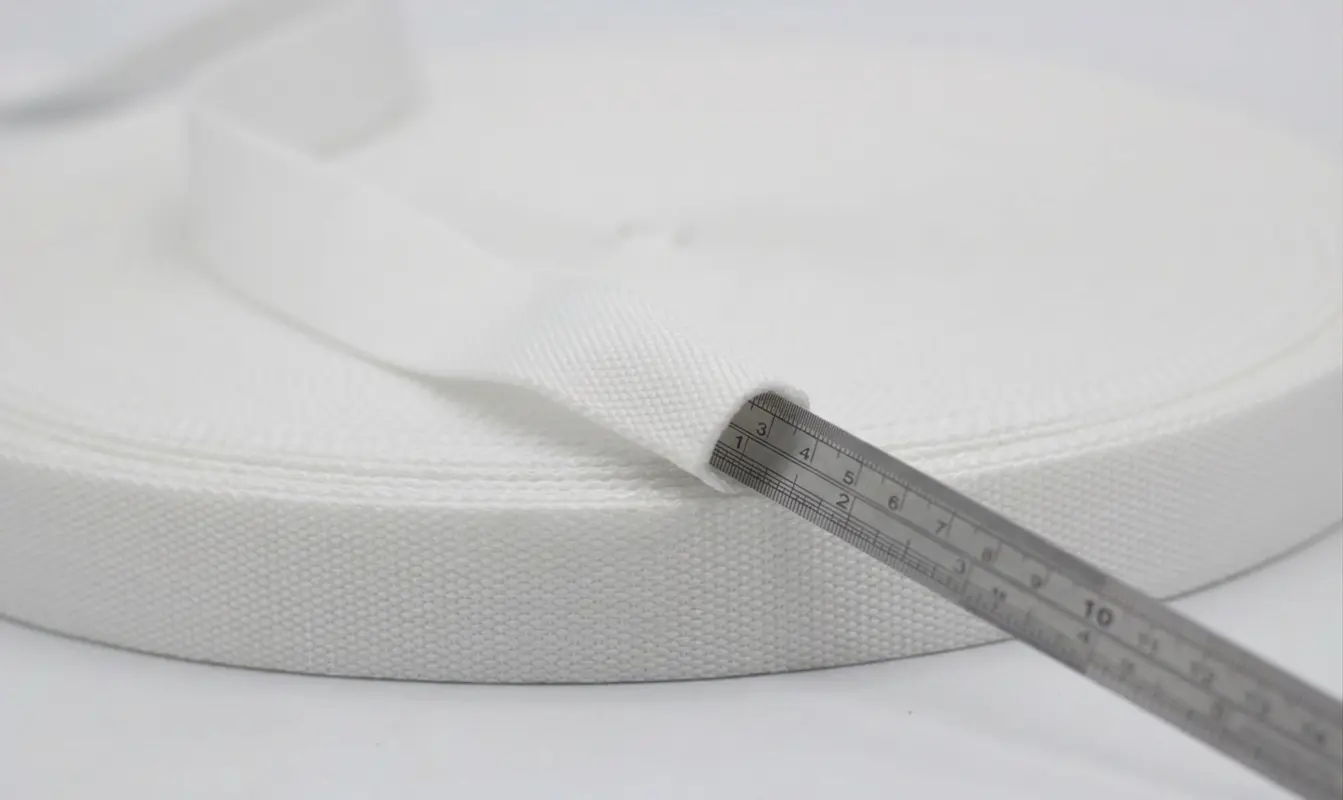
Knots slipping on your Dyneema straps? Learn why Tubular (Hollow) webbing is the superior choice for splicing, knot security, and edge resistance in climbing and hammock gear.
Read More →
Comprehensive guide to sourcing UHMWPE webbing from China. Learn how to find verified suppliers, evaluate manufacturing capabilities, and negotiate best prices for high-performance webbing.
Read More →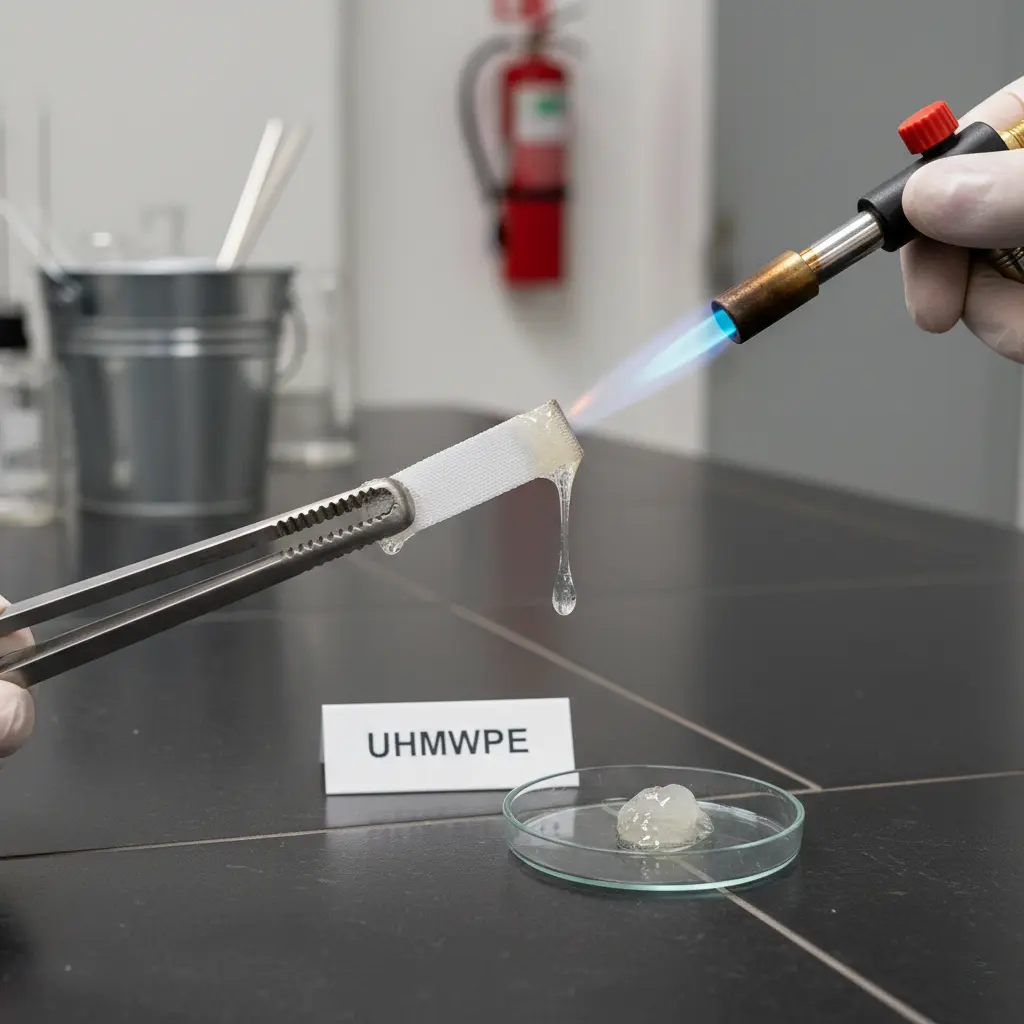
Don't get scammed by fake Dyneema. Learn 4 simple tests—Touch, Float, Burn, and Cut—to verify if your webbing is genuine high-tenacity UHMWPE or just cheap plastic.
See the Tests →
Why are sailors ditching steel for Dyneema? Learn how hydrophobic, salt-resistant UHMWPE webbing is revolutionizing Jacklines, soft shackles, and marine safety gear.
Read More →
Kevlar® stops working above 450°C but Dyneema® melts at 150°C. For firefighter gear, marine rigging, or body armor — this comparison covers heat resistance, buoyancy, cut resistance, and price to help you choose.
See Full Comparison →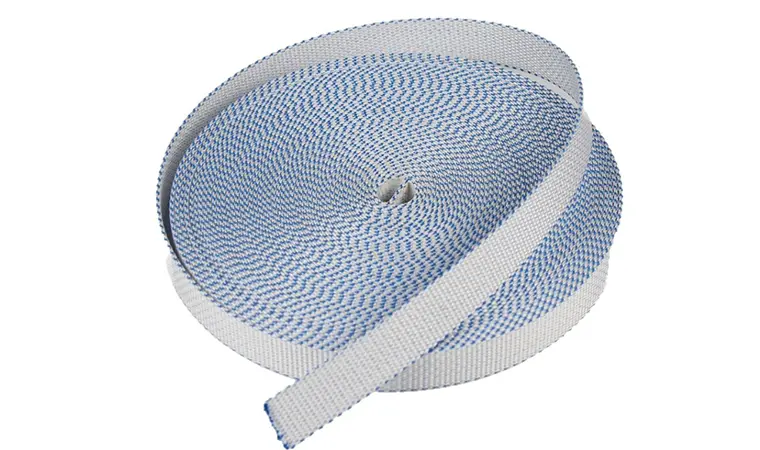
Stitching slipping? Scissors getting dull? Ink rubbing off? UHMWPE (Dyneema®) is notoriously hard to process. Our manufacturer's guide reveals the specialized needles, threads, and cutting techniques needed to conquer this super-fiber.
Read More →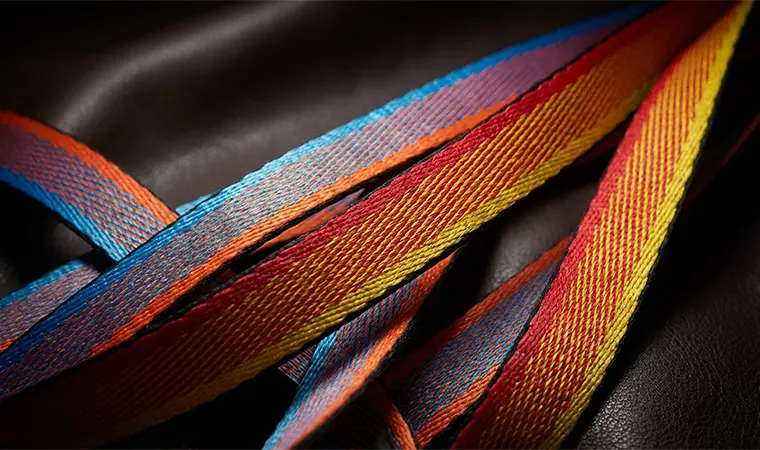
Sourcing for a slackline brand? Learn the difference between Nylon (Trickline), Polyester (Longline), and UHMWPE (Highline). We cover soft-edge technology, custom grip printing, and safety specs.
Read More →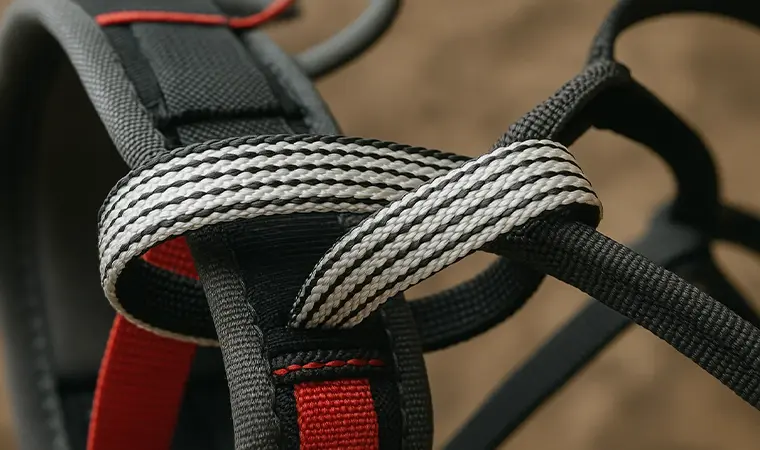
Source UHMWPE and Dyneema webbing from a China factory. Covers tensile ratings, UV resistance, available widths and MOQ for ropes, slings and tactical gear.
Read More →
Sourcing AMCU for ADF contracts? We now have Mil-Spec AMCU Jacquard webbing in stock. Learn about IRR compliance, weave specs, and why this pattern differs from standard MultiCam.
Check Stock & Specs →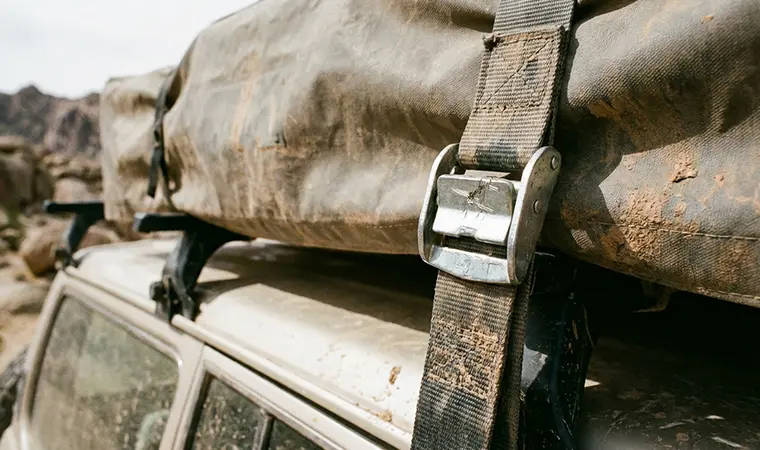
Sourcing webbing for rooftop tents? Learn why high-tenacity polyester is superior to nylon for RTT travel covers. A guide for manufacturers on UV resistance, waterproofing, and hardware integration.
Read More →
Why do standard straps glow under night vision? This technical guide covers MIL-W-17337 compliance, NIR spectral reflectance curves, and why Jacquard outperforms printed webbing in combat.
Read More →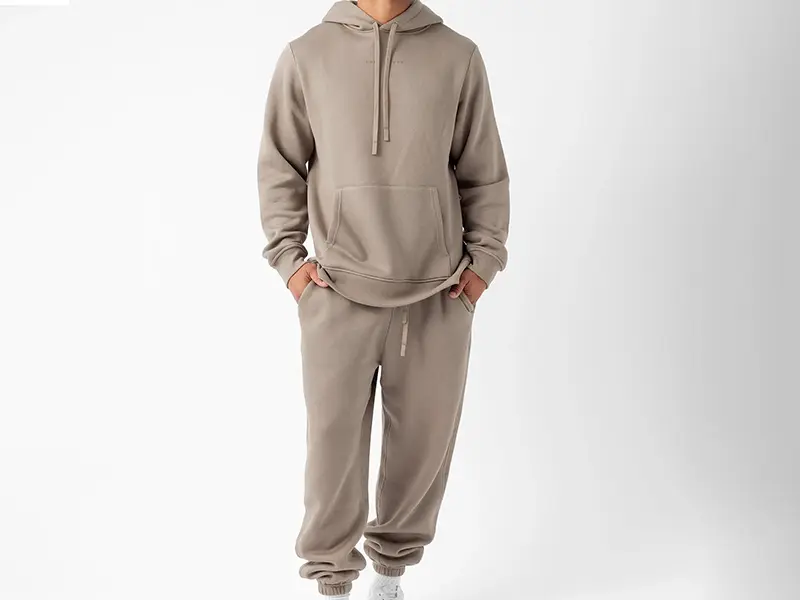
An expert guide for apparel brands on choosing the right webbing. Learn about hoodie drawstrings, elastic waistbands, binding tape, and custom jacquard trims from a manufacturer.
Read More →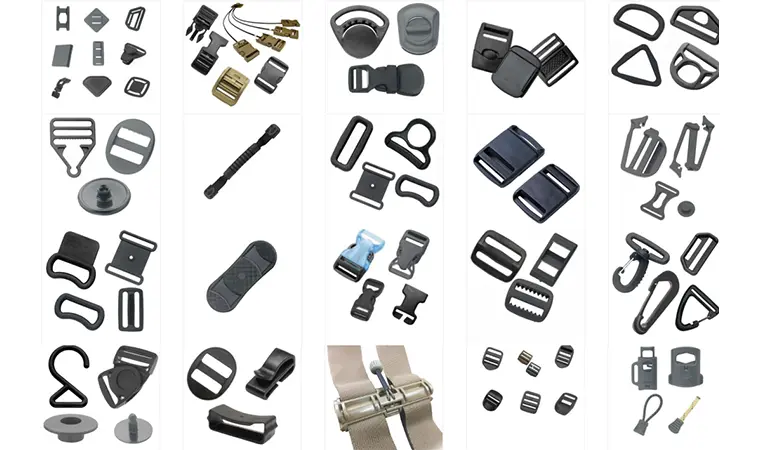
A B2B buyer's guide to sourcing webbing hardware. Learn how to select the best plastic (POM) and metal (alloy, steel) buckles, like quick-release and cobra buckles, for tactical belts, backpacks, and pet collars to ensure performance and durability.
Read More →
A manufacturer's guide to sourcing mission-critical military parachute components. Learn about Mil-Spec parachute webbing like MIL-W-4088K and heavy-duty hardware for maximum safety and reliability.
Read More →
Sourcing authentic A-TACS FG webbing? This guide covers the critical role of Mil-Spec nylon, IRR compliance, and jacquard weaving for creating elite tactical gear.
Read More →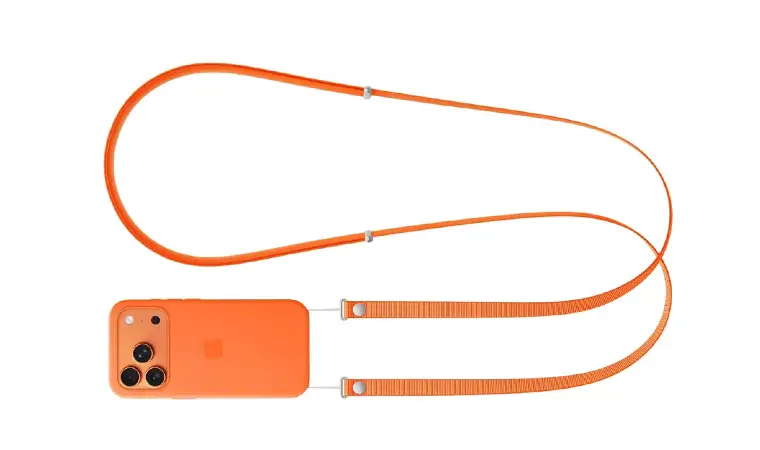
With the iPhone 17 launch approaching, phone lanyards are a hot accessory. This B2B guide details how to choose the right lanyard materials (nylon, polyester), styles, and custom options to meet market demand.
Read More →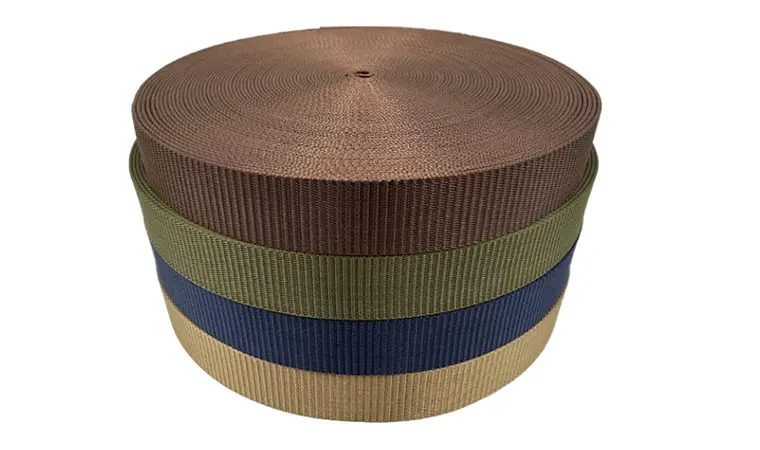
Sourcing webbing for tactical or work belts? Our guide explores the benefits of extra thick 2.3mm-2.7mm 'Tank Weave' nylon webbing for creating rigid, load-bearing belts.
Read More →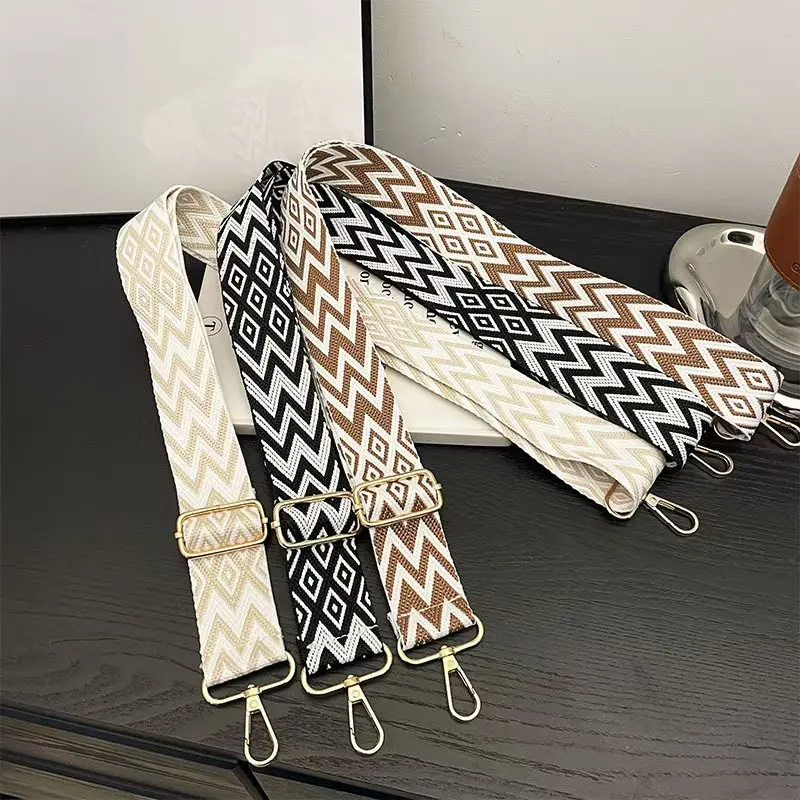
Sourcing webbing for bag straps? Our expert guide covers the best materials (nylon, polyester, cotton) for backpacks, luggage, and handbags. Learn about strength, comfort, and custom options.
Read More →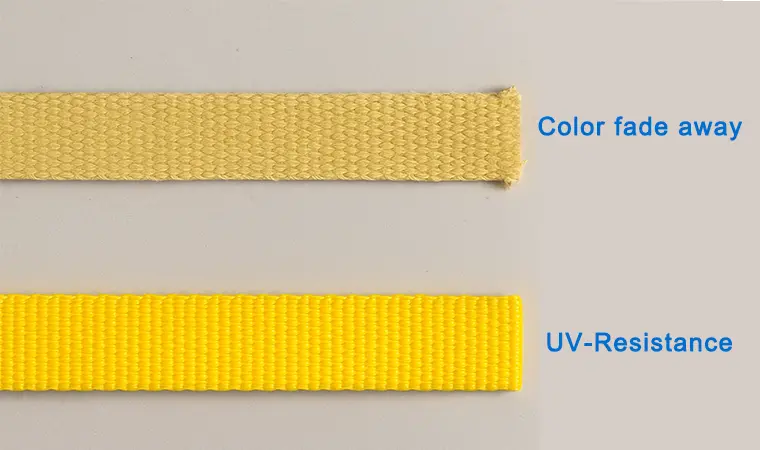
Nylon loses 50–60% strength after 36 months in full UV. Polyester keeps 70–80% after 500 hours in a UV chamber. Compare real test data for Nylon, Polyester, PP, and Aramid webbing lifespan in outdoor conditions.
See UV Test Data →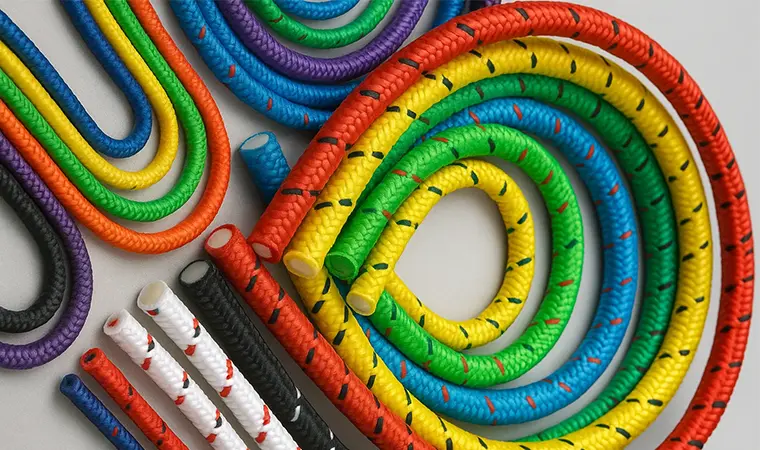
Discover the ultimate guide to elastic cords. Learn about materials (nylon, polyester), types (braided vs. woven), and key industrial applications.
Read More →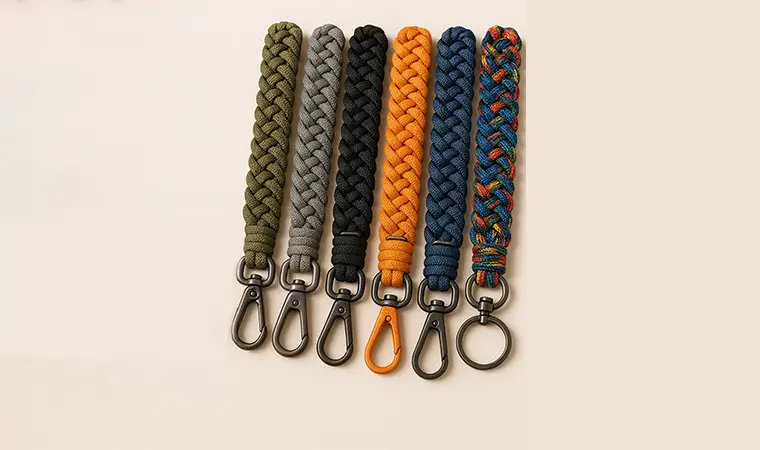
A deep dive into braided paracord straps. Discover the best materials, weaving techniques, and diverse applications in tactical, outdoor, and pet gear from a source factory perspective.
Read More →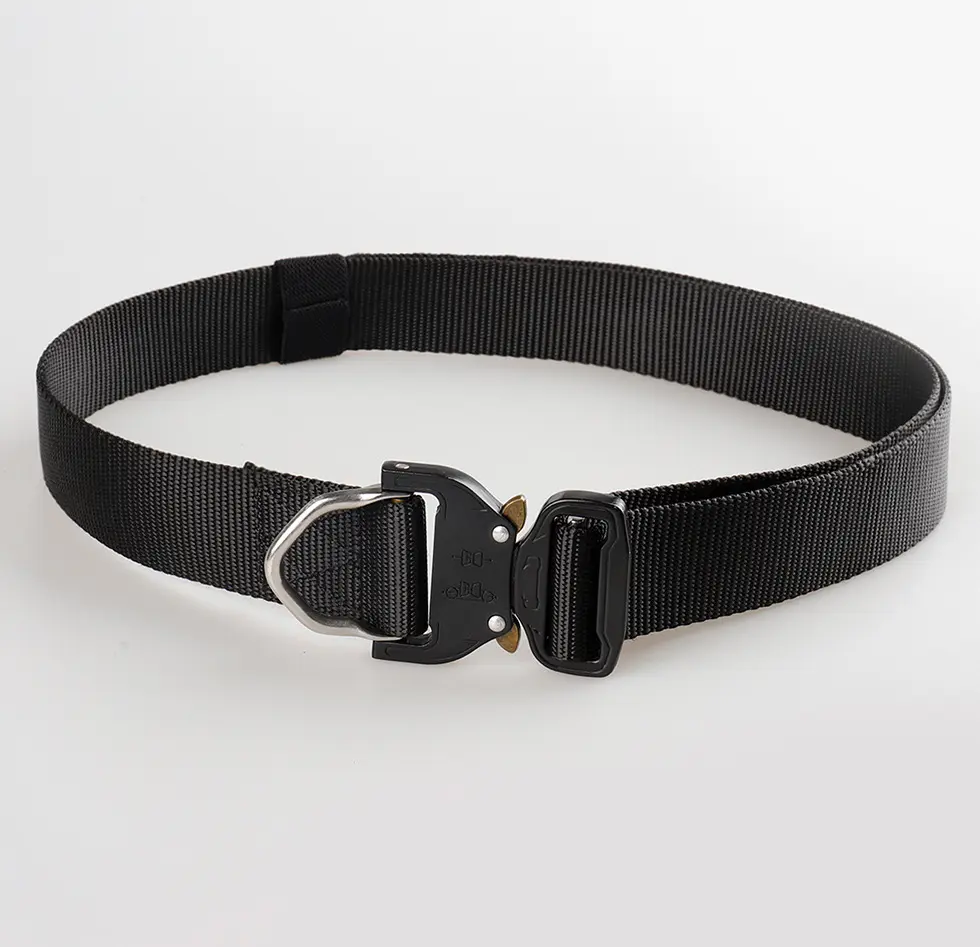
Discover the secrets of a truly durable tactical belt. As a mil-spec webbing manufacturer, we break down the materials, buckles, and construction. Order our factory-direct tactical belts, available now with no MOQ.
Read More →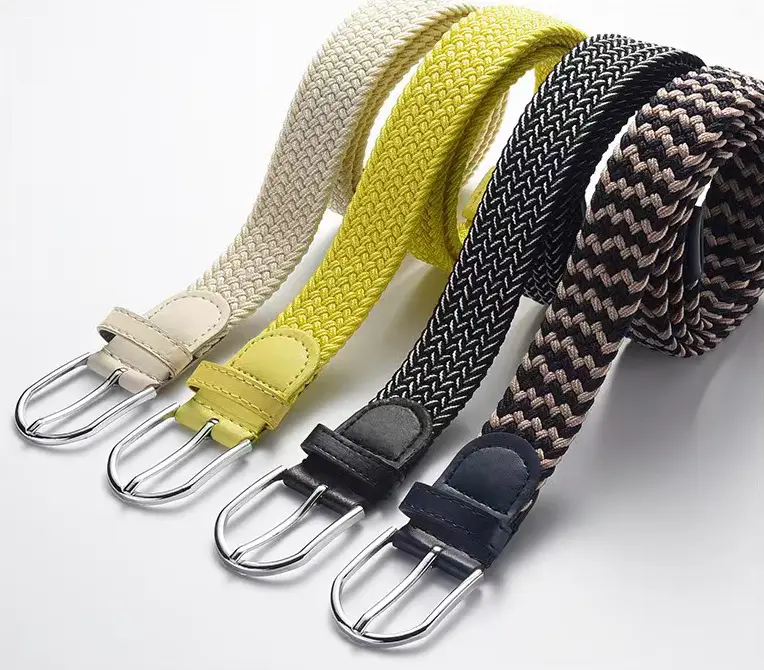
An expert guide for B2B buyers on sourcing custom woven belts. Learn about the best materials (elastic, polyester), buckle types, and wholesale customization options.
Read More →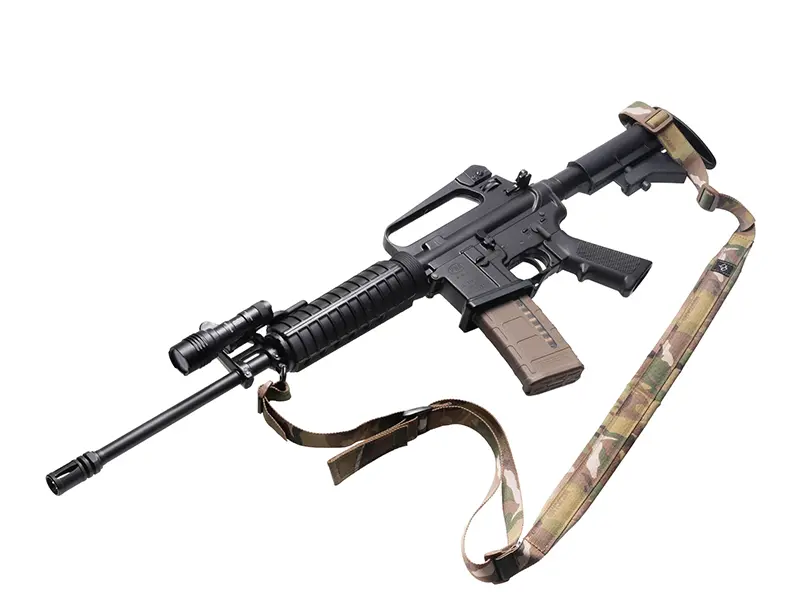
A professional guide for tactical gear brands on choosing the best webbing for gun slings. Compare Nylon vs. Polyester and learn why Mil-Spec webbing is the gold standard.
Read More →
Dyneema® is 10–15× stronger than steel by weight but costs 3–5× more than Kevlar. This guide compares breaking strengths (up to 60 kN), UV limits, and best applications to help you choose.
Read Comparison →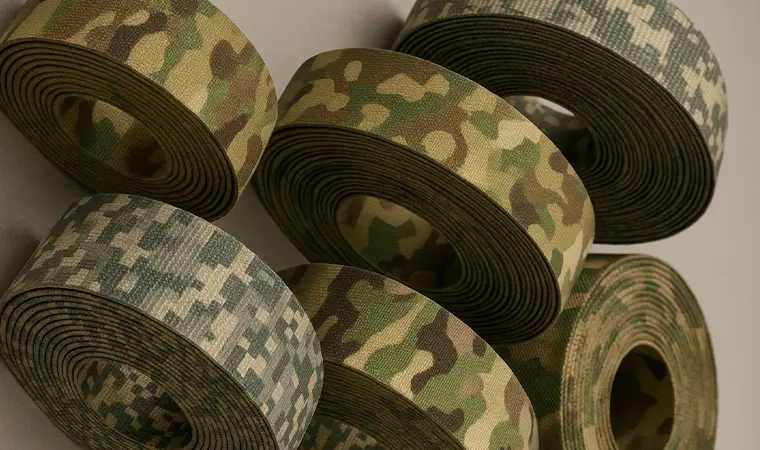
An expert guide for B2B buyers on camouflage webbing. Learn how camo webbing is made, the best materials (nylon vs. polyester), and critical specs like IRR and color fastness.
Read More →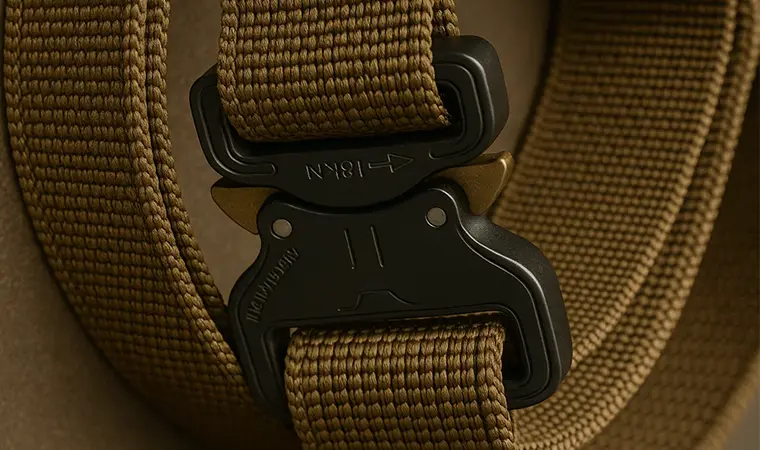
A manufacturer's breakdown of what makes a military belt truly durable. Learn about the critical role of mil-spec nylon webbing, buckle types, and stitching techniques.
Read More →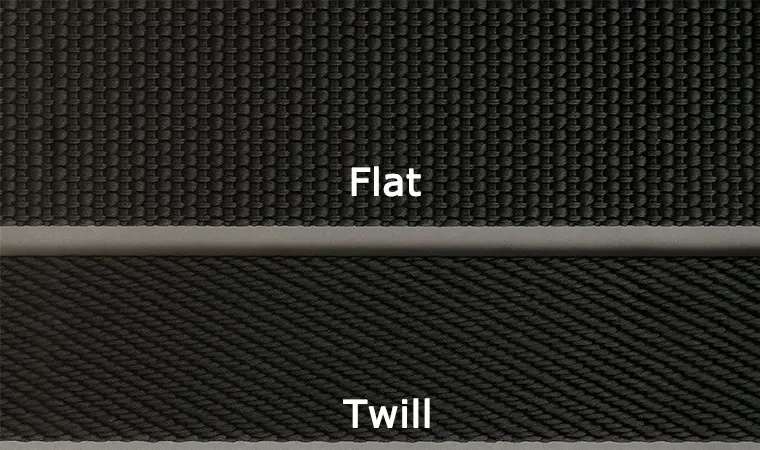
A manufacturer's guide comparing plain vs. twill weave webbing. Learn how the pattern affects strength, abrasion resistance, and cost to choose the best option for your product.
Read More →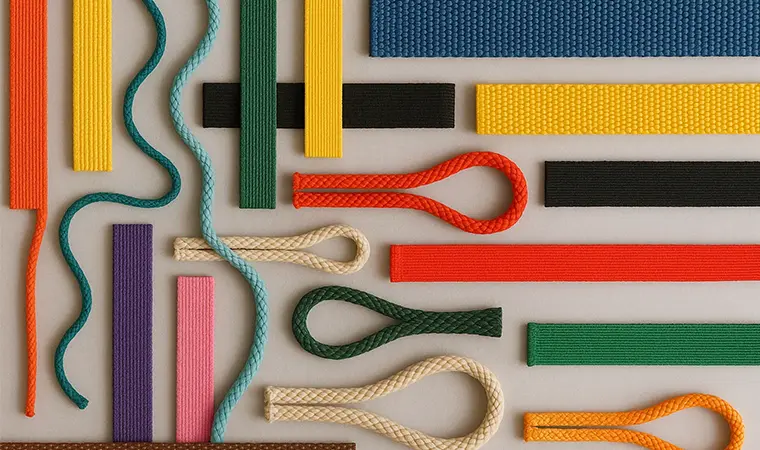
A manufacturer's guide explaining what narrow fabric is. Learn about the types (webbing, straps, tapes), materials, and applications to source the right component for your products.
Read More →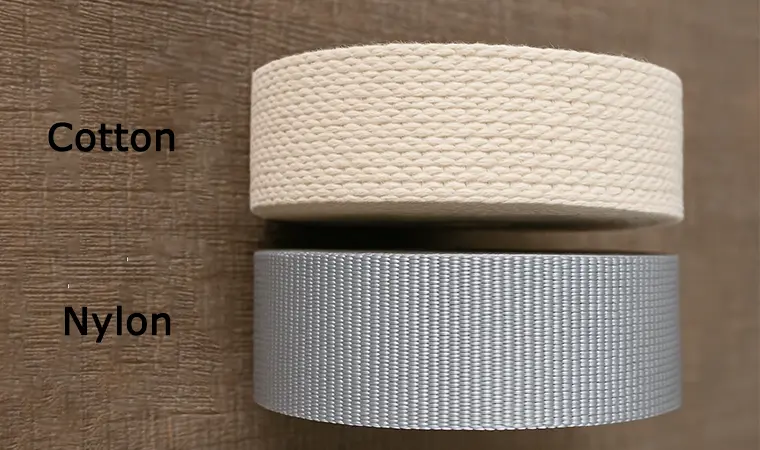
An expert comparison of cotton vs. nylon and polyester webbing. Learn the key differences in strength, feel, durability, and cost to choose the best material for your B2B products.
Read More →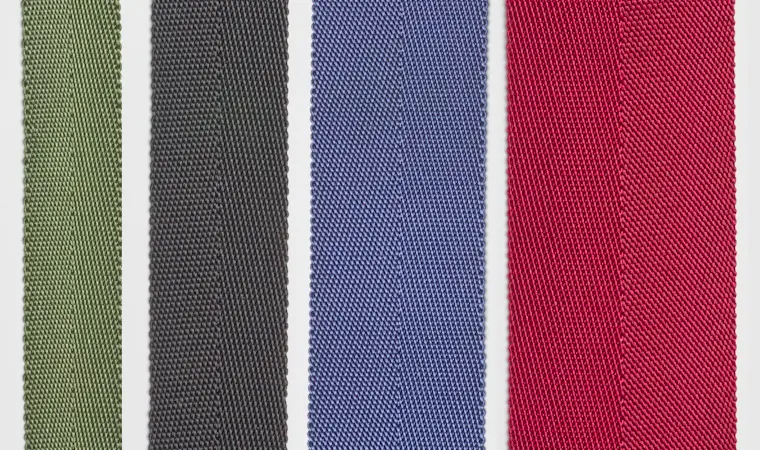
A manufacturer's deep dive into MIL-W-4088K. Understand the different 'Types,' breaking strengths, and why this spec is the gold standard for parachute and heavy-duty nylon webbing.
Read More →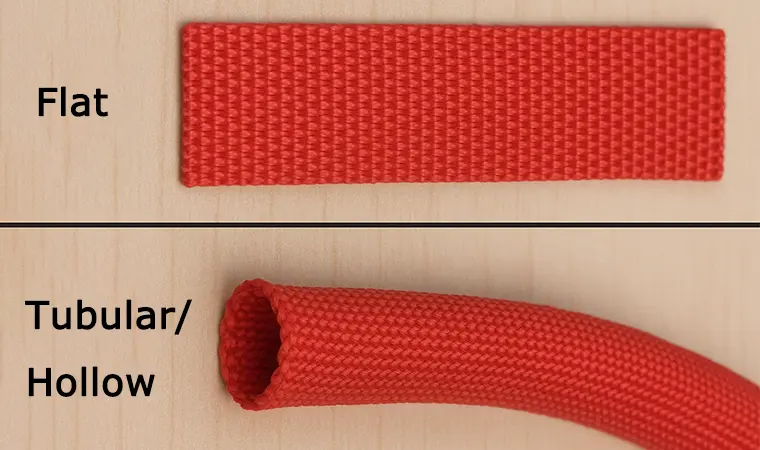
Tubular webbing keeps 70–85% knot strength vs flat's 40–50%. See the full comparison table with breaking strengths, abrasion resistance, and best uses for climbing, harnesses, and cargo straps.
See Comparison Table →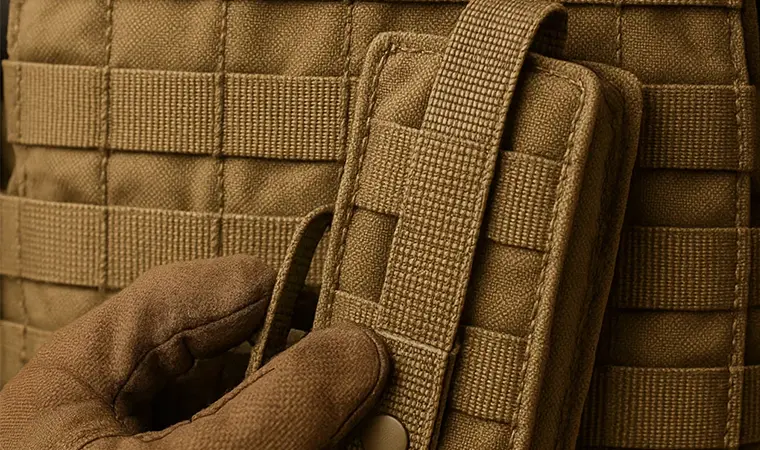
MOLLE vs PALS — they're not the same thing. This guide covers Mil-Spec compliance (A-A-55301, MIL-W-17337), IRR treatment, and how to source 1-inch nylon direct from a manufacturer with free samples.
View Specs →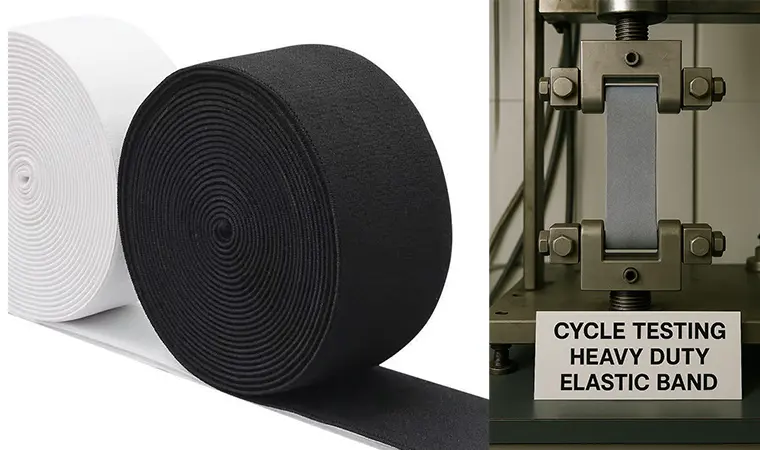
Avoid product failure with our guide to heavy duty & industrial elastic bands. Learn why cycle testing and material choice are key for durable woven elastic webbing.
Read More →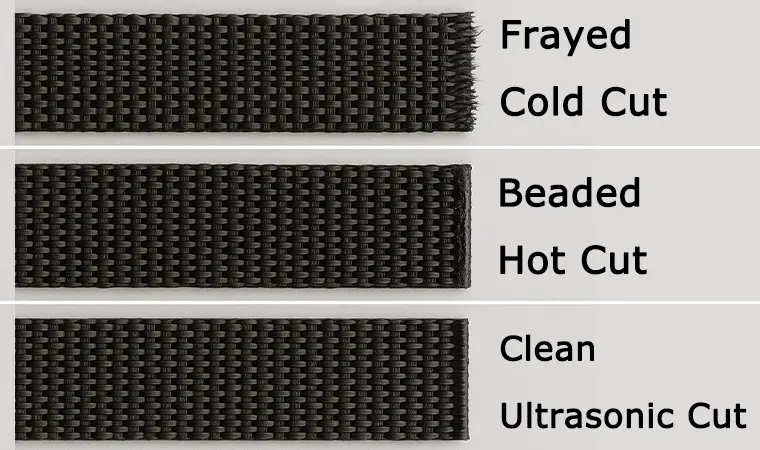
A manufacturer's guide comparing webbing cutting methods (Cold, Hot, Ultrasonic). Learn why a clean, fray-free edge is critical for product quality and brand reputation.
Read More →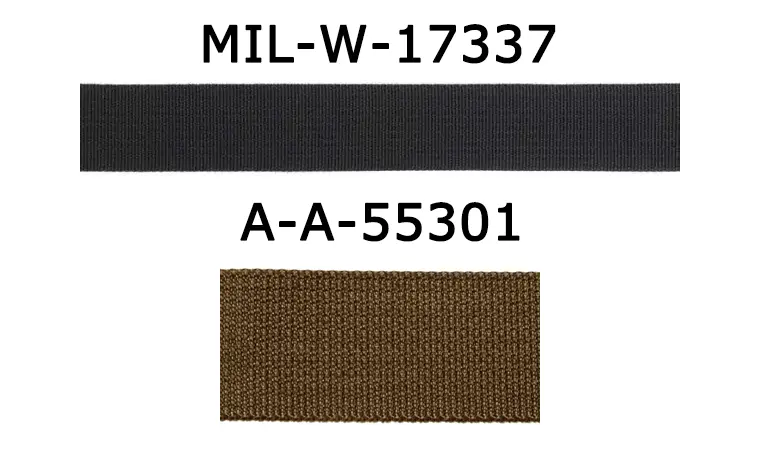
A manufacturer's expert guide comparing two key military webbing specs. Understand the differences in strength, weave, and use cases for tactical gear.
Read More →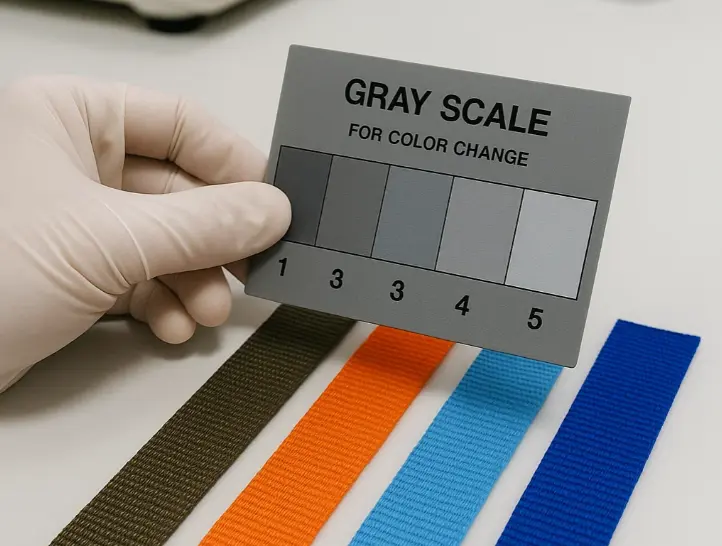
An in-depth guide to webbing color fastness. Learn the key factors that cause fading—sunlight (UV), washing, and friction—and how AATCC standards protect your brand.
Read More →
From MOLLE backpack straps to UV-resistant tent guylines and climbing slings, discover the best webbing materials (Nylon, Polyester, Tubular) for high-performance outdoor gear.
Read More →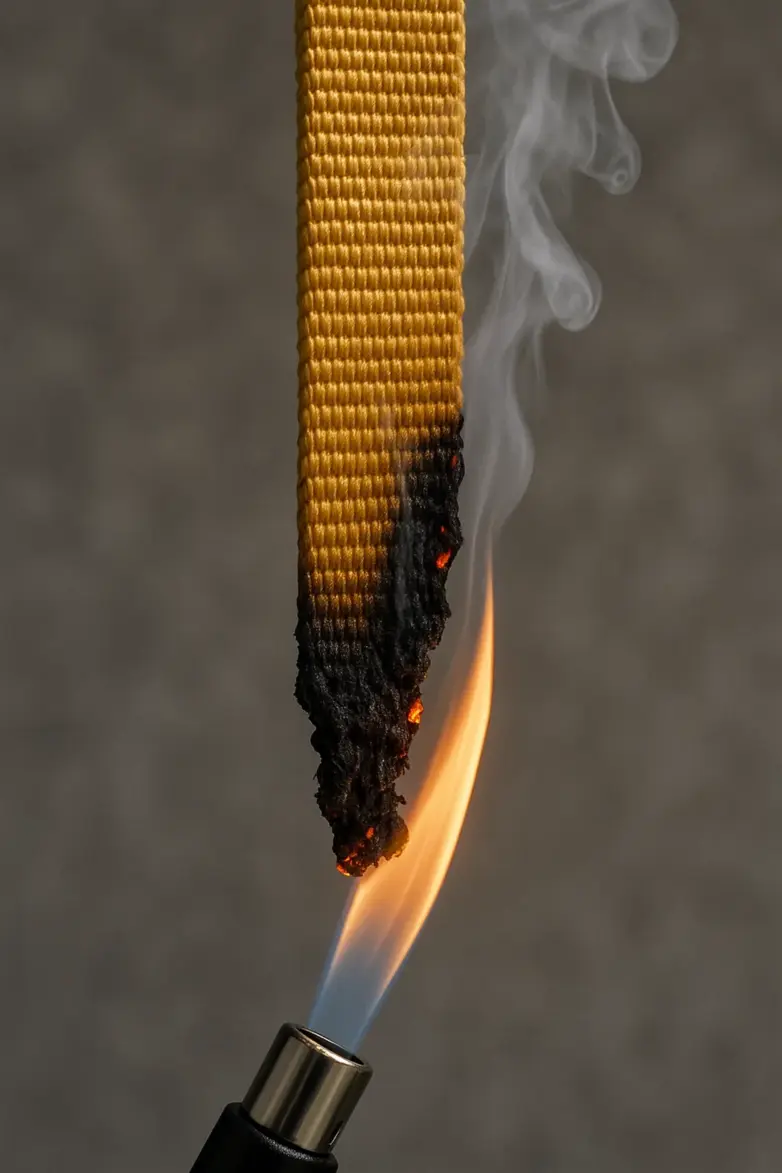
Learn how flame retardant (FR) treatments work, the standards they meet (like UL94), and why choosing aramid fibers like Kevlar® offers inherent fire resistance.
Read More →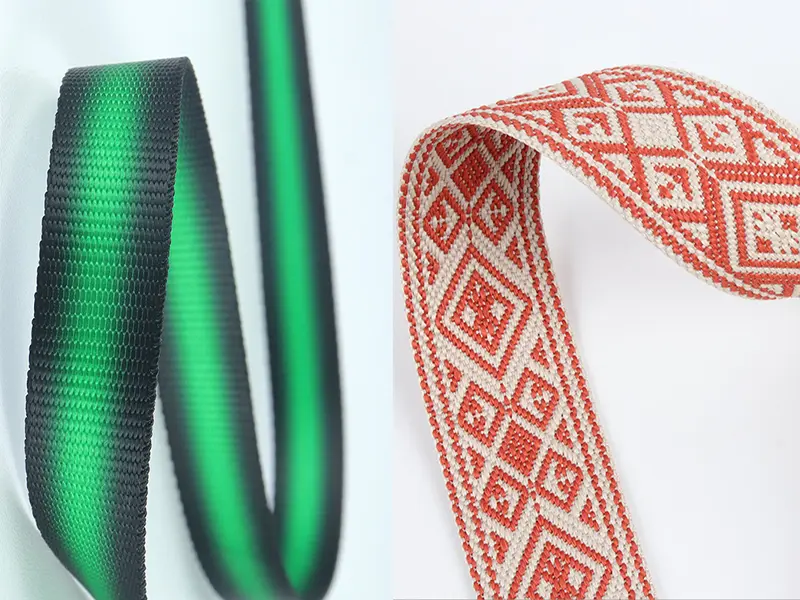
A head-to-head comparison. Discover the key differences in durability, appearance, cost, and MOQ to choose the right custom logo webbing for your brand.
Read More →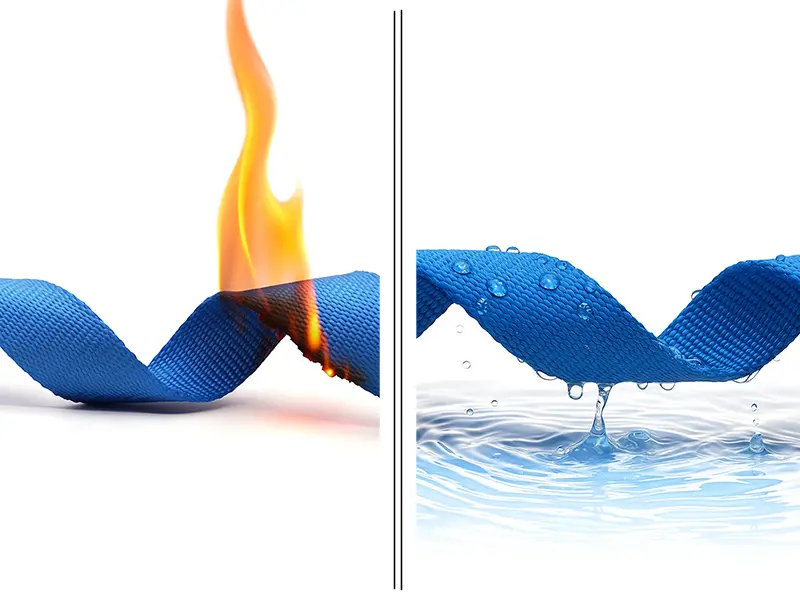
Explore how special finishes enhance performance. Learn about waterproof, UV-resistant, and flame-retardant treatments for outdoor gear, safety equipment, and more.
Read More →
Learn how we package your order to withstand international transit and understand key trade terms like FOB and CIF to ensure a smooth, confident delivery.
Read More →
A manufacturer explains the science behind dye lot variation and how our rigorous quality control process minimizes color differences between batches.
Read More →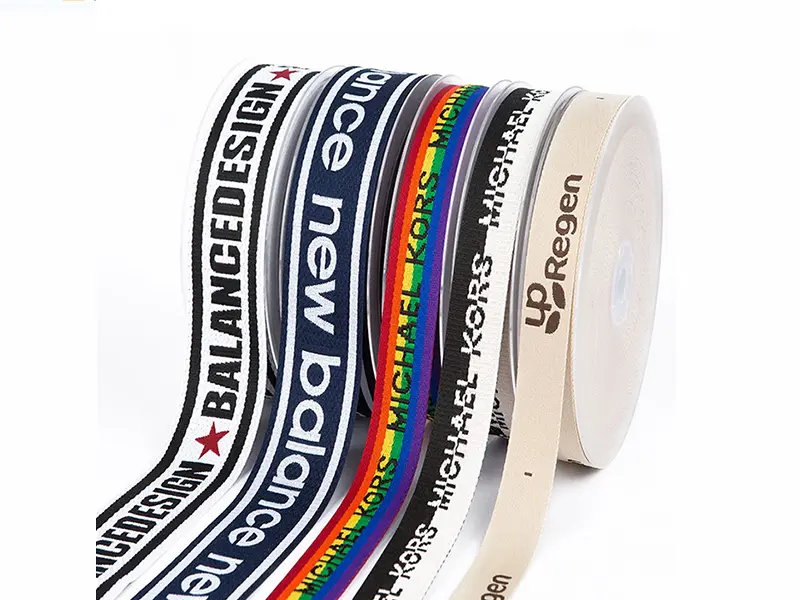
Discover how jacquard looms weave complex logos directly into webbing, and learn why this durable, premium method is superior to printing for high-end brands.
Read More →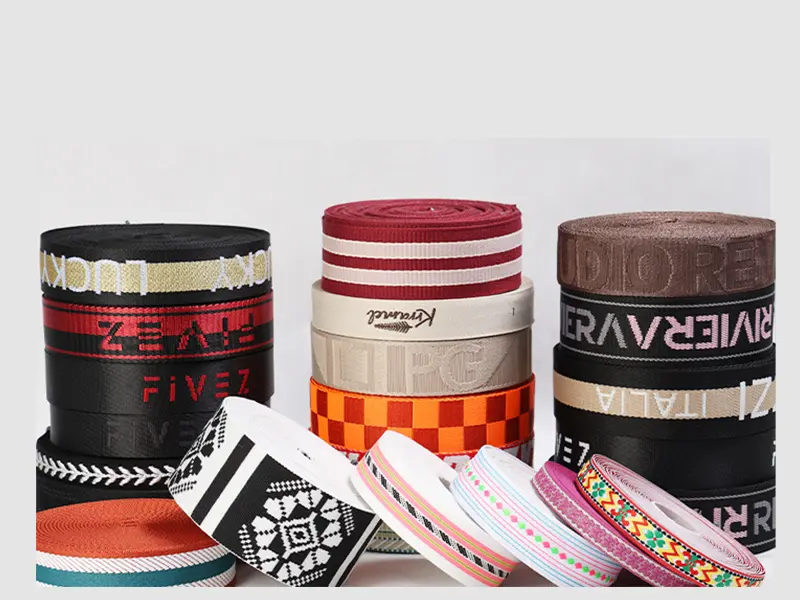
From raw material sourcing to machine setup and dyeing, we explain why MOQs for custom webbing exist and offer flexible solutions to meet your needs.
Read More →
Discover how sustainable webbing like rPET can elevate your brand. Our guide covers performance, validation with GRS, and the market benefits of going green.
Read More →
A deep dive into our commitment to quality. See how our QC system, from raw material inspection to finished product tensile testing, protects your brand's reputation.
Read More →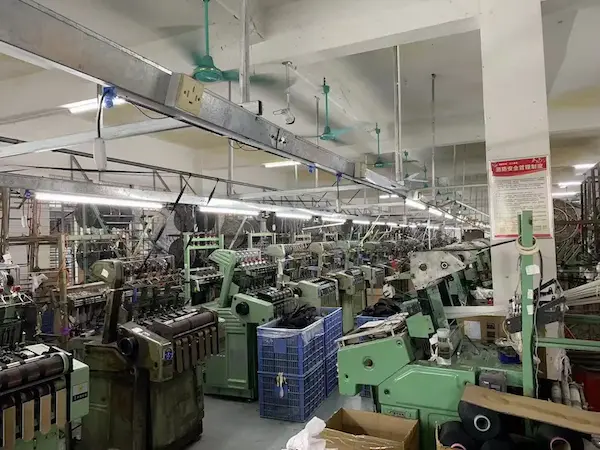
A step-by-step guide for B2B clients on how to source custom webbing, from inquiry and sampling to production, QC, and logistics.
Read More →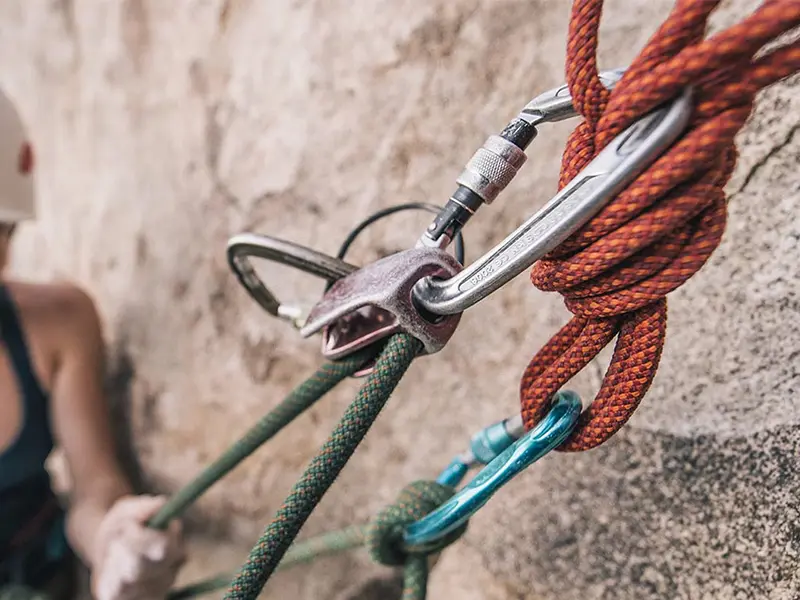
For safety harnesses, climbing cords, and safety belts, webbing failure is not an option. A guide to choosing webbing that protects users and your brand's reputation.
Read More →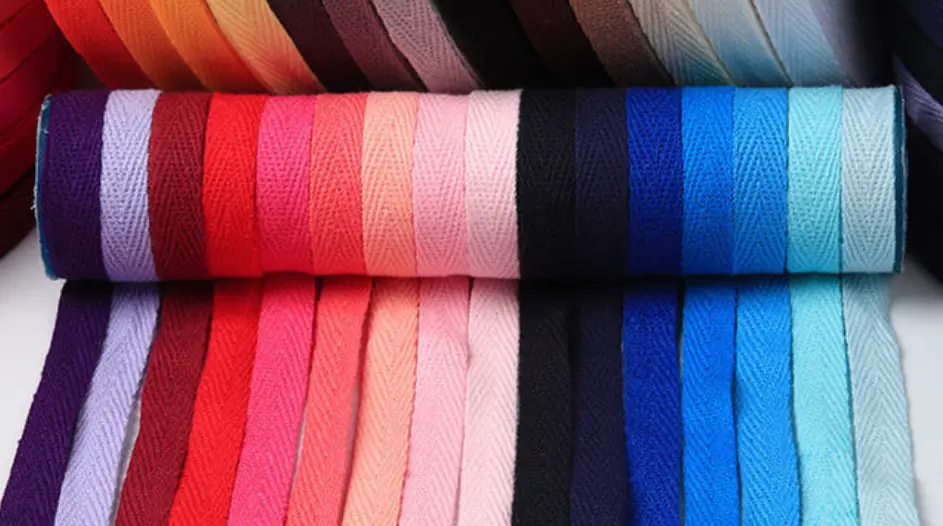
Discover the pros and cons of cotton webbing. This guide covers its applications in apparel and bags, and explains when to choose this natural fiber over synthetics.
Read More →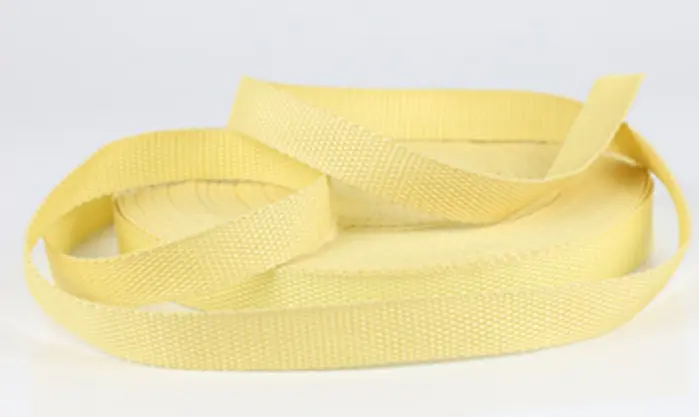
Explore the unparalleled strength and flame retardant properties of KEVLAR® and aramid fiber webbing. A guide to its uses in bulletproof gear, firefighter safety, and more.
Read More →
Discover the vital role of webbing in garment accessories. From elastic bands in hoodies to decorative jacquard tapes, learn how to choose the right materials for apparel.
Read More →
Explore key mil-spec webbing standards like MIL-W-17337F, MIL-W-4088K, and MIL-PRF-5038J. Learn what makes tactical webbing 'mil-spec' and how to choose the right material for your gear.
Read More →
From durable nylon dog leashes to waterproof PVC pet collars, choosing the right pet webbing is key. Our guide explores materials, strength, and safety for pet products.
Read More →
Why do webbing prices vary? Our guide breaks down costs from raw materials (virgin vs. recycled) to manufacturing, explaining why 'cheap' isn't always best.
Read More →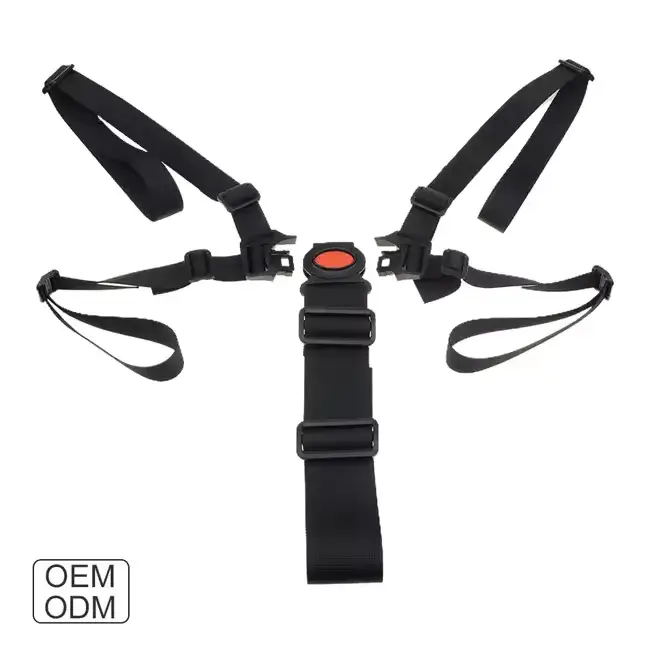
Need safe harness straps for strollers or car seats? We supply EN 1888 compliant, saliva-resistant nylon webbing. Factory direct prices for baby product brands.
Get Free Samples →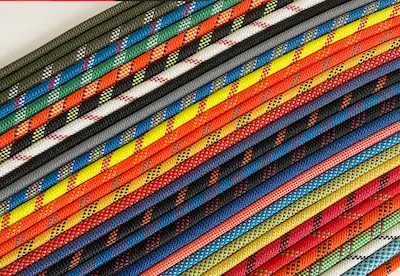
From hoodie drawstrings to backpack shock cords, our factory guide covers the key differences between polyester and elastic ropes to help you choose the right one.
Read More →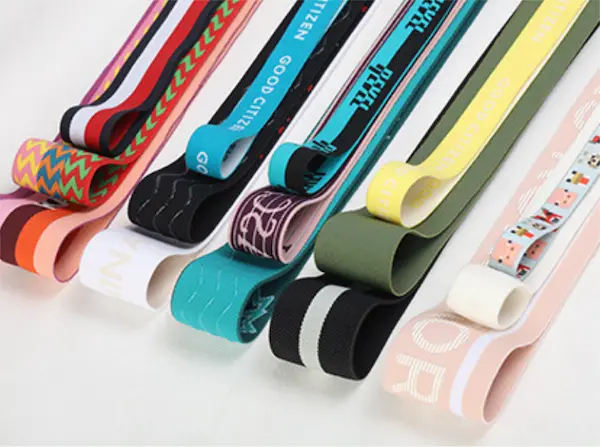
From spandex vs. rubber to woven vs. knitted, this guide covers everything you need to know to choose the right elastic band for apparel, medical, or industrial use.
Read More →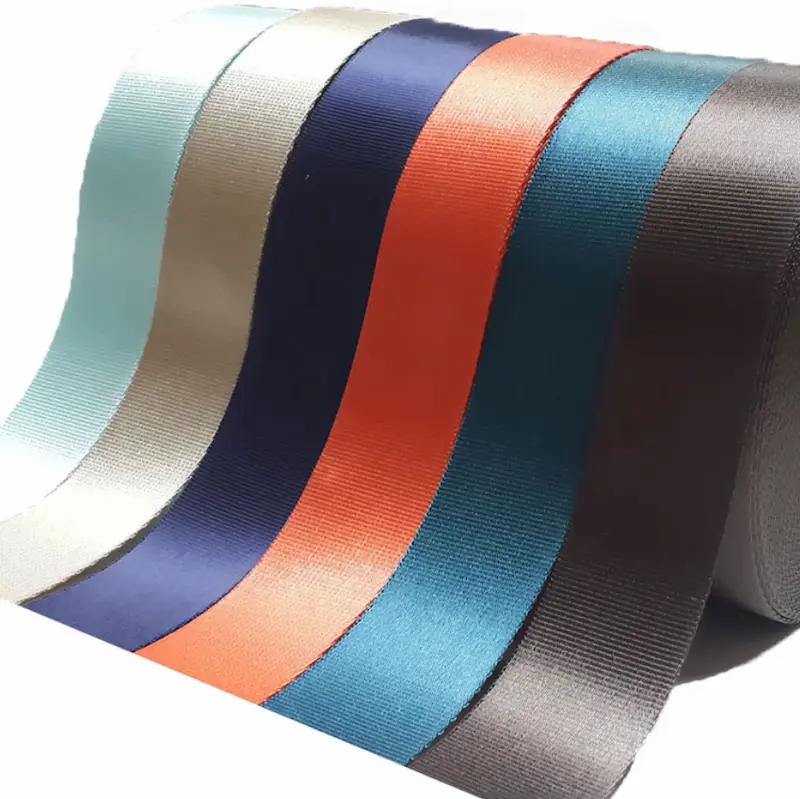
Nylon's unique ability to stretch under load makes it vital for safety and recovery. Discover its top applications, from climbing harnesses to military gear and tow straps.
Read More →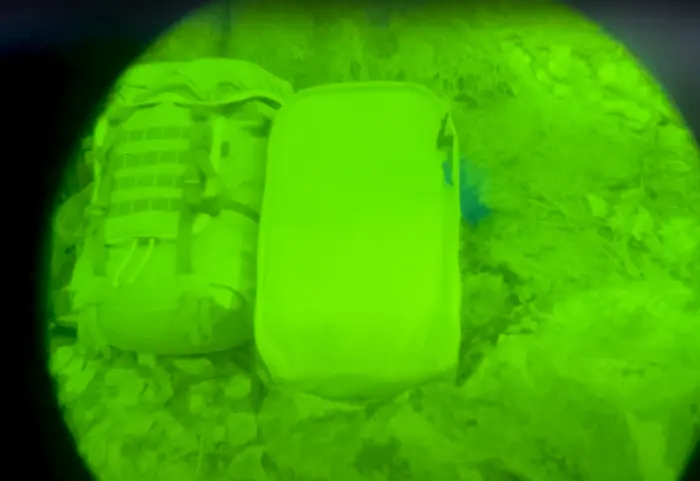
An expert guide to military webbing. Learn about MOLLE systems, camouflage patterns, and the critical role of IRR (Infrared Reflective) technology in modern tactical gear.
Read More →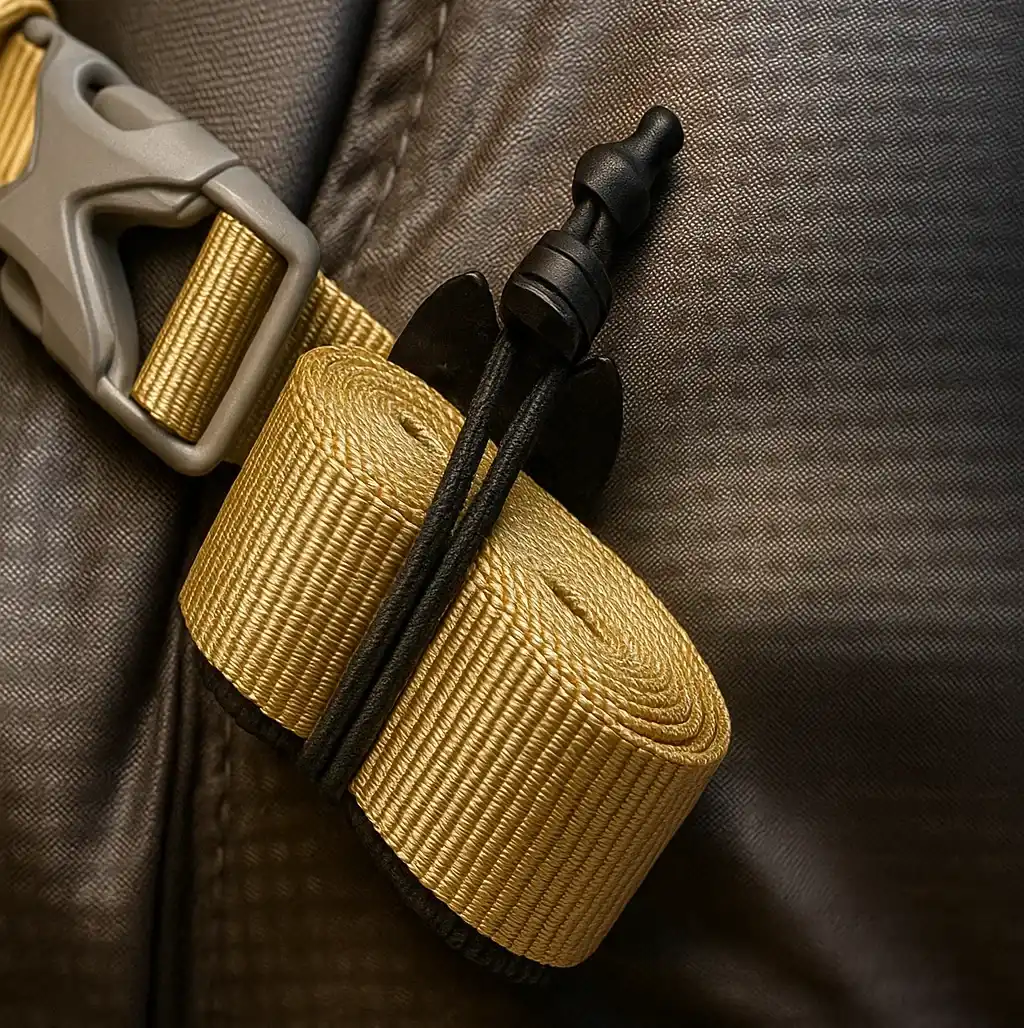
Discover why using cheap PP webbing on outdoor gear leads to failure and how choosing the right material, like durable nylon, protects your brand and customers.
Read More →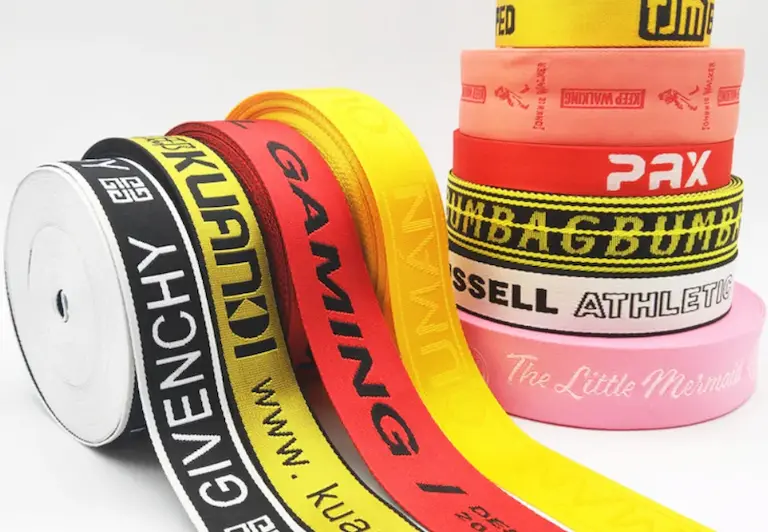
Discover why heavy-duty polyester webbing is the industry standard for everything from cargo tie-downs to safety harnesses. An essential guide for product designers.
Read More →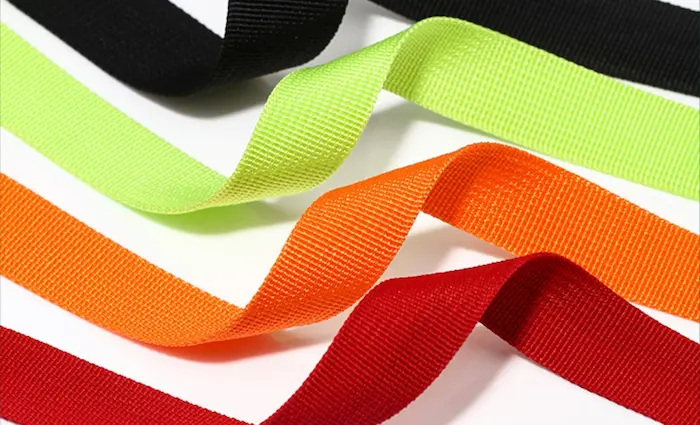
Discover the pros and cons of PP webbing. Our expert guide covers its uses in marine, outdoor, and medical applications, and when to choose it over nylon or polyester.
Read More →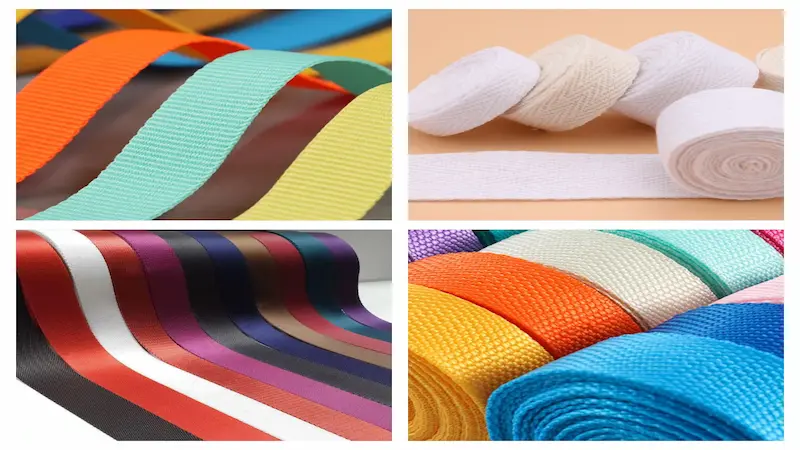
Learn the key differences between Nylon, Polyester, Polypropylene, and Cotton webbing using simple look, feel, and burn tests from a factory expert.
Read More →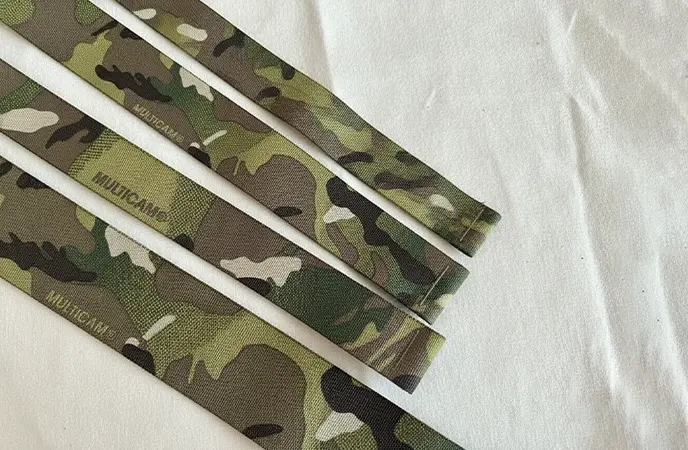
Compare jacquard woven and printed MultiCam webbing: IRR compliance and near-infrared reflectance, colorfastness under field washing, minimum order quantities, and how tactical gear and outdoor brands should choose between the two constructions.
Read More →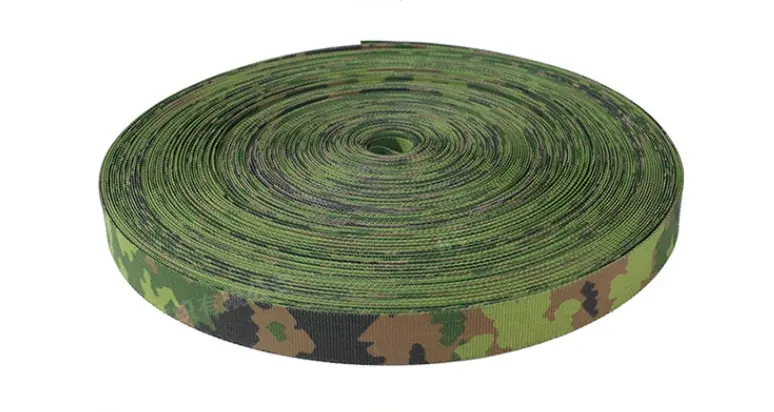
Factory-direct supply of authentic Finnish M05 camouflage webbing on Mil-Spec nylon 6.6: high-definition NIR printing, IRR compliance across the visible and near-infrared spectrum, and what to verify before buying.
Read More →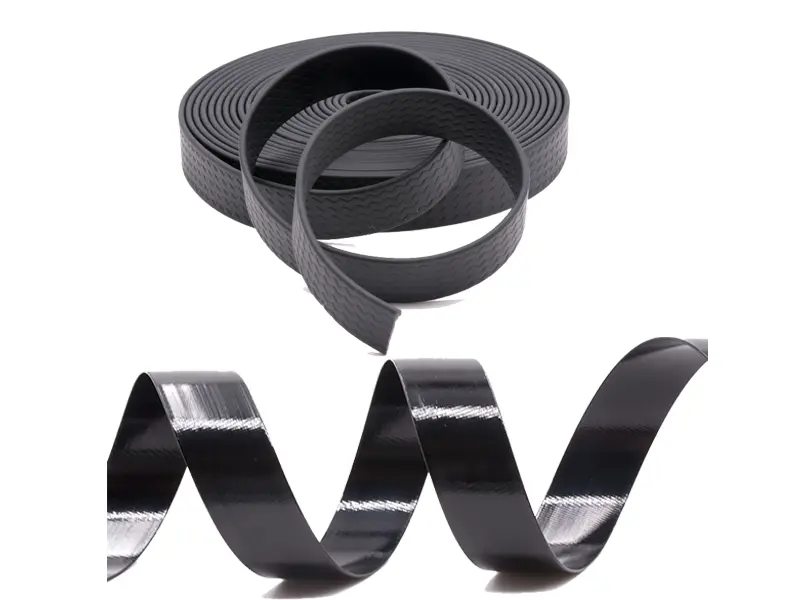
An expert comparison of PVC and TPU coated webbing: flexibility in cold weather, abrasion and hydrolysis resistance, environmental and REACH compliance differences, bonding methods, and total cost per metre.
Read More →